Tavern interior with dancing peasants, by Richard Brakenburgh
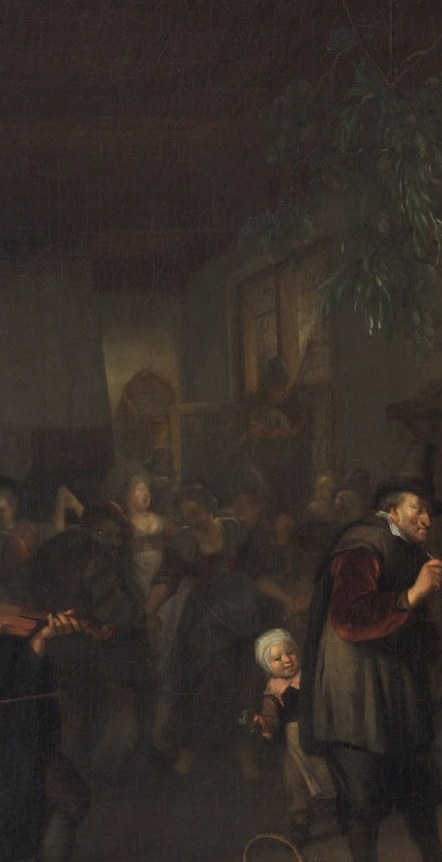
This is Richard Brakenburgh's "Tavern Interior with Dancing Peasants" from 1696, now in the Kunsthistorisches Museum. It looks like a party, and it is, but the real subject is the cost of letting go. Dutch painters of the era sold these rowdy scenes to wealthy city merchants who wanted a reminder of what they had escaped: disorder, lost time, and the poverty that follows pleasure without restraint.
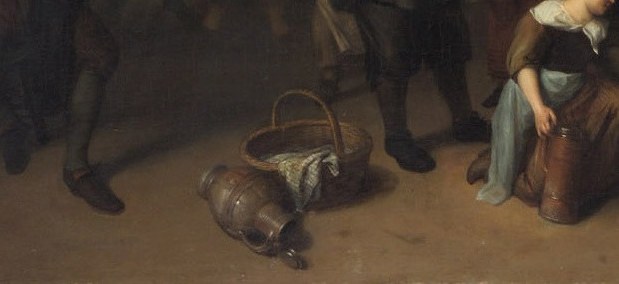
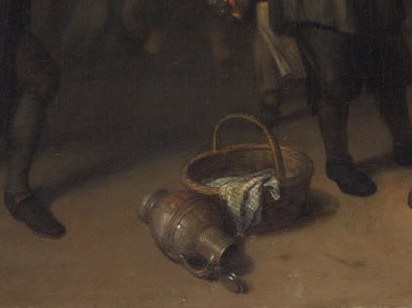
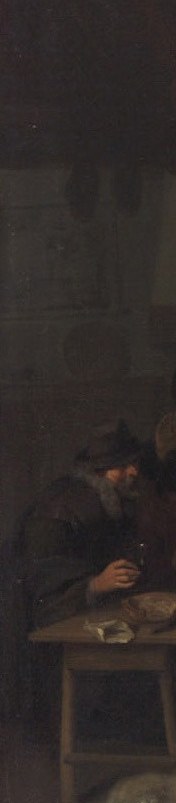
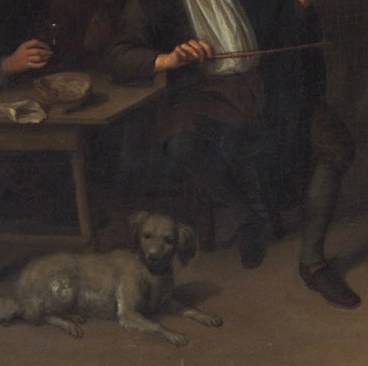
Look past the dancers at the floor. A clay pipe lies broken, a basket has tipped over, and the broom on the left wall hasn't moved. The dog, alert and sober, watches from the foreground. Every object in a tavern interior was a coded argument about the wages of idleness, and Brakenburgh was meticulous about packing the frame with them.
Brakenburgh was born in Haarlem in 1650 and trained in the shadow of Jan Steen, whose chaotic households he softened into something warmer. By 1696, when he painted this, the wildest days of the Dutch Golden Age were behind him, and he was selling a nostalgia for simpler village life to an urban audience that had already won its prosperity. The canvas is an oil painting, built with strong chiaroscuro that backs the figures against a dark wall and pulls the eye straight down to the clutter on the floor.
The laughter in the room is genuine, but so is the warning. What do you think the unseen violinist on the left is playing, and would you have put down your glass to dance?
Details
Transcript
A party in full swing, late in the Dutch Golden Age. At the center, a couple dances without a care. But the floor tells a more expensive story. A broken pipe, a spilled basket: lost work time made solid. Painters like Brakenburgh sold these as moral warnings. The broom unused, the dog alert: a household on pause. The real currency here is reputation, and it is being spent.