Mrs. Charles S. Carstairs by Orpen, William, Sir
This is Sir William Orpen's portrait of Elizabeth Stebbins, painted in 1914 and now held by the National Gallery of Art. Orpen was the most sought-after and expensive portraitist in Edwardian London, and this painting is a quiet catalog of why.
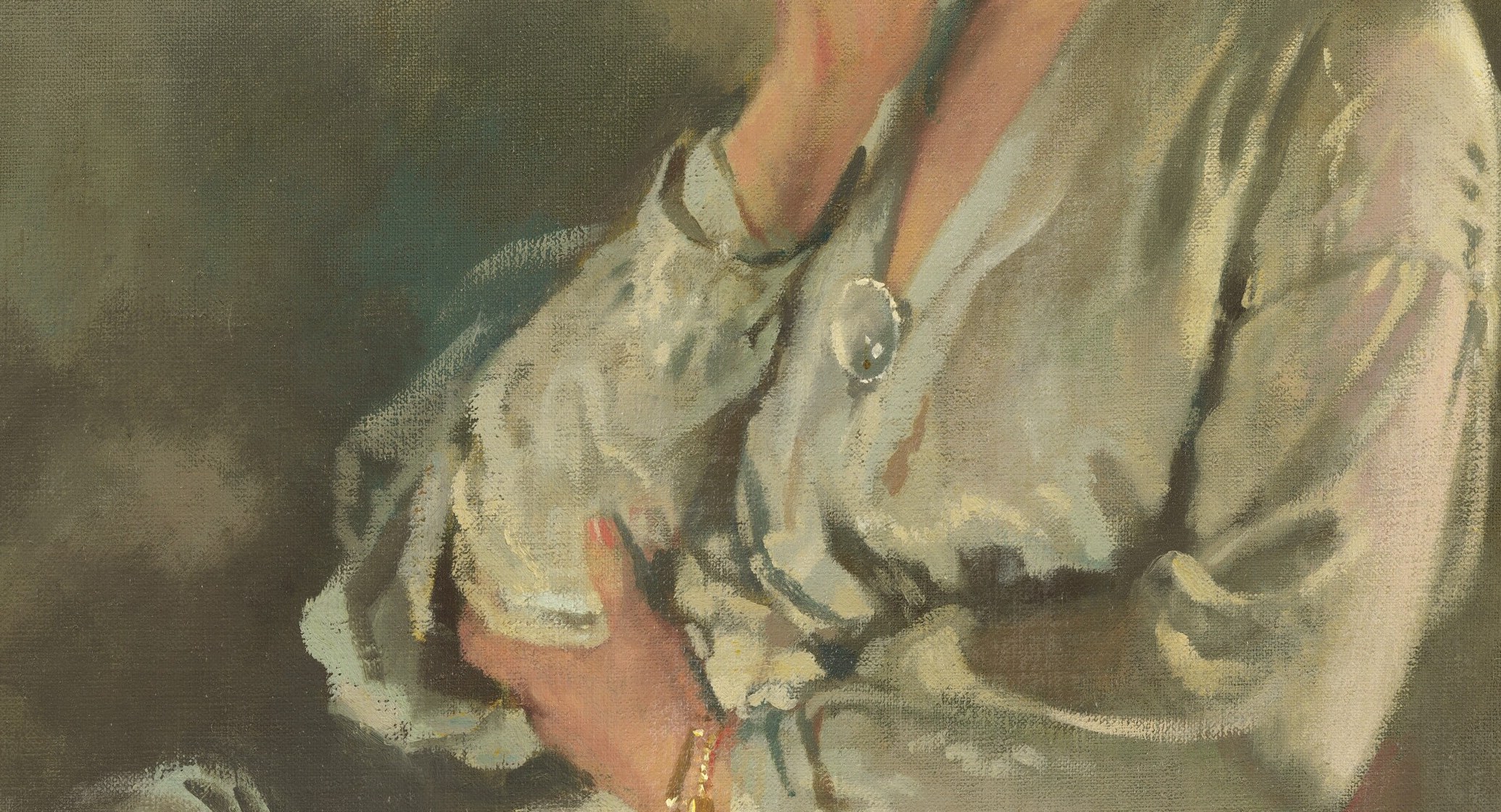
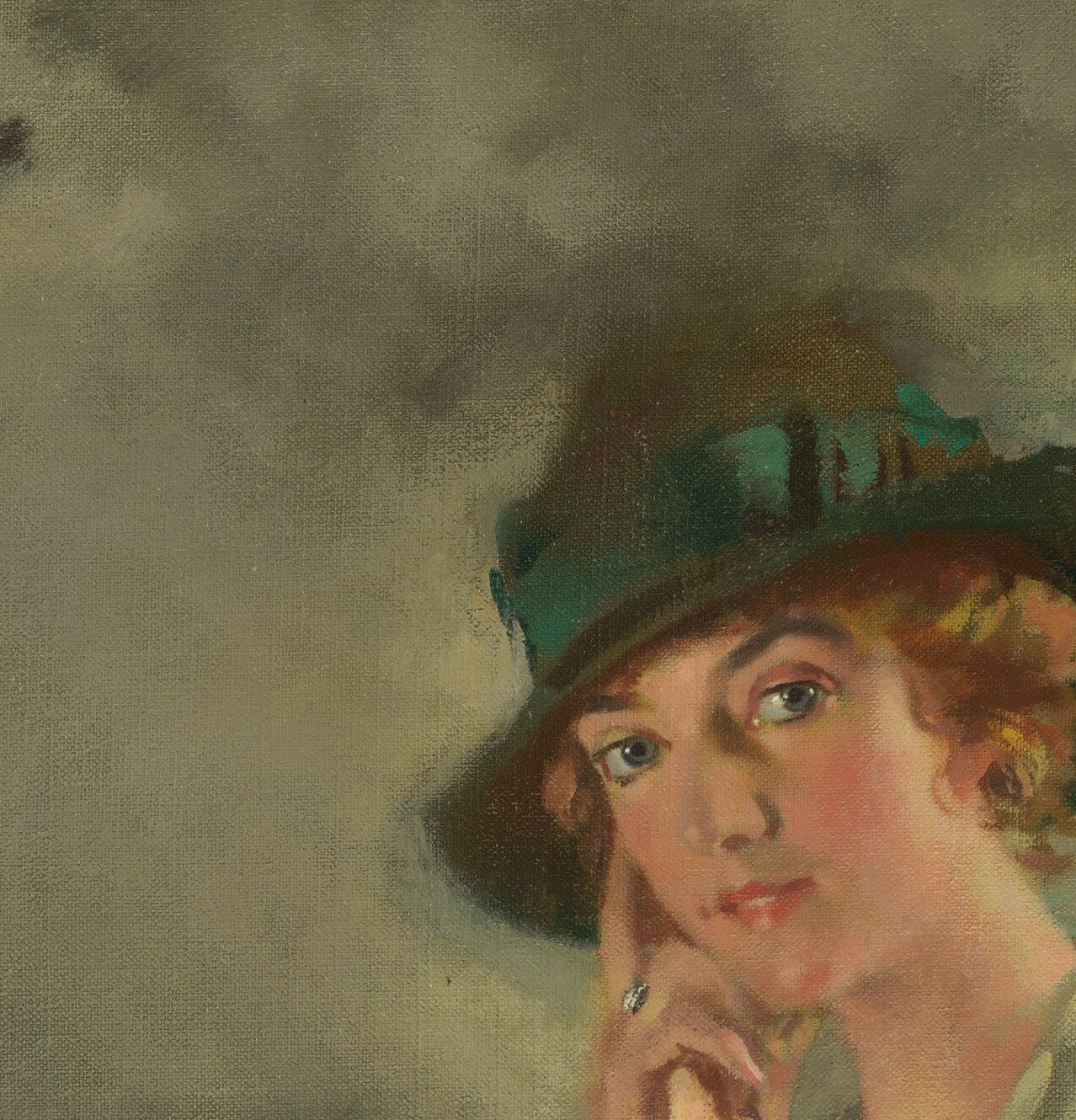
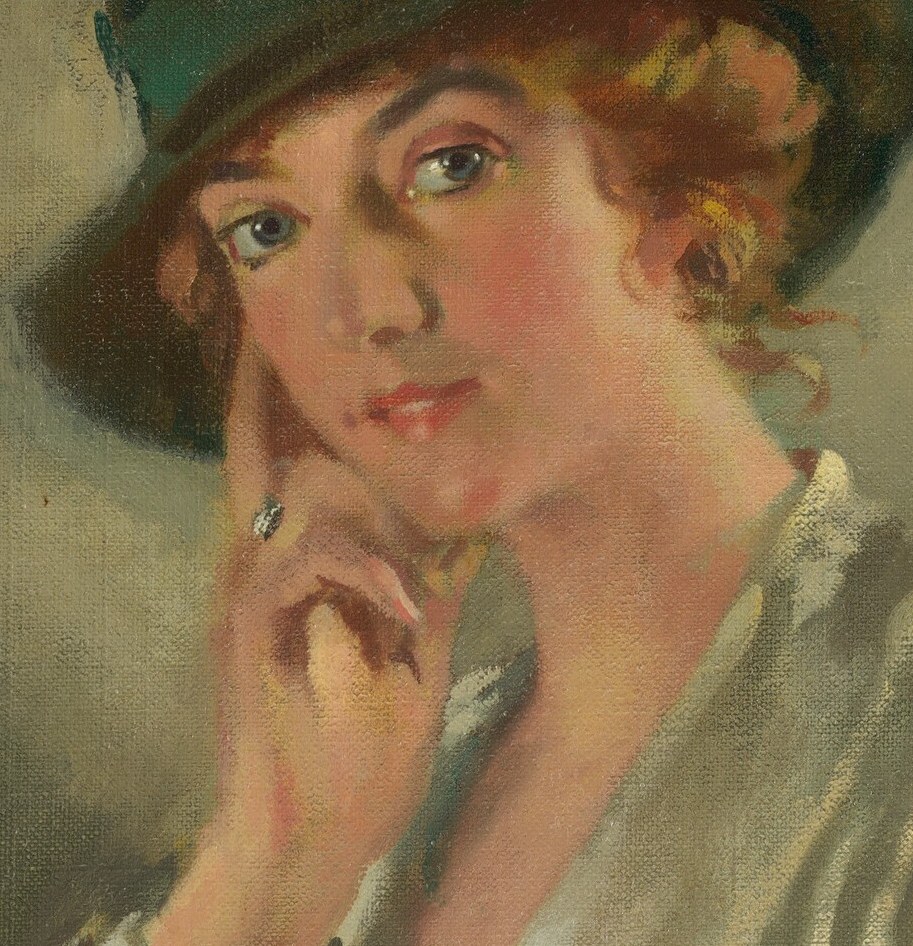
Look at the deep green of her hat. Turquoise echoes it at her wrist. These were not accidents. A portrait sitting was a negotiation of status, and every color, every piece of jewelry, was chosen to project wealth and taste. Then look at the lace bodice. Orpen renders its translucency and weight with varied impasto, a technical display meant to justify his fee to a client who understood fabric.
Her downcast eyes and hand at her chin break the standard contract of a society portrait. She does not perform for the viewer. The pose borrows from intellectual portraiture, coding her as a thinking person rather than an ornament. In the months before the First World War shattered this world, Orpen gave Elizabeth Stebbins something rarer than flattery: the look of a private moment.
What small detail of your own self-presentation would you choose for a painted portrait?
Details

Transcript
A woman sits for her portrait, 1914. Her hat's deep green signals wealth. The turquoise bracelet echoes it exactly. Her lace bodice is a painter's test piece. Only a top-tier portraitist could charge for this. She avoids your eyes completely. Her hand says: I think, I do not merely pose. Orpen painted a thinker, not a decoration.