Lady with the Rose by John Singer Sargent
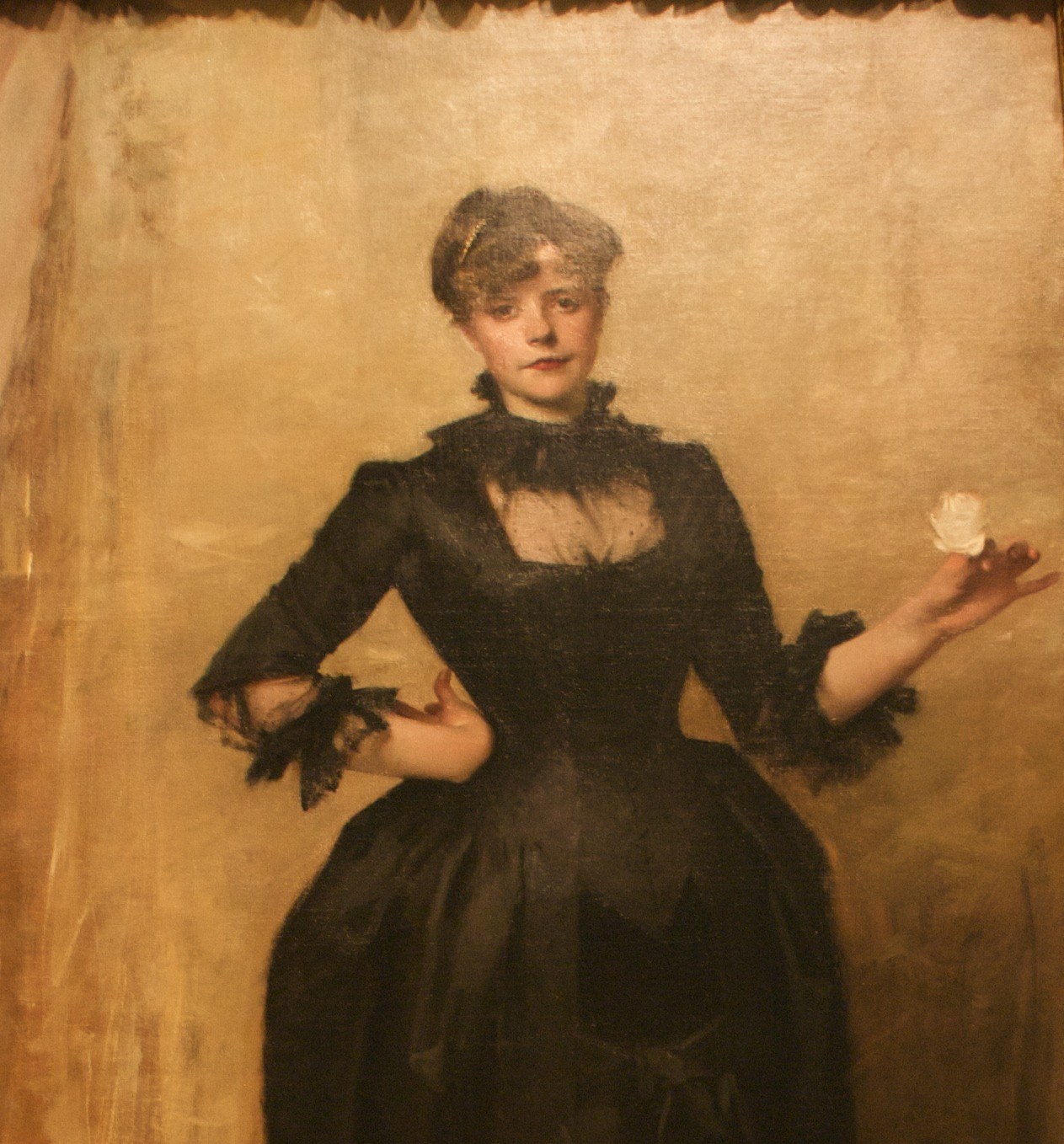
John Singer Sargent painted Lady with the Rose in 1882, and it met great acclaim at the Paris Salon that year. The sitter is Charlotte Louise Burckhardt, a twenty-year-old from a Swiss merchant family in Paris, part of Sargent's cosmopolitan circle. The painting now lives at the Metropolitan Museum of Art in New York.
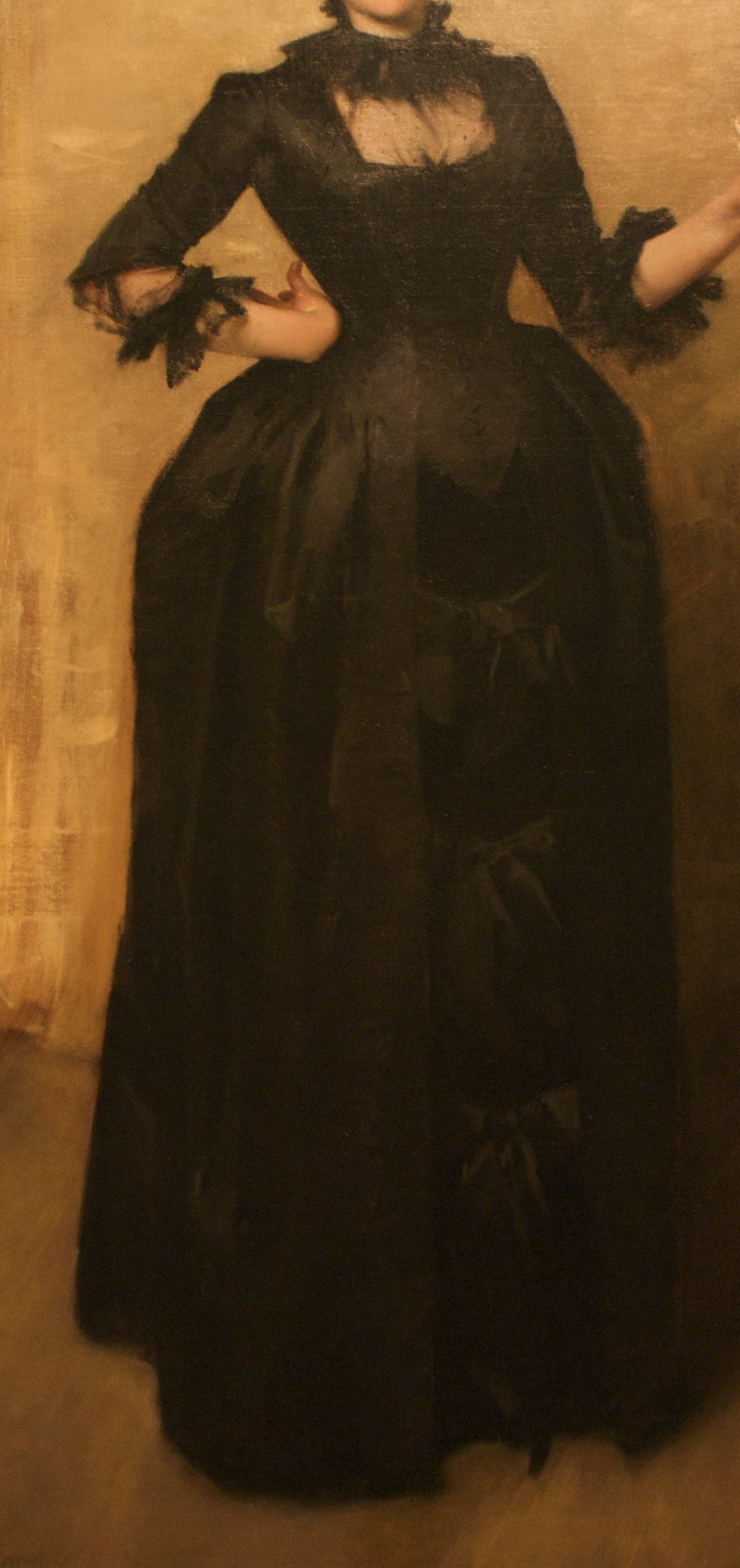
The whole composition is a gamble: a near-black mass that carries a large canvas. Sargent withholds the ground line entirely and lets the dark skirt dissolve, grounding the figure by suggestion alone. All the light in the painting funnels toward a single detail, the white rose held aloft, the only pale accent in the frame. In the floriography of the 1880s, a white rose signaled purity and the brevity of youth.
Sargent was deliberately channeling Velázquez, whose work his teacher Carolus-Duran had urged him to study. The hard edge between the black dress silhouette and the warm ochre background is where that influence is most surgical. The face, meanwhile, is pure Sargent: a reserved, self-possessed expression built from just a few strokes, making direct contact across 140 years.
Charlotte married Roger Ackerley, the fruit importer known as the Banana King, and died after only two years of marriage. The white rose she holds means something different once you know she had just ten years left.
Details


Transcript
She looks like a woman who knows exactly who she is. Sargent painted her in 1882, when she was twenty. Her name was Charlotte Louise Burckhardt, from a Swiss merchant family in Paris. Now look at the one pale thing in this whole dark canvas. A single white rose. In the 1880s, that meant purity and the brevity of youth. Ten years after this painting, Charlotte was dead at thirty.