The Bell Inn by George Morland
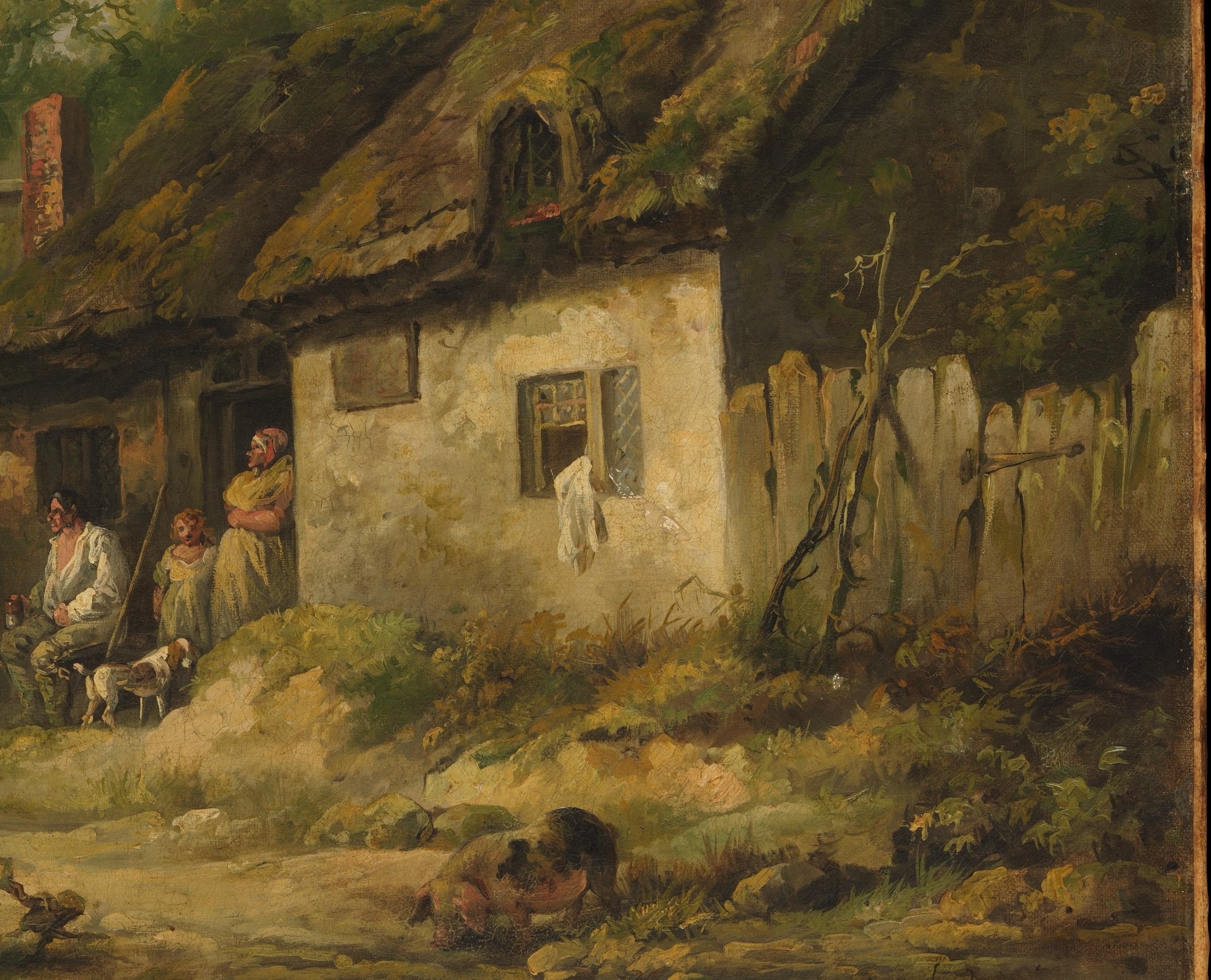
George Morland's 1790 oil painting *The Bell Inn* hangs on the quieter walls of British art, and its thatched roof is the real show. Look closely and the thatch stops being an image: it becomes a physical crust of paint, dragged and built up until it reads as actual straw. That impasto is Morland's signature, a trick he took straight from the Dutch Golden Age painters he admired.
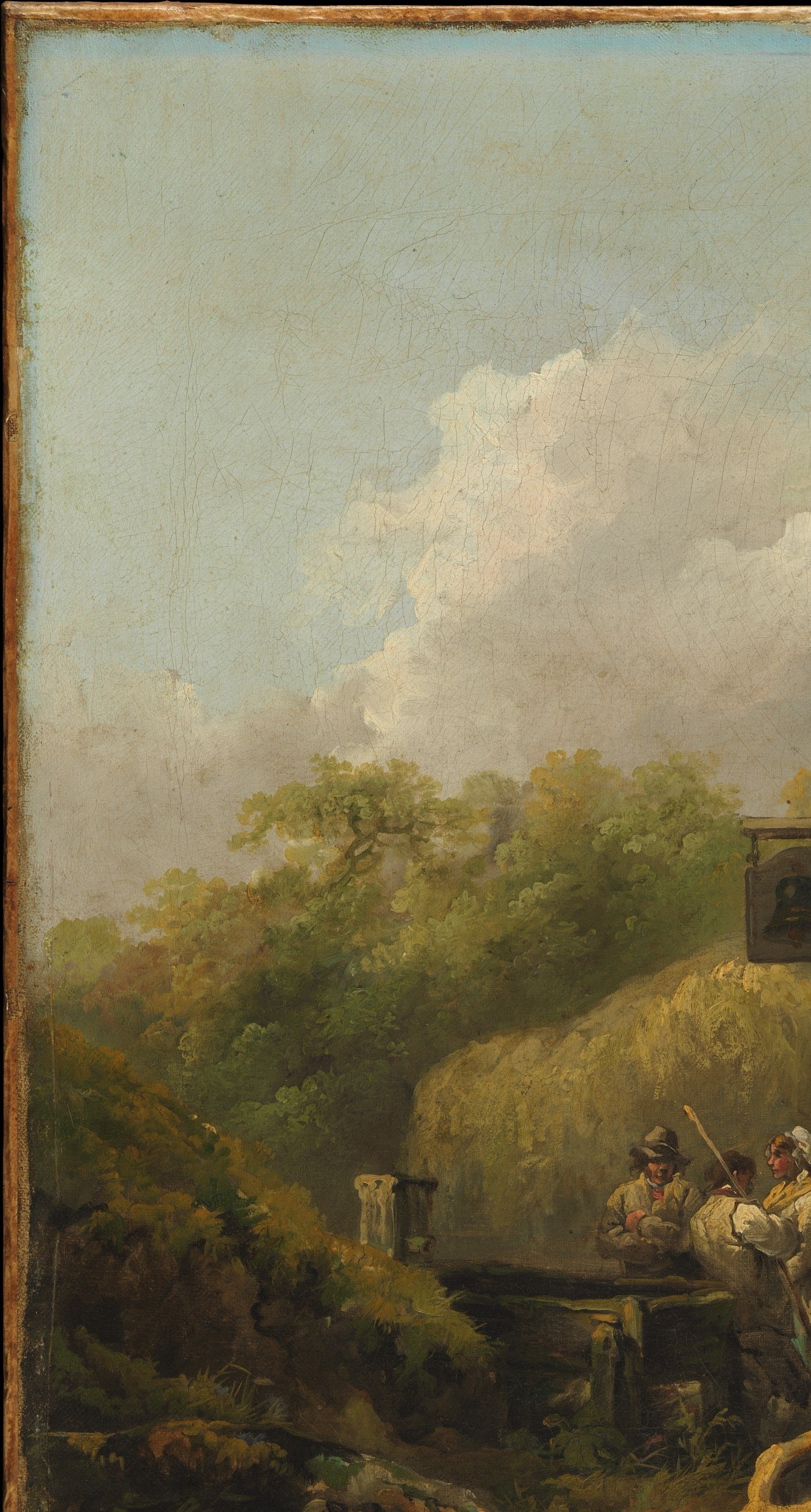
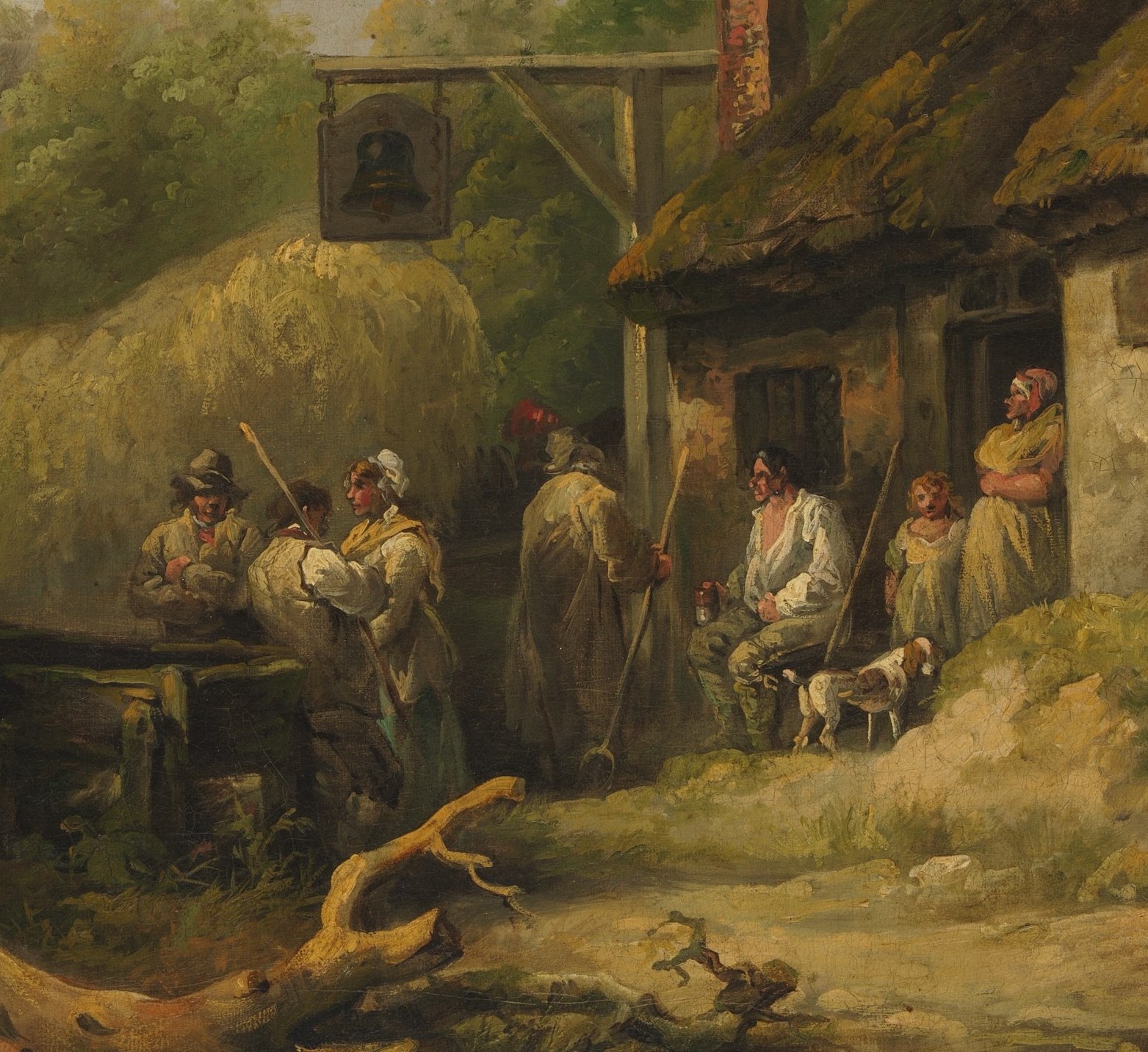
The whole painting is organized around a single collision of light and dark. On the left, the woodland mass sinks into near-black shadow. On the right, the inn's whitewashed wall catches a flood of pale afternoon sun. Morland uses that tonal split to push your eye exactly where he wants it, toward the low building, the figures at the door, and the rough texture of the roof above them.
Morland was enormously prolific and enormously troubled. He painted rustic England, farms, inns, smugglers, pigs, at a pace that kept publishers in prints and himself in debt. His life was short and rackety; he died at 41. But in *The Bell Inn*, he was fully in command of his craft, building a whole world out of thick paint and thin shadow.
What do you notice more, the light on the wall, or the weight of that dark wood on the left?
Details

Transcript
It looks like an ordinary country inn. But walk closer to the roof. The thatch is a thick crust of oil paint. Morland dragged a stiff brush through wet paint to make straw. Now look at the white wall catching sun. He sets bright plaster against near-black trees. That gash of light is the whole painting's engine. He learned this from Dutch Golden Age painters. Thick light, thin shadow.