Virgin and Child with Saints by Ugolino di Nerio
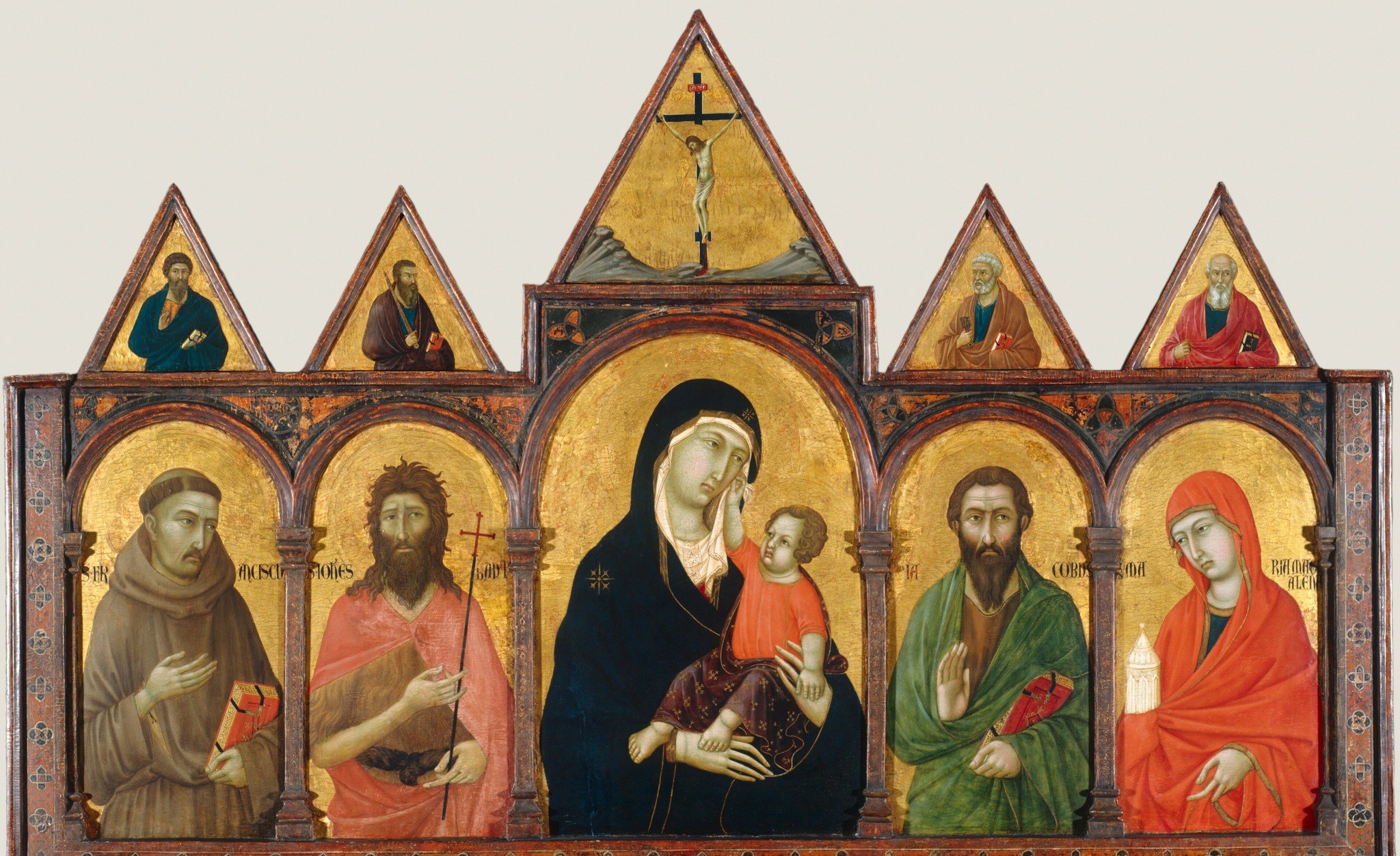
Ugolino di Nerio's "Virgin and Child with Saints," painted around 1320, exemplifies the complex structure of early 14th-century Italian altarpieces. This polyptych, now at The Cleveland Museum of Art, reveals how sacred art was designed to guide worship and organize the visual experience within a church.
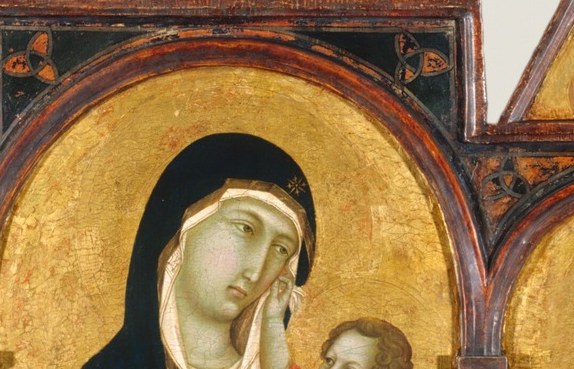
At the center, the Virgin Mary cradles the Christ Child, their figures rendered with solemn expressions. Look closely at their halos; these intricate patterns were not just painted but meticulously punched into the gold leaf. Flanking them, saints occupy individual cusped Gothic arch frames, creating a sense of distinct, sacred niches.
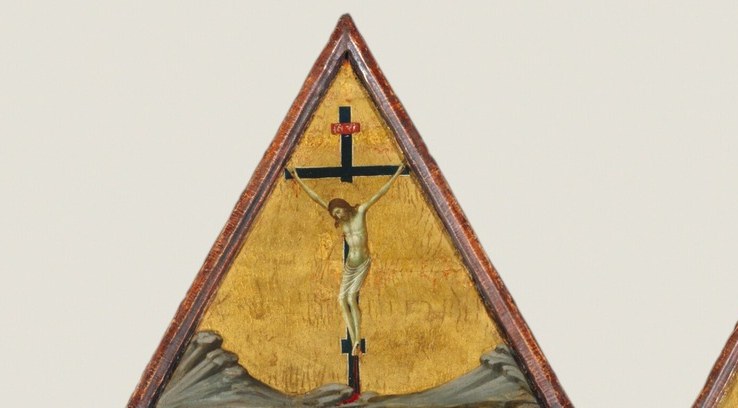
Ugolino di Nerio, a follower of Duccio di Buoninsegna, played a key role in spreading the Sienese style to Florence. This work showcases the rich use of gold and idealized forms characteristic of the period, emphasizing the divine nature of the figures. The small crucifixion scene nestled in the central pinnacle arch above the Virgin and Child is a powerful detail, telescoping Christ's future into the present of his infancy.
This kind of elaborate, multi-panel altarpiece was the standard format for Italian churches for two centuries, shaping how worshippers interacted with the divine. What details do you notice that speak to its age?
Details

Transcript
This altarpiece, painted around 1320, organized an entire church. At its heart: the Virgin Mary and Christ Child. These golden halos are not just painted, but punched into the gold. Saints in separate arches flank them, like sculpted niches. Above the Virgin, a tiny crucifixion shows Christ's future. This vertical arrangement of sacred figures shaped devotion for centuries.