Las postrimerías de Fernando III el Santo by Virgilio Mattoni
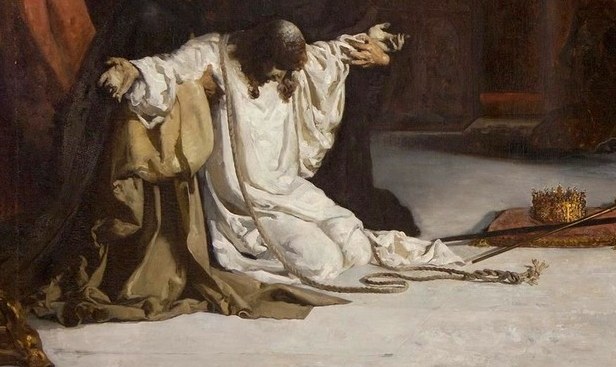
Virgilio Mattoni's 1894 painting, Las postrimerías de Fernando III el Santo, housed at the Museo del Prado, depicts a striking image of renunciation. A central figure, Ferdinand III, is shown divested of his royal regalia, signifying a profound spiritual choice.
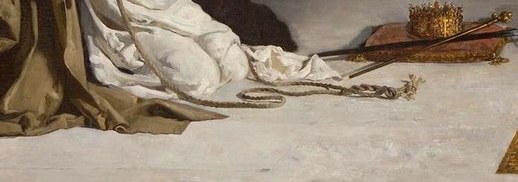
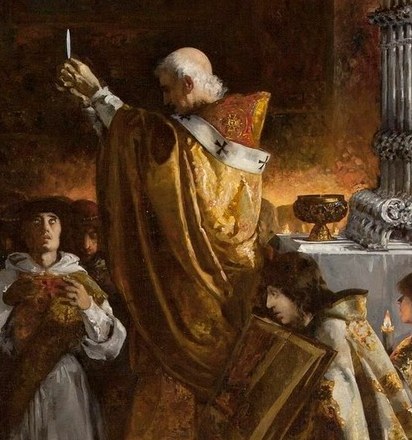
Focus on the crown and scepter placed on the red carpet, symbols of earthly power abandoned. Then, direct your eye to the ornate lectern. Notice the book open before Ferdinand. It appears to hold a profound message, but upon closer inspection, the page is conspicuously blank.
This detail speaks volumes: Ferdinand III the Saint's earthly story was complete. The artist, Virgilio Mattoni, a key figure of the modern Andalusian school, chose to represent this moment not with a sacred text, but with the absence of one, highlighting that the emperor's legacy was already defined by his deeds, not by further words.
Mattoni masterfully uses light and shadow to create a theatrical, solemn atmosphere. The stark blank page serves as the ultimate hidden detail in this depiction of pious finality.
Details
Transcript
This emperor renounces his earthly crown. He holds a cross, not earthly power. The year is 1894. Spain is modernizing. Look at the orante lectern. The book is open to a blank page. His story had already been written.