Death of Euridice by Joos de Momper the Younger
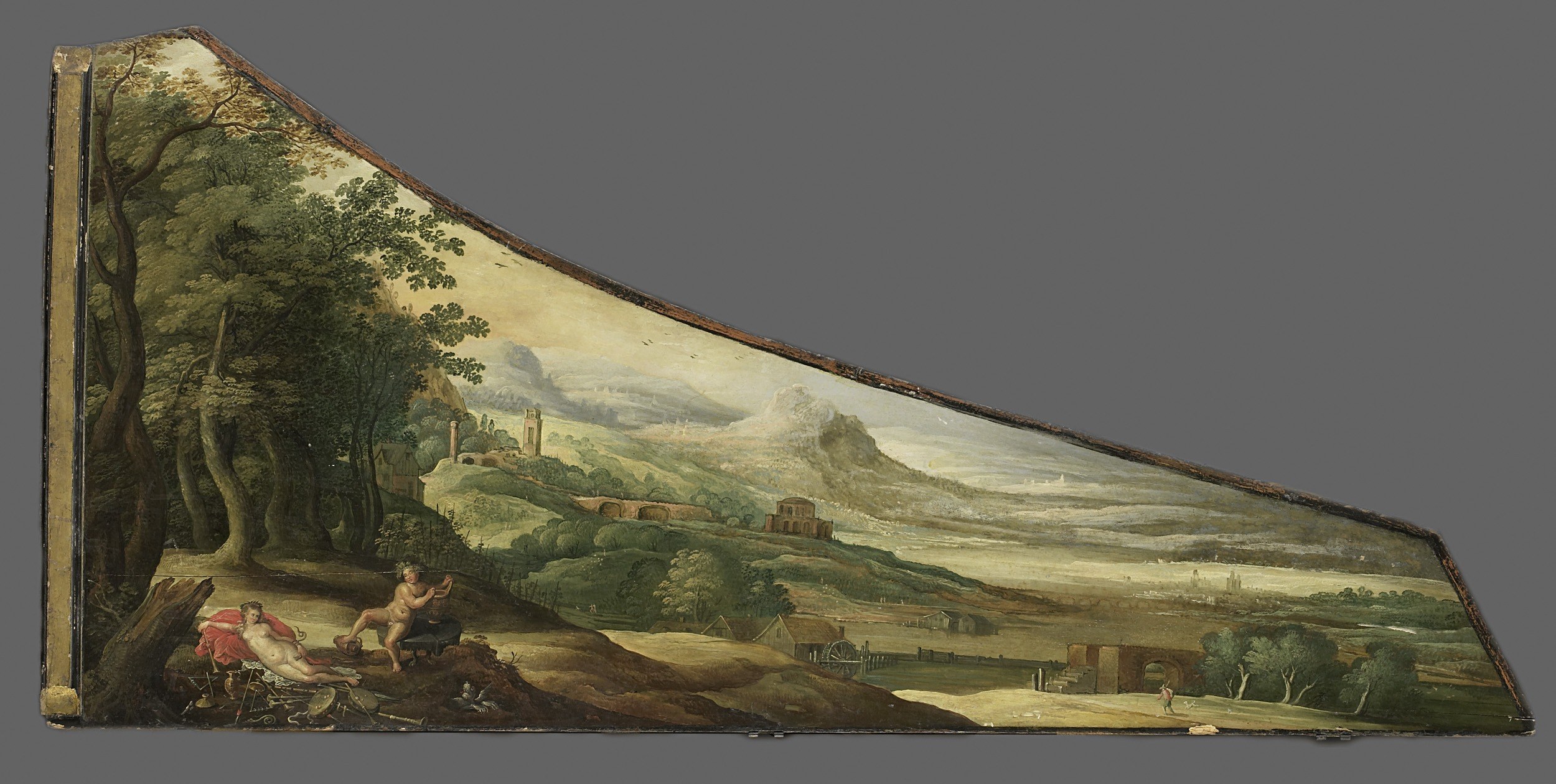
This is The Death of Euridice, painted by the Flemish landscapist Joos de Momper the Younger around 1632. The painting is held in a private collection. Despite its grand scale and sweeping vista, the entire narrative turns on one small, almost invisible detail hidden in the dark soil of the foreground.
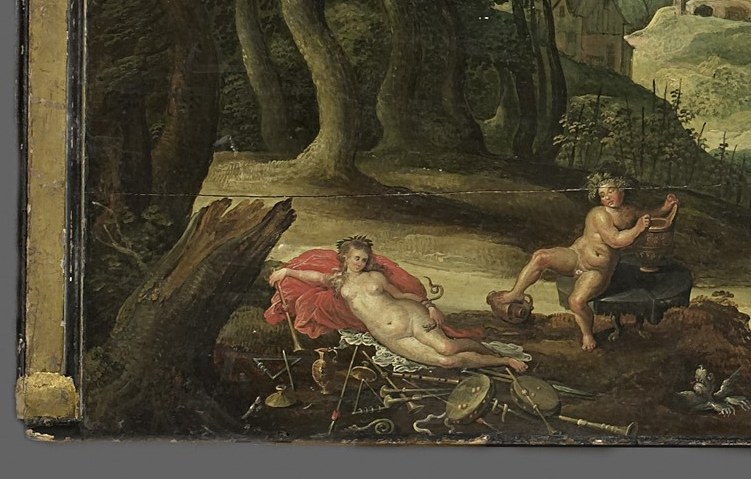
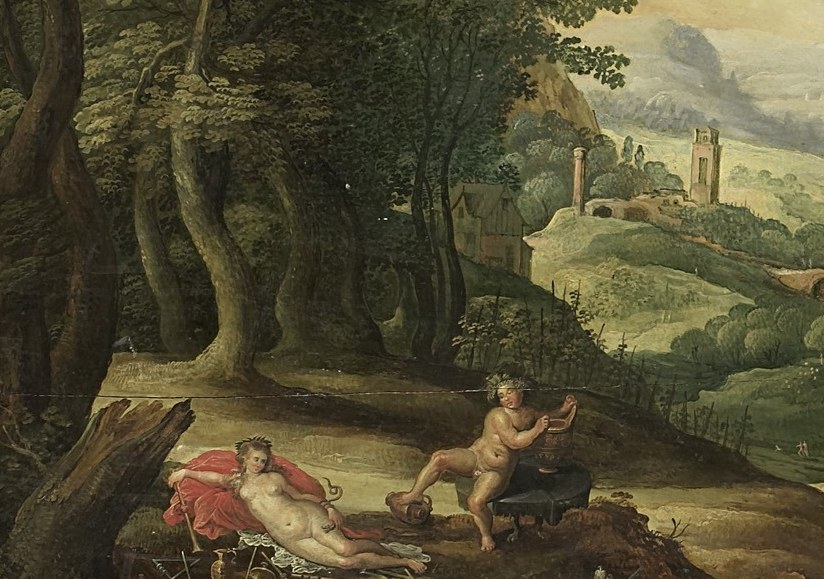
Look at the foreground figures. Eurydice lies dying, her gaze fixed upward on Orpheus, who kneels and reaches for her. It is an image of irreversible loss, but the cause is easy to miss. Near her feet, a tiny dark serpent coils in the undergrowth. That snake is the myth made visible, the single point on which the whole tragedy pivots.
The landscape itself is coded. The river winding through the middle distance echoes the serpent's shape, a formal rhyme that guides the eye toward the underworld. In Ovid's telling, the Styx is the river that divides the living from the dead, and Orpheus will soon cross it to retrieve her. De Momper keeps the tragedy in deep shadow on the left, while the brightest light breaks over the distant hills on the right, illuminating a Flemish village that continues, oblivious, in the world of the living.
De Momper was successful in his lifetime, known for panoramic views like this one. Here he uses the conventions of landscape to do something quietly radical: he makes the scenery itself an actor in the myth. The serpent, the river, and the dividing light do not just frame the story. They tell it.
Details

Transcript
A woman lies dying in the foreground. A man reaches for her, too late. The cause is almost invisible, coiled near her feet. A serpent's bite killed Eurydice on her wedding day. The river behind her winds like a second snake. In the myth, that river is the Styx, boundary of the dead. The light abandons the foreground. It falls only on the far hills. The world of the living glows, but the tragedy stays in shadow.