Wounded Eurydice by Jean Baptiste Camille Corot
Jean-Baptiste-Camille Corot's "Wounded Eurydice," painted in 1868, captures a poignant moment from Greek mythology. This oil painting, held at the Art Institute of Chicago, showcases Corot's late-career interest in mythological subjects rendered with a deep Romantic sensibility.
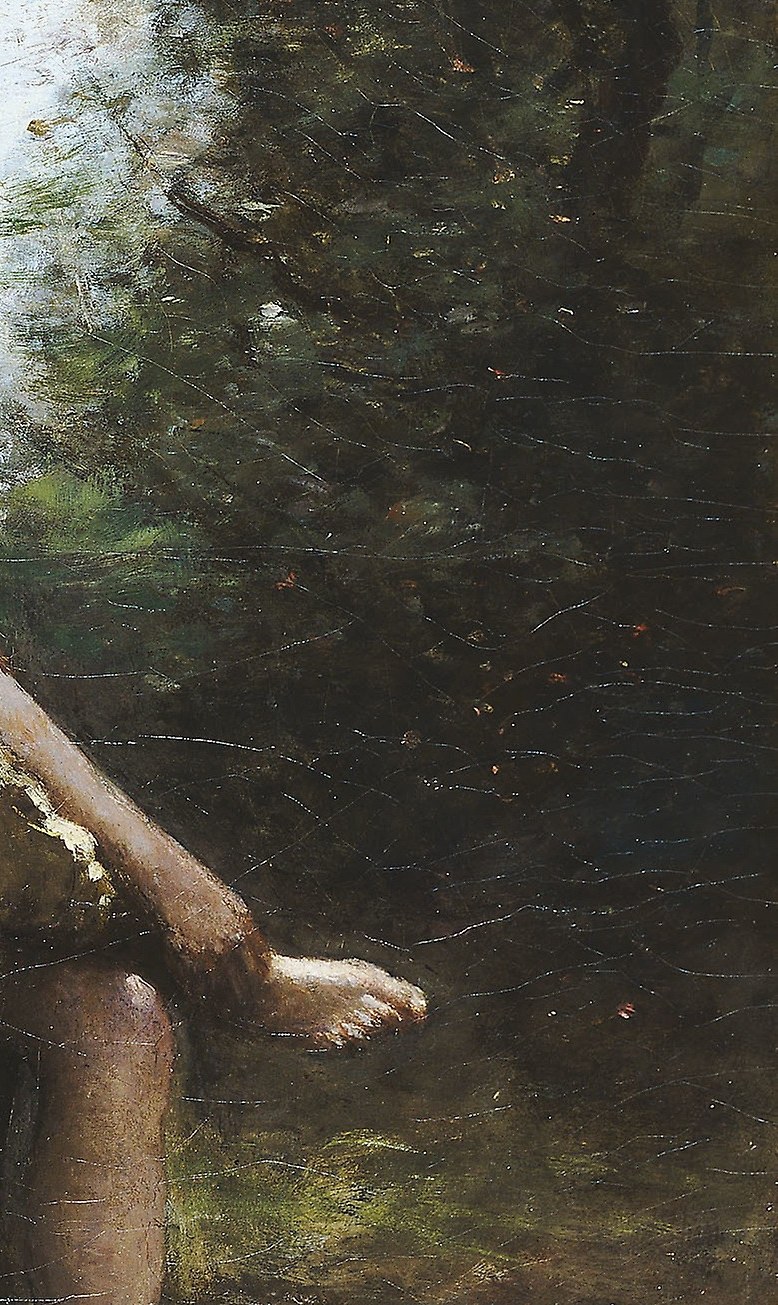
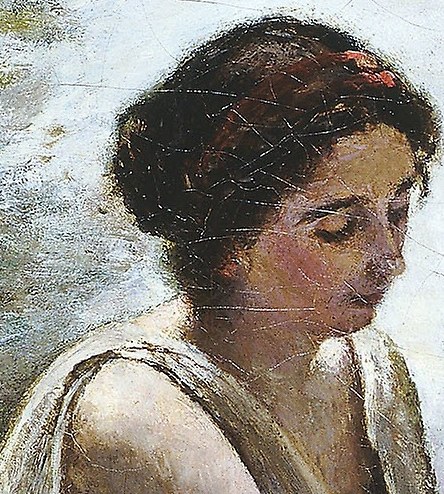
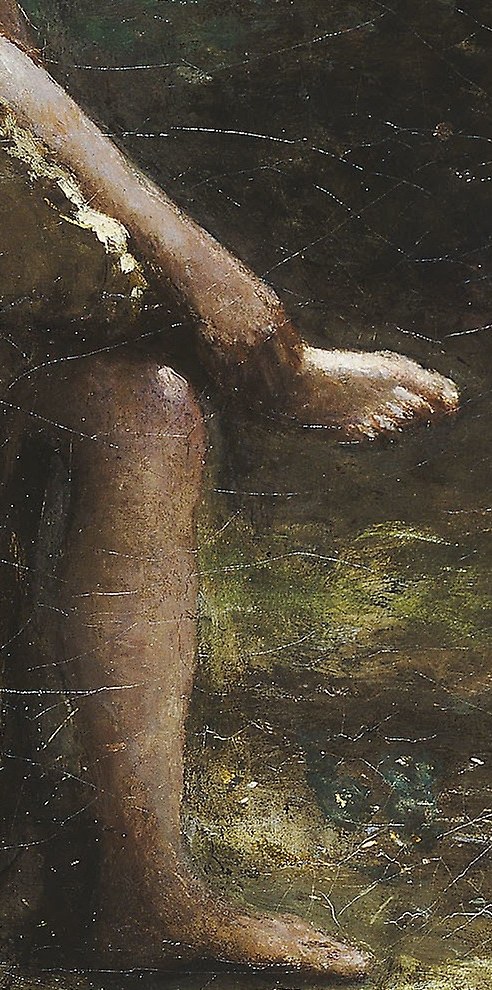
Look closely at Eurydice's injured foot, which is the central focus of her tragic capture. Her downcast gaze and the muted, sorrowful atmosphere evoke themes of loss and vulnerability. The composition's strong chiaroscuro, with its deep shadows and filtered light, heightens the drama of the scene.
While Corot was primarily celebrated for his landscapes, he turned to historical and mythological subjects in the 1860s. This work bridges Neo-Classical traditions with the plein-air innovations that would influence Impressionism, demonstrating his direct, almost tactile handling of paint.
What emotions does Corot's depiction of Eurydice evoke in you?
Details
Transcript
This is Eurydice, from Greek myth. She has been bitten by a snake, and is dying. The muted colors and deep shadows create a somber mood. Corot painted this in 1868, late in his career. He was known for landscapes, but turned to myth later on. Her downcast gaze evokes themes of loss and vulnerability.