After the Storm by Albert Bierstadt
Albert Bierstadt's 'After the Storm' (ca. 1870-80) is not a weather report. It is a sermon in oil paint, part of the American Wing's collection. Bierstadt, a German-American painter of the Hudson River School, built his career on vast landscapes of the American West that doubled as moral allegories. To his audience, a storm passing and light returning was never an accident. It was a sign of providential order reasserting itself over chaos.
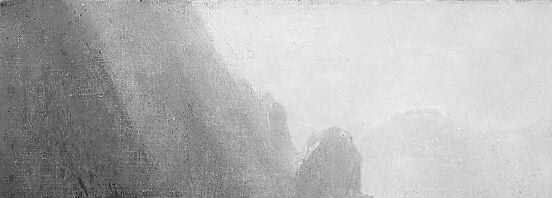
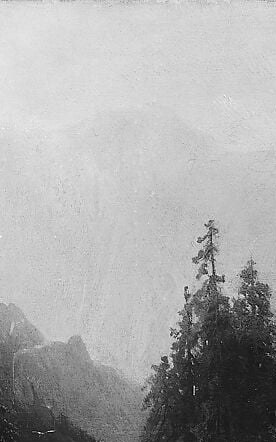
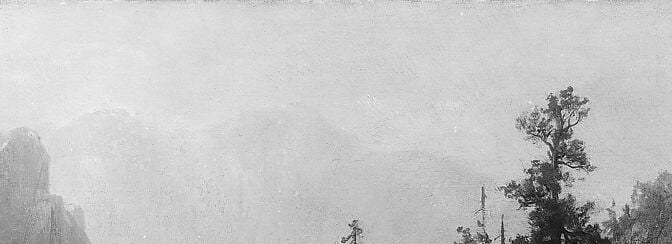
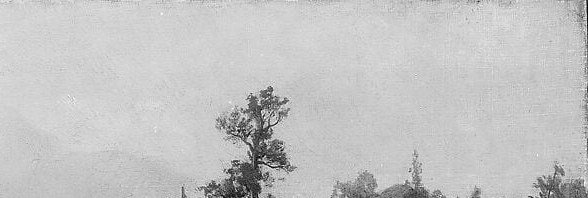
Look at the two halves of the painting. On the upper left, a heavy, dark cloud mass is still pressing down. It is retreating, but it has not left the frame. Directly beneath that weight, a lone pine stands perfectly vertical. Bierstadt placed a single, resilient tree under the heaviest darkness as a shorthand for survival. Then your eye moves right and a shaft of light breaks through, illuminating the distant mountains. The painter's technique here is key: he used glazing, thin translucent layers of paint, to make that light feel luminous and soft, a visual reward following the turmoil.
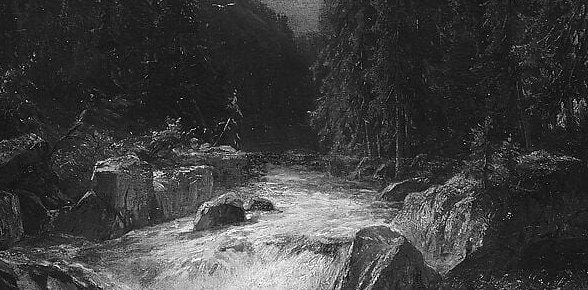
The foreground rapids are still churning, painted in thick impasto that makes the froth feel physically present. This is the storm's last audible voice, still raging, but already surrounded by calm. The tumbled boulders nearby are not just a compositional anchor; they are a record of past floods, evidence that the violence is cyclical and survivable.
Bierstadt was part of the second generation of the Hudson River School, and he joined actual westward expansion journeys to gather his sketches. These paintings were immensely popular back east, offering people a theological view of a wilderness they would never visit. What looks like a simple nature scene to us was, for its original viewers, a promise that light follows darkness. Do you see a sermon, or just a very good painting?
Details
Transcript
Start with the storm cloud mass, still pressing in from the left. It's retreating. The 'before' is still visible in the same frame as the 'after'. Now the single pine. It stands directly under the heaviest weight. Bierstadt used a lone pine as a code for resilience, it survived the chaos. But look at the light shaft breaking through. That's the painter's real argument. For Bierstadt, light punching through darkness was a sign of providential order. The churning rapids below are the storm's last voice, still audible in the froth. Chaos gives way to calm. It always does, in a Bierstadt painting.