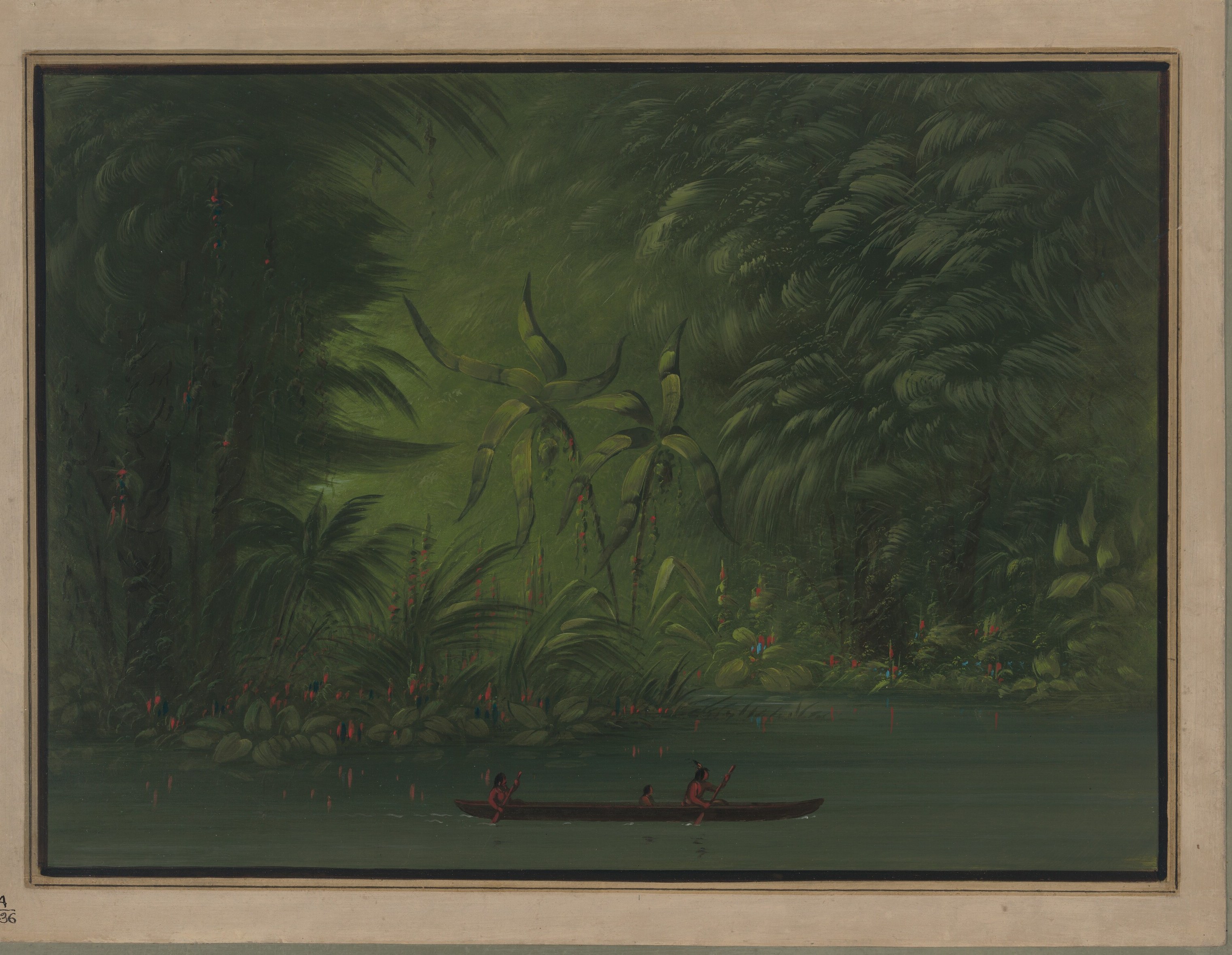
Entrance to a Lagoon, Shore of the Amazon by Catlin, George
George Catlin was in his sixties when he painted 'Entrance to a Lagoon, Shore of the Amazon' in 1862. He had already spent decades traveling the American frontier, documenting the lives of Plains Indians in hundreds of portraits he believed would preserve a vanishing world. But later in life, his gaze turned south, to the Amazon.
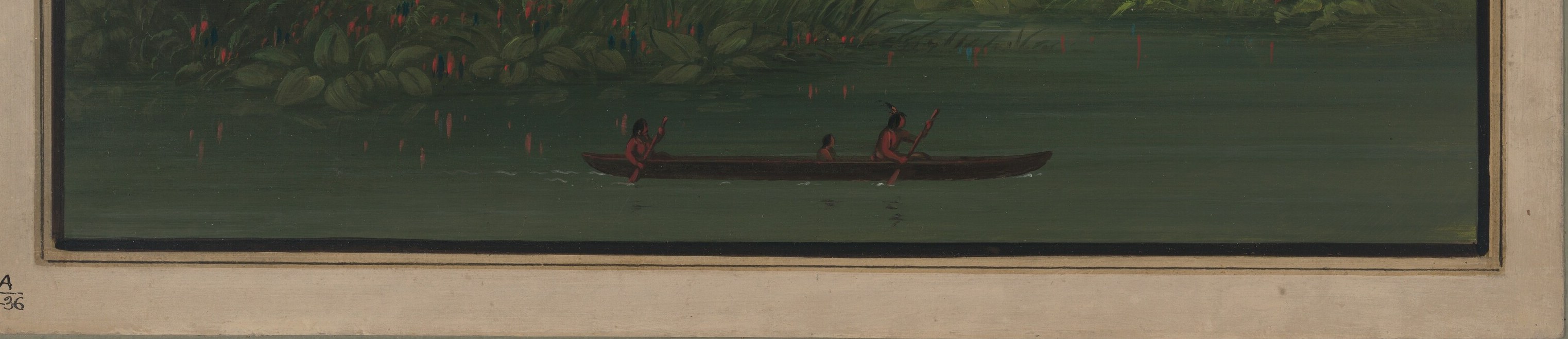
This small oil painting, done on a portable card mounted to paperboard, captures a quiet, almost claustrophobic stretch of jungle and still water. If you look closely, you will find three people. Two share a dugout canoe near the center of the composition, one paddling gently. Then there is a third, easy to miss: a solitary figure swimming in the lagoon, just ahead of the canoe, barely breaking the surface.
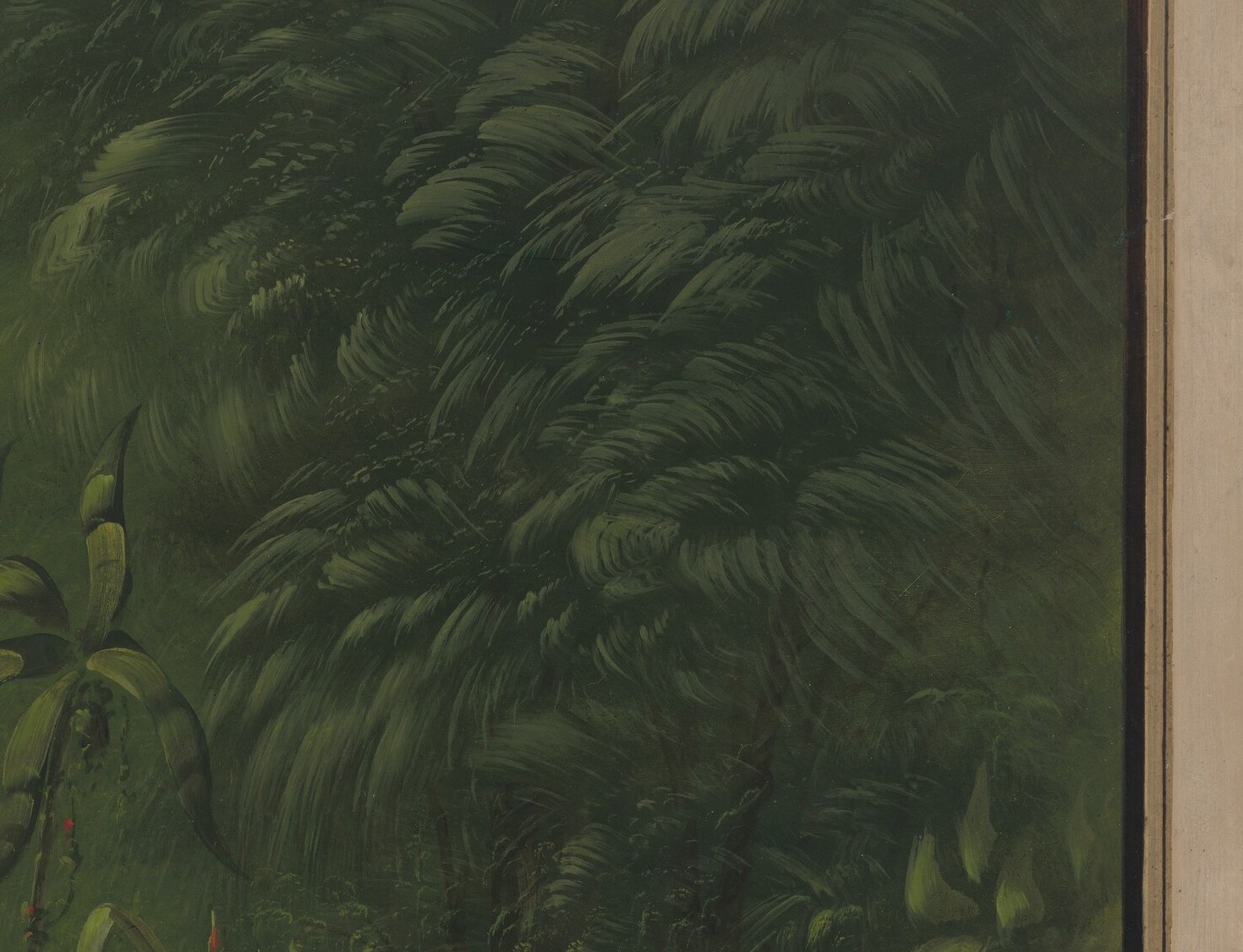
Catlin was not a trained academic painter. He was a lawyer who taught himself to paint because he believed certain things needed to be seen before they were gone. The same documentary impulse that took him to the Plains brought him here, to a lagoon whose stillness he rendered with precise, delicate brushwork on a support small enough to carry into the field.
We still do not know who the swimmer is, or why Catlin chose to include them. The painting offers no answers, only the image itself: a quiet moment, a stranger in the water, and a jungle that has since changed beyond recognition.
Details
Transcript
He was famous for painting Native American chiefs. But in his sixties, George Catlin sailed for the Amazon. He wanted to see what the wilderness held before it vanished. A small canoe carries two travelers through the stillness. Now look at the water, just beyond the bow. A single figure swims alone in the lagoon. No one knows who they were or why Catlin placed them there.