Jupiter and Mercury at Philemon and Baucis by http://www.wikidata.org/.well-known/genid/3bade0b3dc68d9dc4494dbc952c016ec
Jupiter and Mercury at Philemon and Baucis, painted by Peter Paul Rubens around 1622, shows the moment two gods sit down to eat in the poorest house in Phrygia. The story comes from Ovid: Jupiter and Mercury walk the earth disguised as mortals, and a thousand doors are shut in their faces. Only a elderly couple living on almost nothing takes them in.
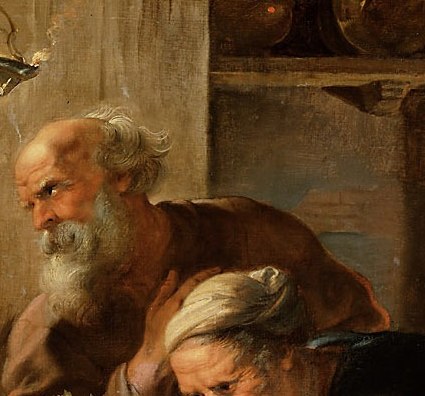
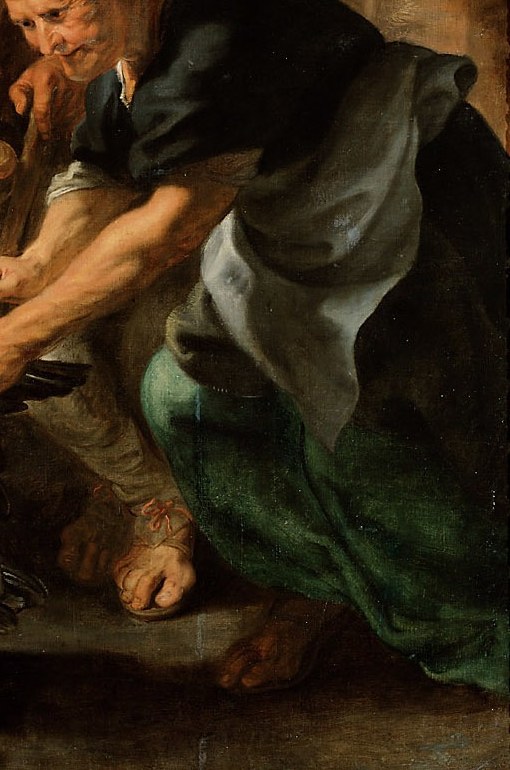
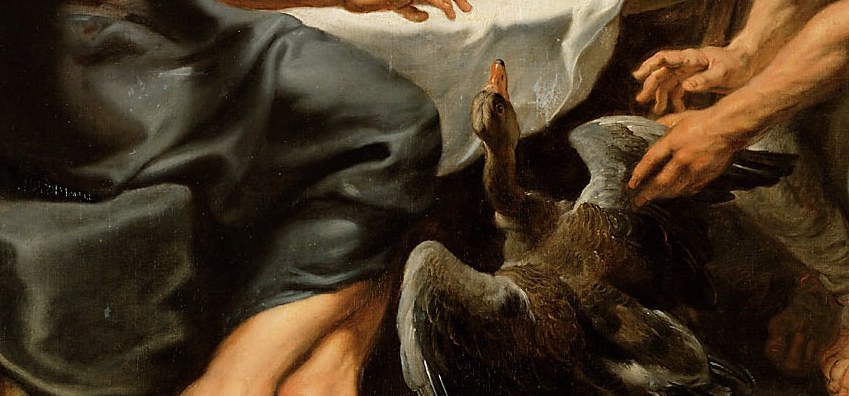
Rubens stages the whole episode in a single dim room. An old man with a white beard offers his seat; his wife Baucis bends to the floor to catch their one goose, the meal she cannot afford to lose. A plain table holds a bowl of fruit, a few vessels, a jug of wine. No gold, no architecture, no sign the visitors are anyone special, except for the light.
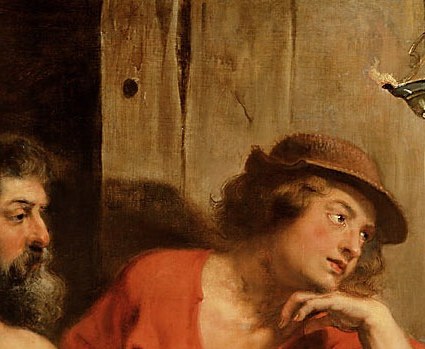
The light is the argument. It hits Jupiter's bare shoulder and Mercury's vivid red garment, making the gods physically brighter than their hosts. Rubens painted this in the early 1620s, when his handling of flesh and chiaroscuro was at its most sculptural. The painting lived through centuries as a quiet devotional piece about hospitality, though it has never been among the artist's most famous works.
The reward for the couple's welcome was transformation: their hut became a temple and they were granted a single wish. Look at the wine jug near the table's edge. In the story, it refilled itself all night long. Rubens placed it in the middle ground, unremarked, as if the miracle was always meant to be ordinary.
Details
Transcript
Two travelers, turned away at every richer door. Here, an old man welcomes them without question. His wife strains to catch their finest meal. One small bird, and it was everything they had. Look closer at the younger guest. That face belongs to a messenger of the gods. And the older man's body betrays the king of heaven. The wine they poured never ran out.