The Crucifixion by Ugolino di Nerio
View the artwork: The Crucifixion →
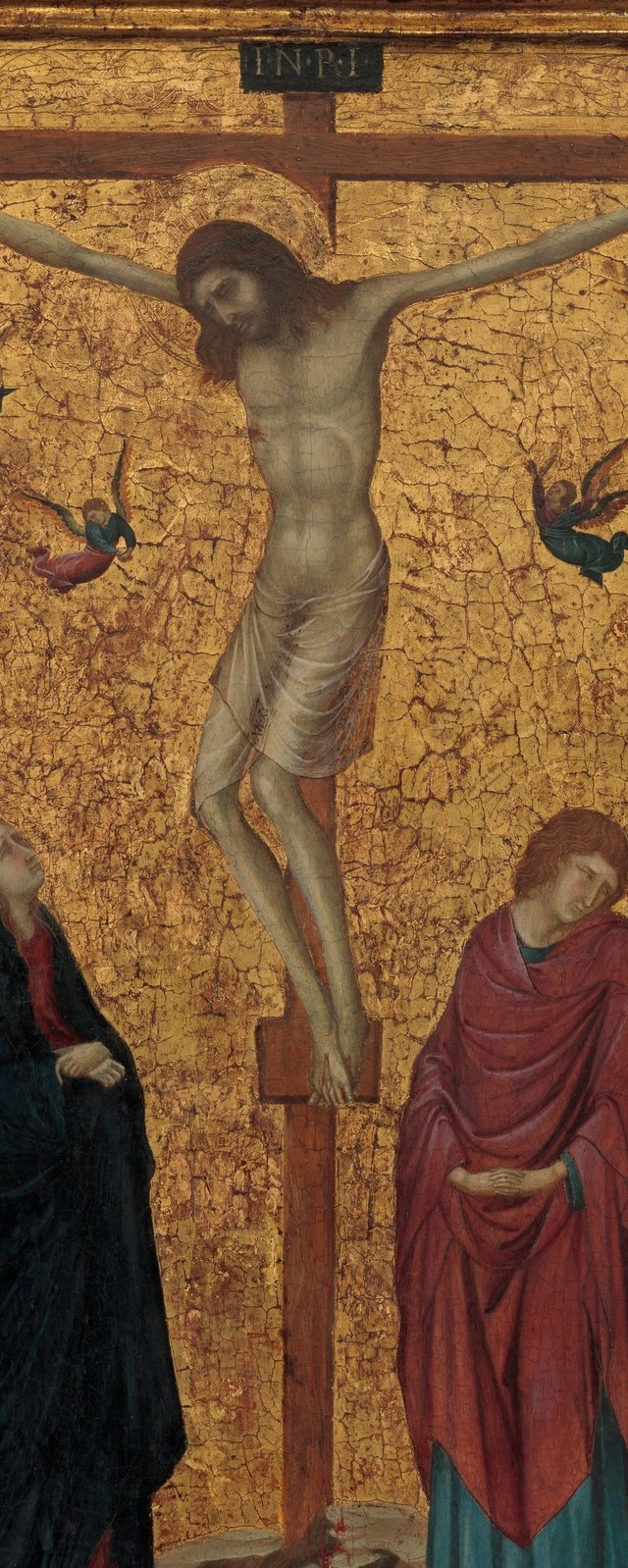
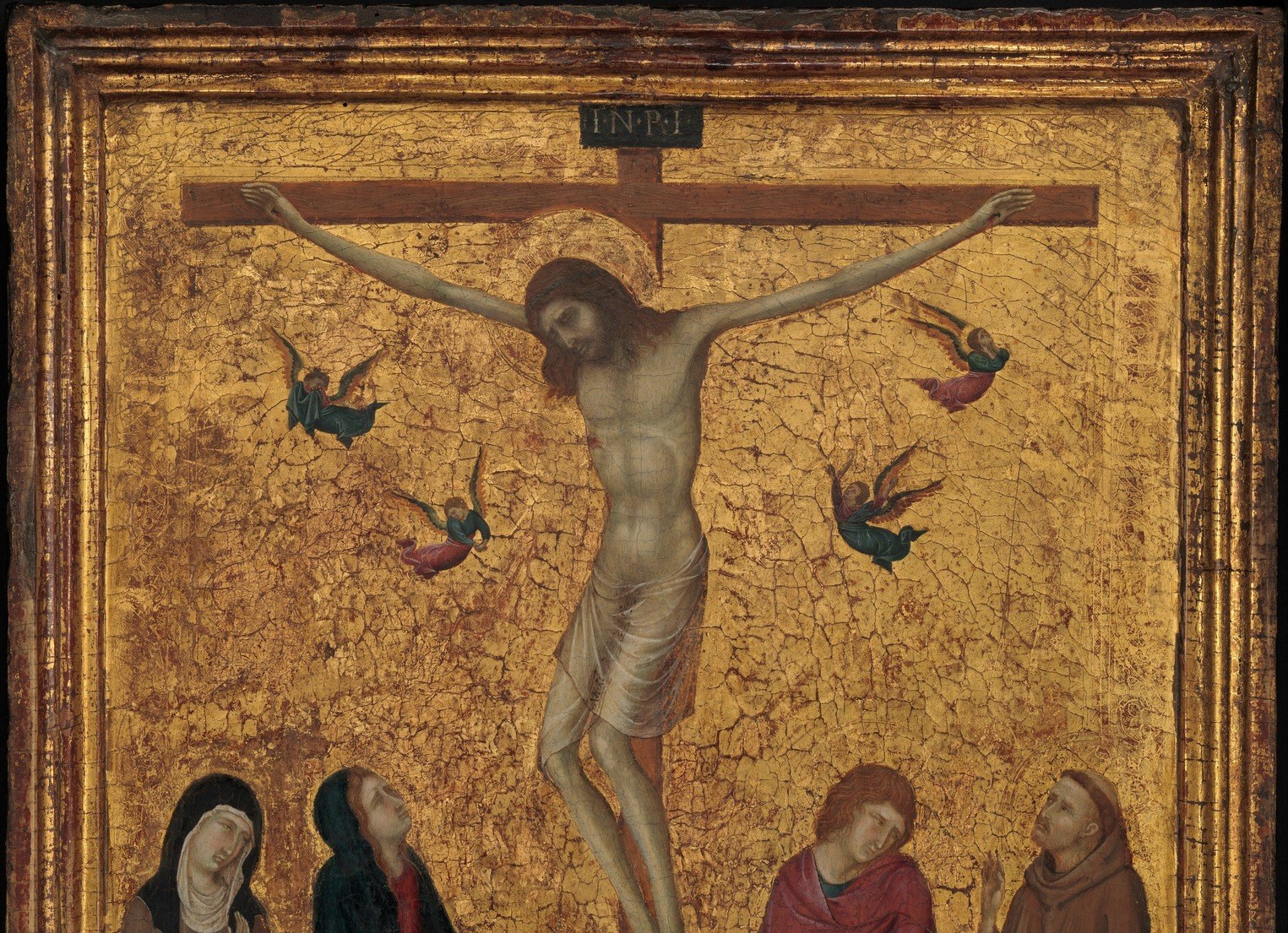
The Crucifixion by Ugolino di Nerio, painted around 1315 in Siena, is exactly the kind of painting you can scroll past in a gallery: a small gold-ground panel, a familiar subject. But Ugolino hid rewards for anyone who stops.
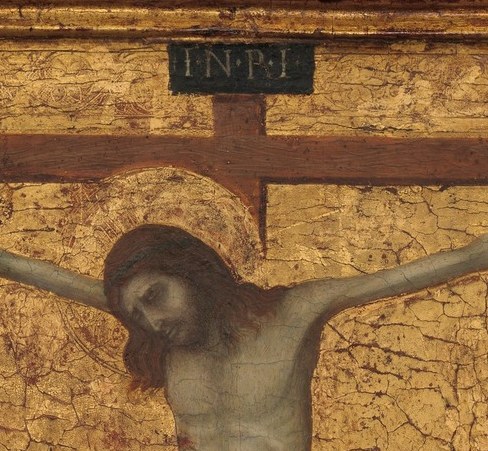
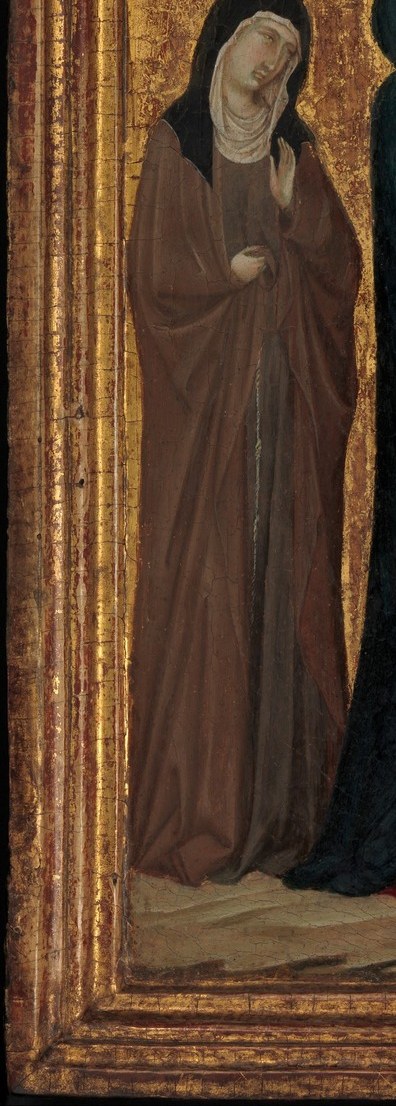
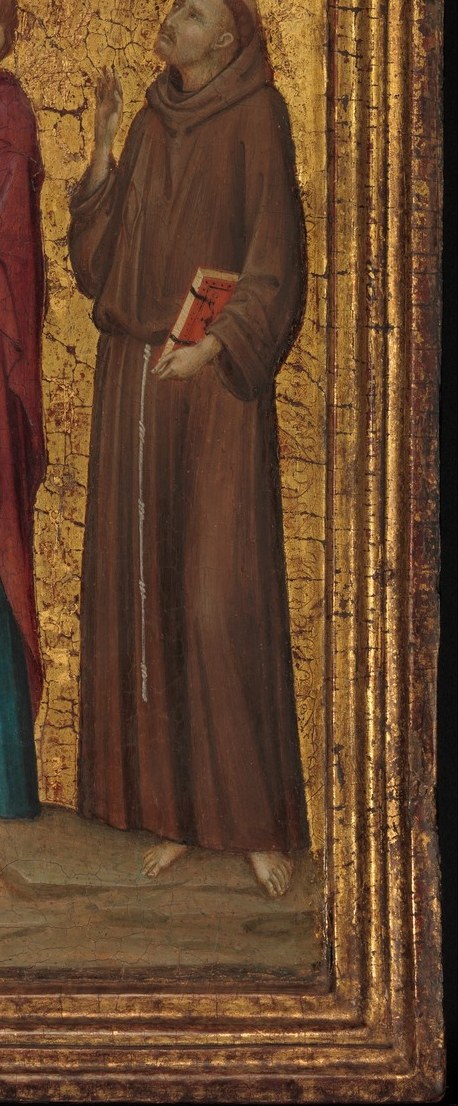
First, the INRI tablet at the top of the cross still carries its lettering, easy to miss at this scale. Second, the man holding a book is Saint John the Evangelist, look closely and you will see the tiny red codex, his Gospel, painted with precision most viewers never notice. And third, the woman in brilliant scarlet is not one of the usual mourners. She is Saint Clare of Assisi, whose red habit cuts through the somber palette like a beacon.
Ugolino di Nerio was a leading follower of Duccio, and his work helped carry Sienese painting into Florence, where he painted for both Santa Maria Novella and Santa Croce. This panel belongs to that tradition: graceful Gothic line, a gold-leaf sky now cracked into a delicate web of age. The cracking is not damage in the usual sense, it is the surface admitting it is seven centuries old.
Next time you see a small panel Crucifixion, give it an extra ten seconds. The painter probably left you something to find.
#arthistory #sienesepainting #ugolinodinerio
Details
Transcript
A Crucifixion, painted in Siena around 1315. Gold leaf, angels, mourners. Standard, until you slow down. First find: the tablet above Christ's head still says INRI. Second: Saint John holds a tiny red codex, his Gospel. Third: that brilliant red figure is Saint Clare, a rare guest at the Cross. 700 years of cracking gold have turned the background into a map of time.