Artwork
The Crucifixion
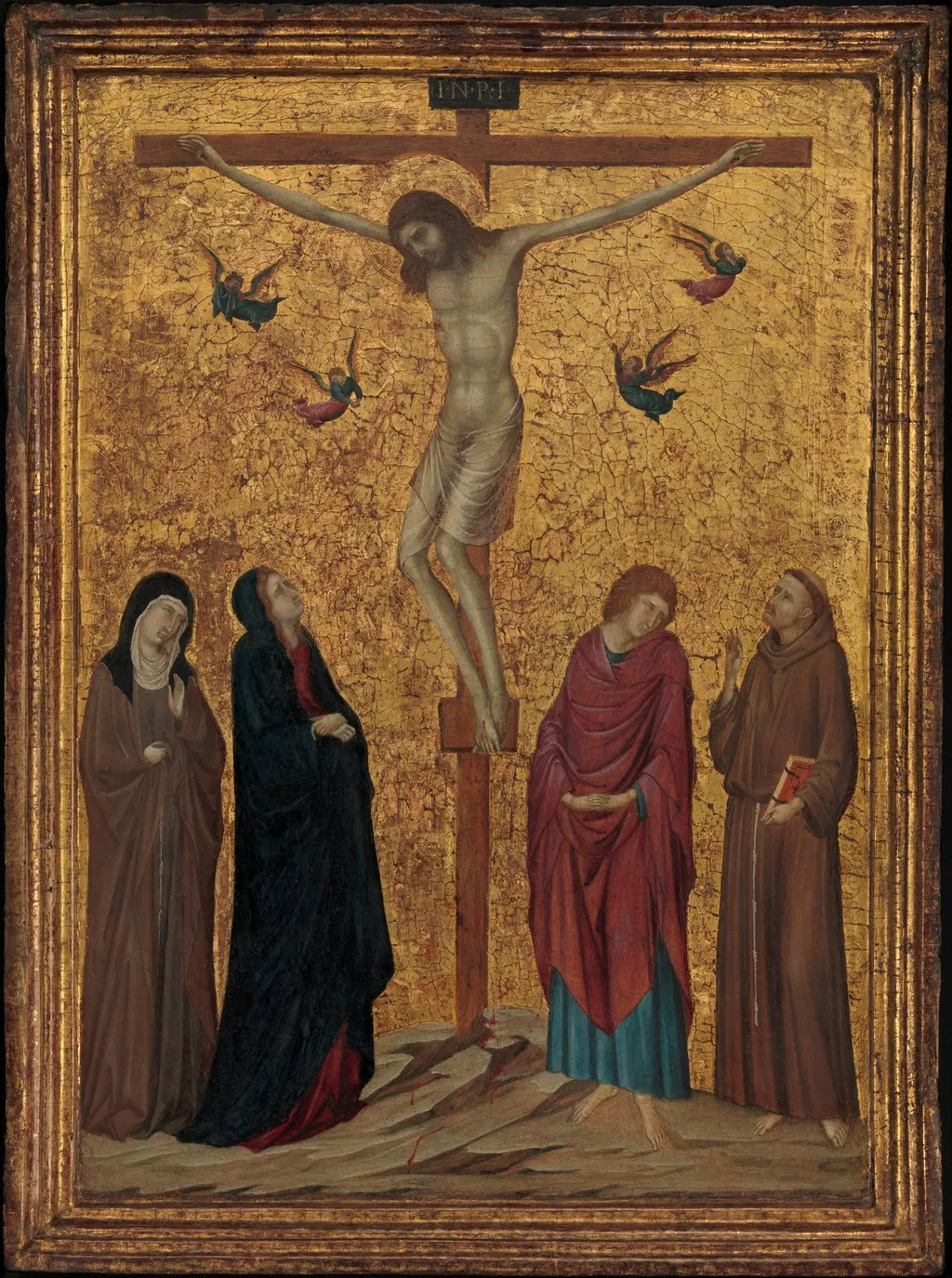
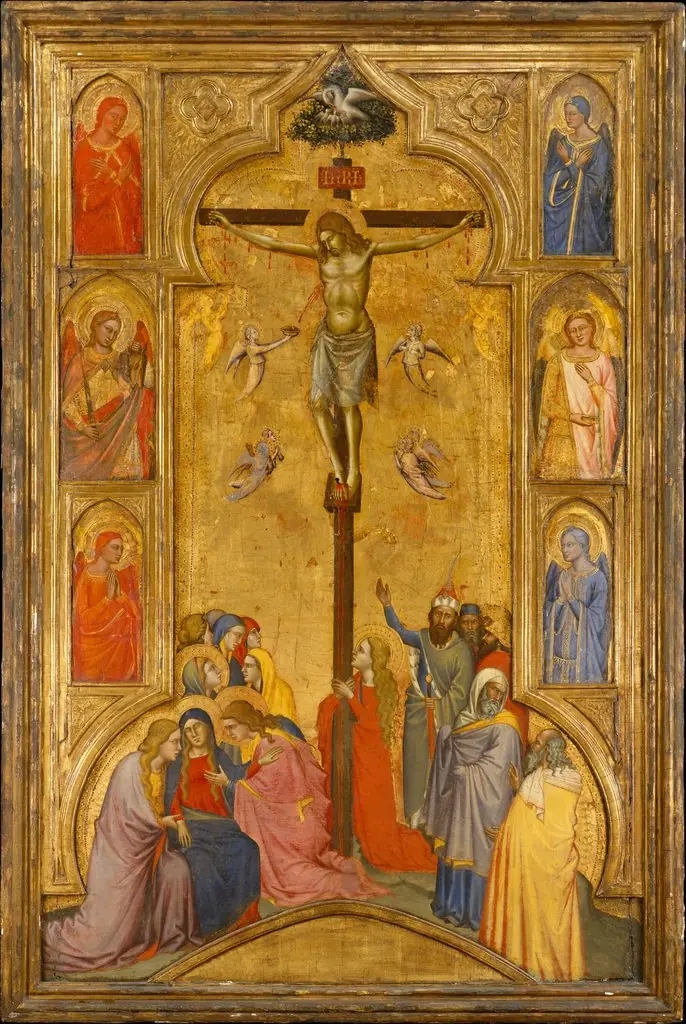
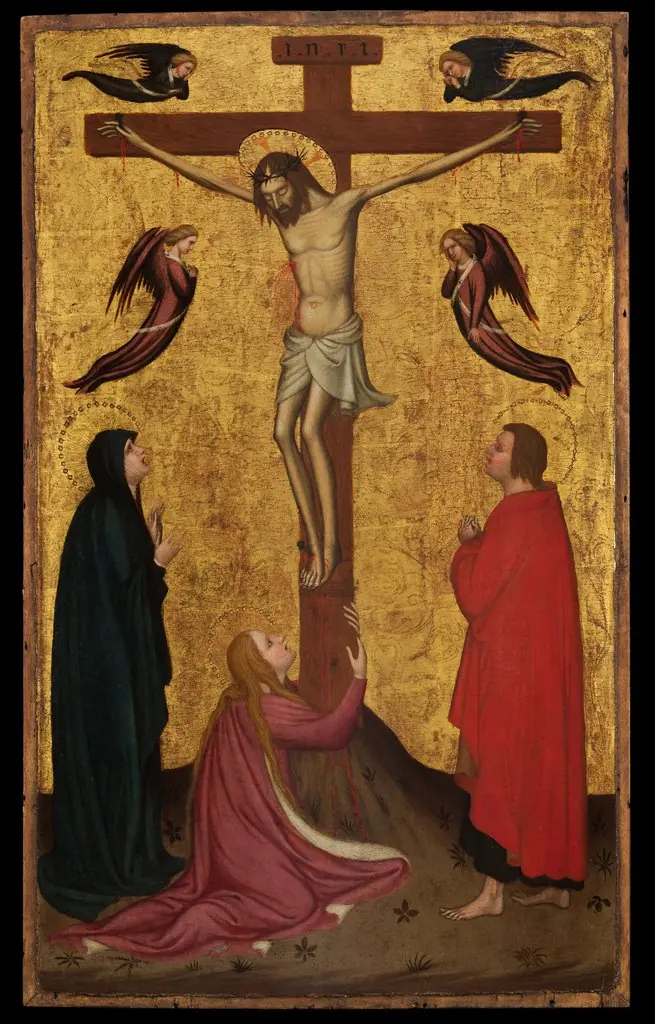
The Crucifixion is a tempera painting by the Sienese School artist Ugolino di Nerio. It dates from 1315 and is held in the collection of the Metropolitan Museum of Art.
About this work
Subject & Meaning
This inclusion of the Franciscan saints reflects the order’s emphasis on Christ’s suffering and their devotional imitation of the Passion.
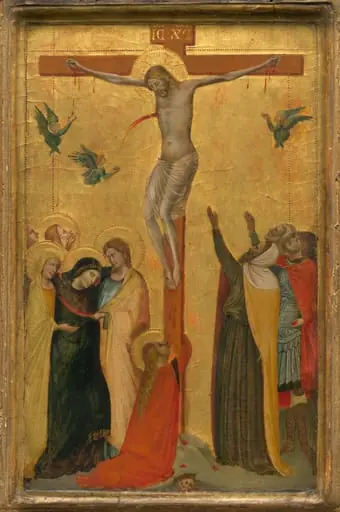
The painting portrays the Crucifixion of Jesus Christ flanked by the Virgin Mary and Saint John the Evangelist, with Saints Francis and Clare of Assisi kneeling at the foot of the cross. This inclusion of the Franciscan saints reflects the order’s emphasis on Christ’s suffering and their devotional imitation of the Passion. The gold leaf background and tempera on wood typical of early Sienese panel painting elevate the scene, underscoring its sacred nature while highlighting the theological message of redemption through Christ’s sacrifice.
Technique & Style
The work is executed as a tempera painting on a wooden panel support, with the surface enriched by gold leaf, a technique typical of early fourteenth‑century Italian panel painting. The medium consists of tempera bound with egg yolk applied to the wood, while the gold leaf provides a luminous background that highlights the sacred figures. The painting depicts the Crucifixion surrounded by saints, reflecting its religious genre and the devotional function of the panel.
Handling of the paint is characterized by fine linear detailing and a restrained palette, consistent with the Sienese Gothic style of the period.
History & Provenance
The painting is attributed to Ugolino di Nerio and dated to 1315. Executed in tempera and gold leaf on a wood panel, it reflects the artist’s Sienese style of the early fourteenth century. Prior to entering the Metropolitan Museum of Art, the work passed through the collections of Frederick Mason Perkins, the connoisseur Bernard Berenson, and the collector George Blumenthal.
These provenance entries, recorded in the object’s collection history, trace its transfer from early twentieth‑century private hands to its current institutional home. No earlier ownership or specific commission is documented in the available sources.
The Crucifixion is currently held by the Metropolitan Museum of Art. Prior to entering the museum's collection, the painting passed through the hands of several notable figures, including Frederick Mason Perkins, Bernard Berenson, and George Blumenthal. Created around 1315, the work has been featured in at least two documented exhibitions: Italian Primitives, and The Art of Francesco: Masterpieces of Italian Art and Lands of Asia from the Thirteenth to the Fifteenth Century.
Legacy
The Crucifixion by Ugolino di Nerio, painted circa 1315, entered the Metropolitan Museum of Art through the collections of Frederick Mason Perkins, Bernard Berenson and George Blumenthal, a trajectory documented in its Wikidata entry. Its presence in major surveys such as “Italian Primitives” and “The Art of Francesco: Masterpieces of Italian Art and Lands of Asia from the Thirteenth to the Fifteenth Century” underscores a sustained scholarly attention that has positioned the work as a reference point for studies of early Italian devotional painting. The attribution to Ugolino di Nerio and the inclusion of saints such as Francis of Assisi within the composition have influenced subsequent iconographic programs in Italian religious art.
Overview
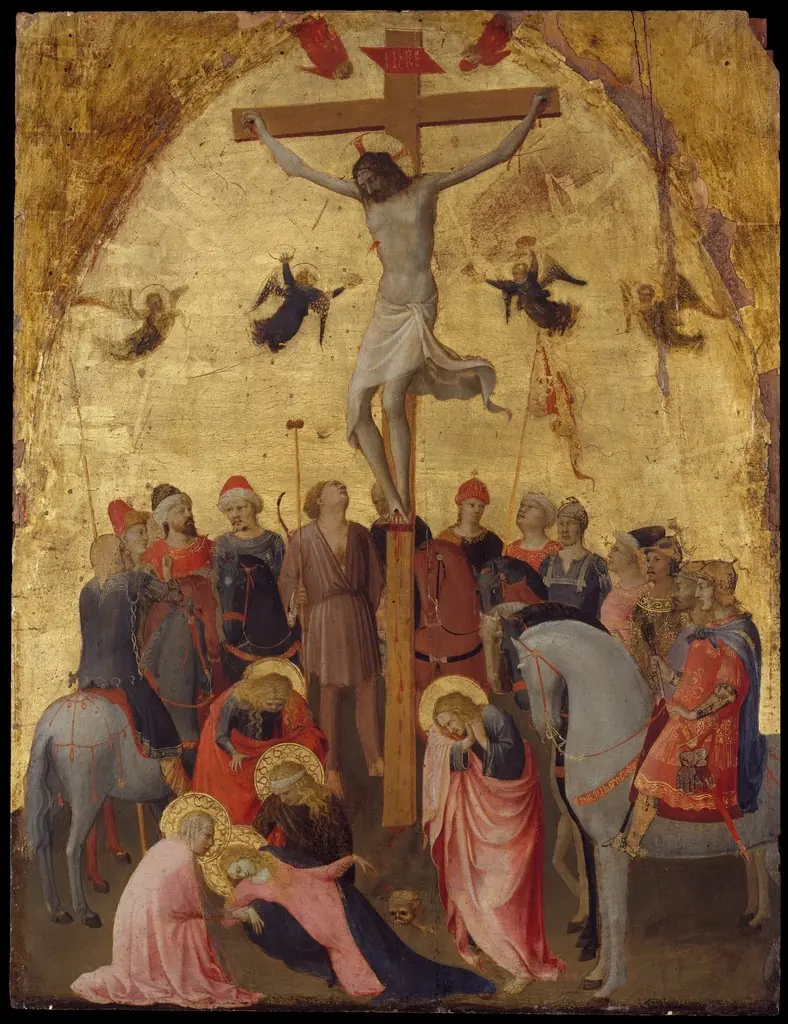
This painting, titled The Crucifixion, is rendered on a wooden panel. It centrally depicts Christ on the cross, an event fundamental to Christian faith. Below, four figures witness the scene, while two angels are positioned above.
The artwork's gold background, now visibly cracked and flaking, indicates its age and traditional artistic approach, underscoring its historical and devotional significance.
Own this work as a print
Artist & collection
Artist
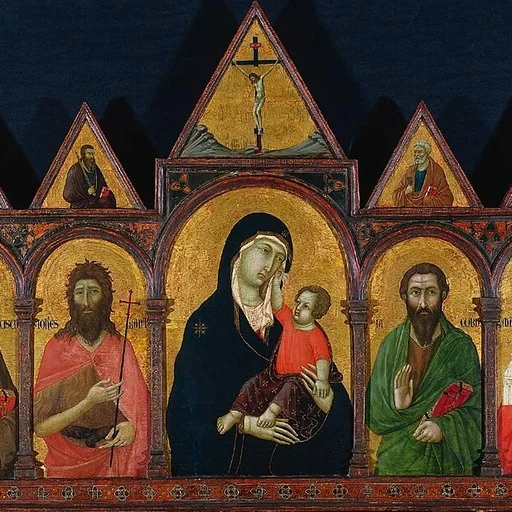
Ugolino di Nerio (1280? – 1349) was an Italian painter active in his native city of Siena and in Florence between the years 1317 and 1327. He was a follower of Duccio di Buoninsegna, from whose Maestà some of his…