Standing Virgin and Child by http://www.wikidata.org/.well-known/genid/c92738694ab4aa997f1fa16c5964aae8
In this small panel from around 1420, "Standing Virgin and Child" by an unknown Austrian Master, now at The Metropolitan Museum of Art, an entire medieval world of love and sorrow is held in a single exchange of glances.
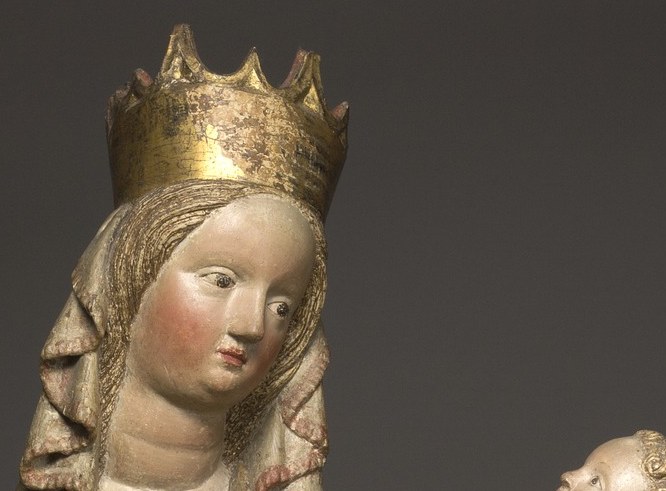
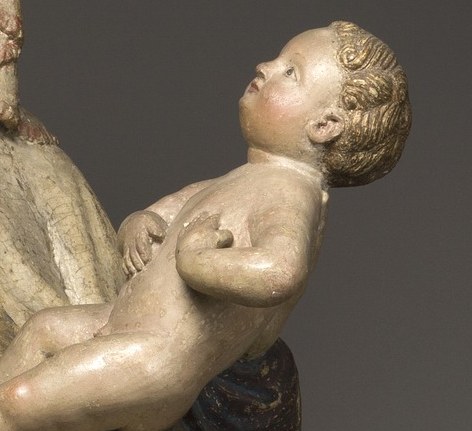
Look first at the eyes: Mary's are lowered, hooded, fixed on her son. The Christ Child looks back up. This locked mutual gaze is the painting's entire emotional engine, it shuts out every distraction, including you the viewer, creating a private, intimate space that has endured for six hundred years.
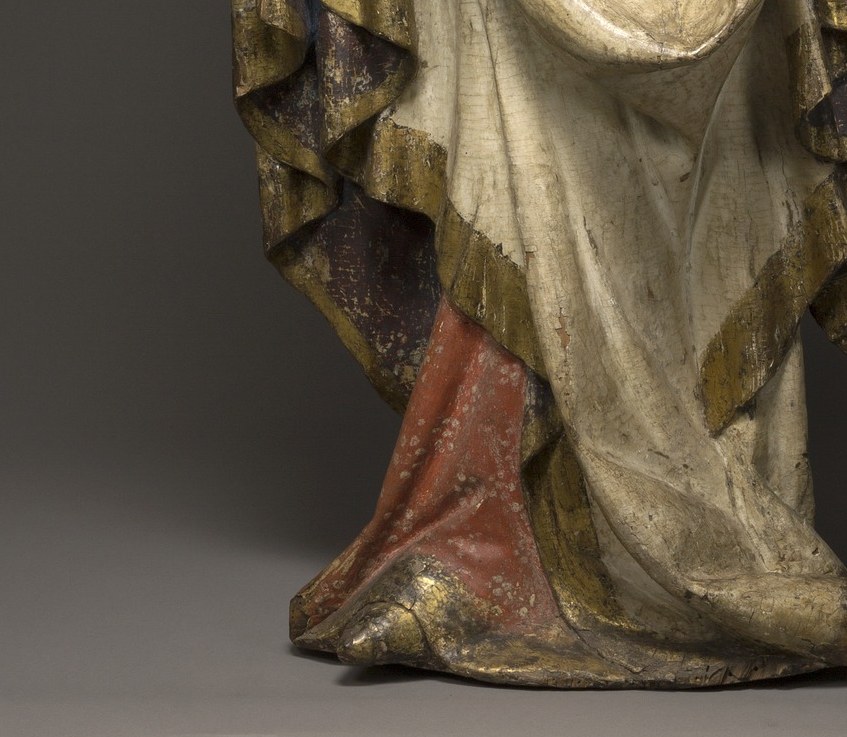
Then notice the hem. The artist draped Mary in a sweeping white robe, a symbol of her purity, but let a sliver of red undergarment peek out at the bottom. In the language of Gothic art, that was no accident. The red prefigures the blood of the Crucifixion. The mother is literally swaddled in her child's future suffering, a grief the painting refuses to state aloud but cannot suppress.
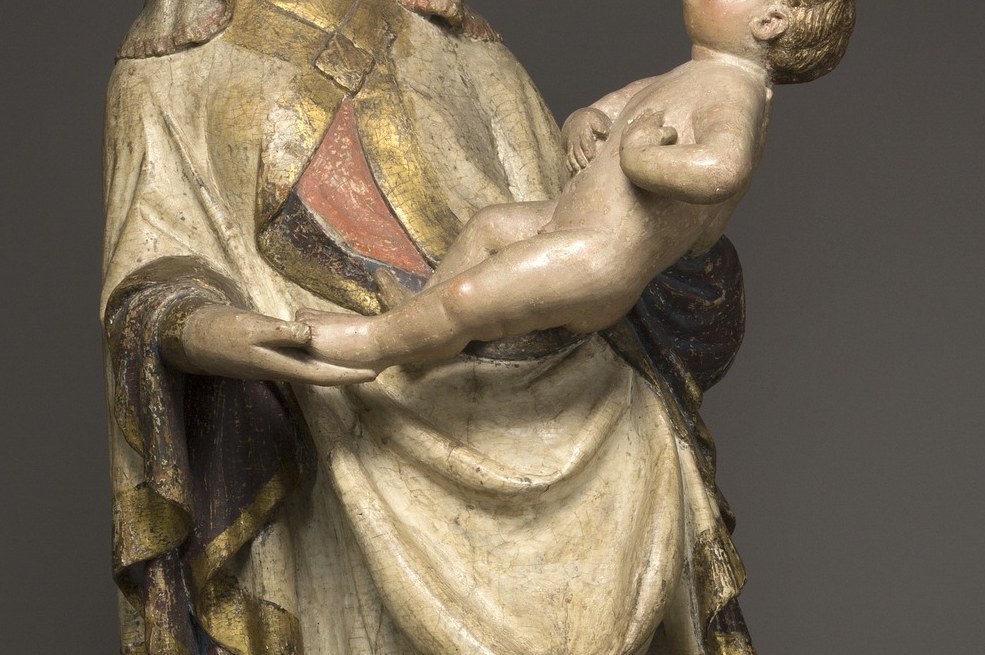
The artist used a dark, unadorned background and early chiaroscuro, strong modeling in light and shadow, to push the figures forward. The technique makes them feel like sculpture: solid, present, almost touchable. Her crown is gilded, her status as Queen of Heaven secure, but her gesture undercuts all majesty. She cradles him, she supports him, she does not show him off.
We're looking at an object made for private prayer, intended to be held close. Six centuries later, it still demands that closeness. What does it cost a mother to hold everything that will happen in her arms?
Details

Transcript
She is a queen, but she doesn't look at us. He is the divine, but right now he's just her baby. The white robe is virginity. The red hem beneath it? That red was a signal. It prefigures the Passion to come. His nakedness is total vulnerability against her layered cloth. She doesn't display him. Her fingers just support him. A painted sculpture, standing in silent devotion since 1420.