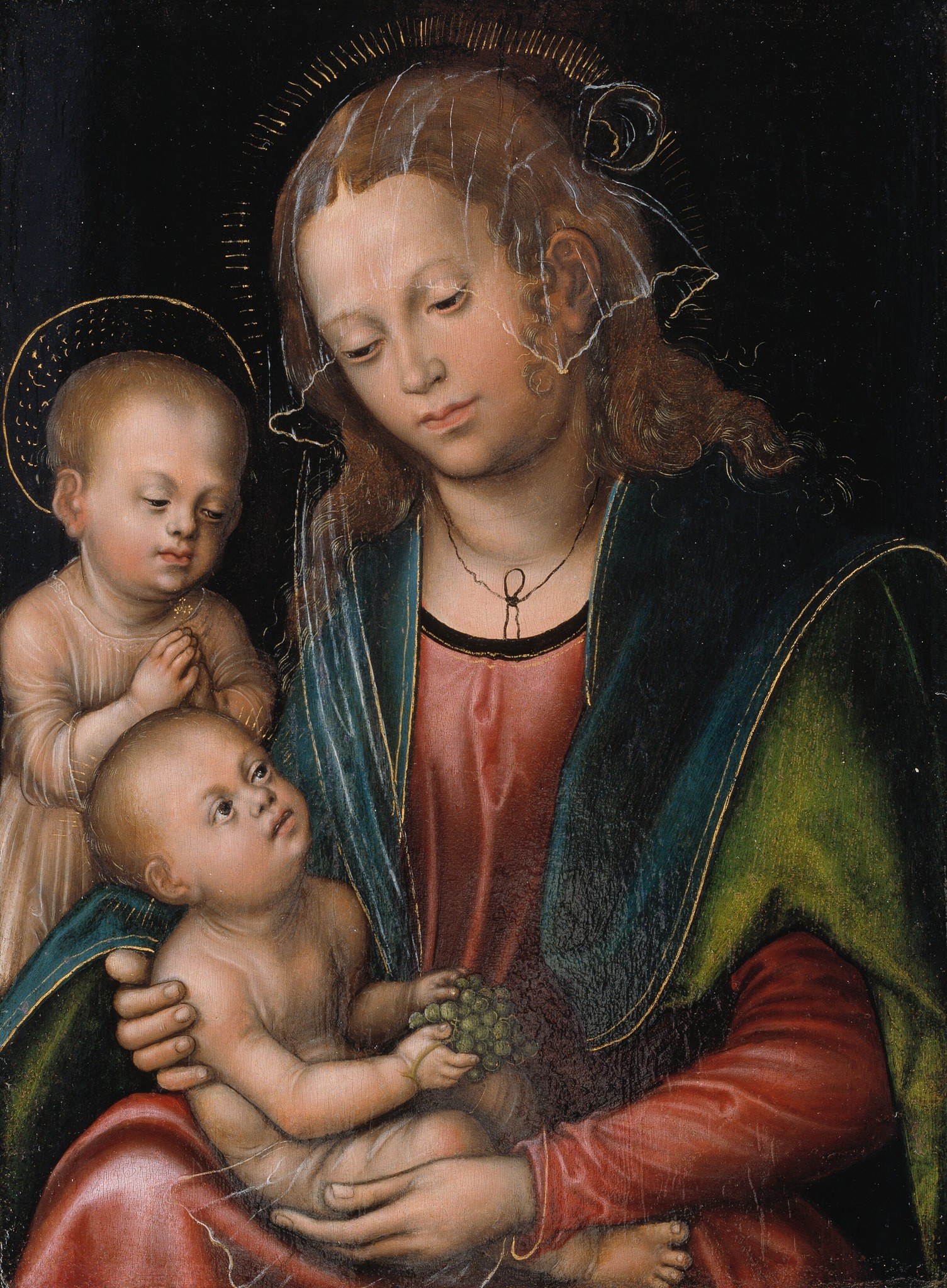
Virgin and Child Adored by the Infant St John by Lucas Cranach the Elder
Lucas Cranach the Elder's "Virgin and Child Adored by the Infant St John" (1512) at the Statens Museum for Kunst, presents a familiar religious tableau with subtle, yet profound, symbolism.
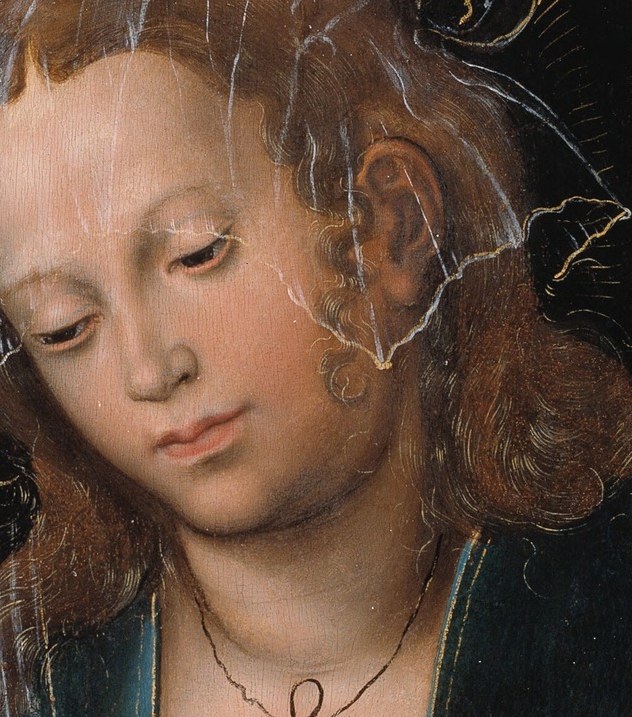
At first glance, the painting draws the eye to the serene faces of Mary and the children. Mary's downcast gaze and the Christ Child's upturned expression convey a deep spiritual connection. But a closer look reveals small details that enrich its meaning.
Observe Mary's simple necklace, a knot that quietly symbolizes unity and divine conception. Even more striking is the tiny sprig of grapes held by the Christ Child, a direct foreshadowing of the Eucharist and his future sacrifice. Cranach, a close friend of Martin Luther, often imbued his religious works with such layered meanings, blending traditional iconography with new theological interpretations.
This painting invites us to look beyond the obvious, revealing the artist's clever way of conveying profound truths through small, deliberate details. What other hidden symbols do you think might be present?
Details
Transcript
This painting by Lucas Cranach the Elder shows a tender scene. The Virgin Mary cradles the Christ Child, with Saint John adoring them. But look closely at Mary's necklace. It's a simple knot, often symbolizing unity. Yet the painter included this unexpected detail. The Christ Child holds a sprig of Eucharist grapes.