Virgin and Child by http://www.wikidata.org/.well-known/genid/f99849fa691c527d870299df8981cc60
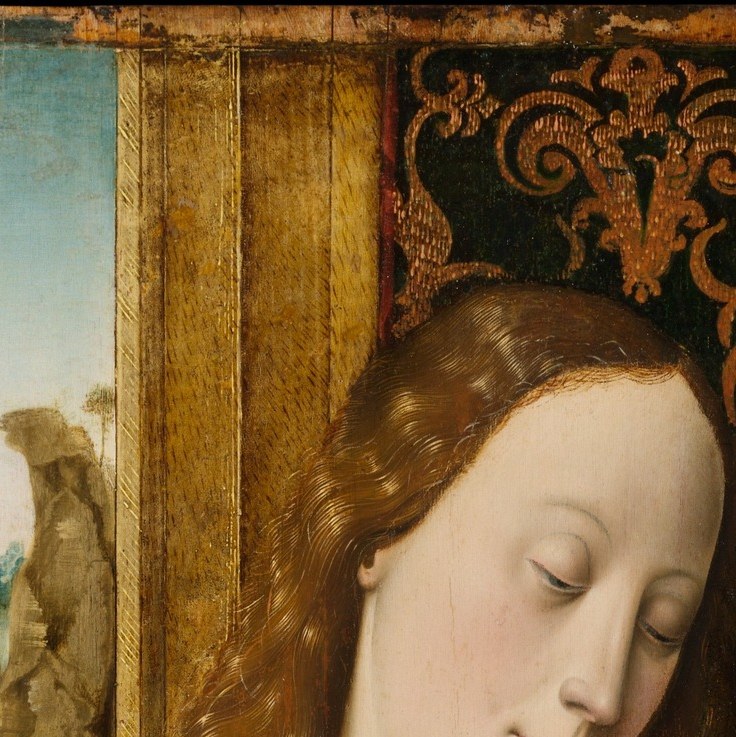
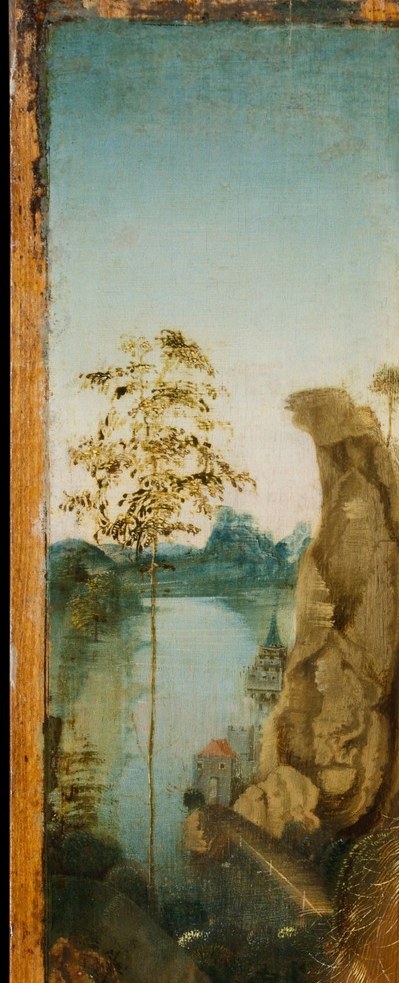
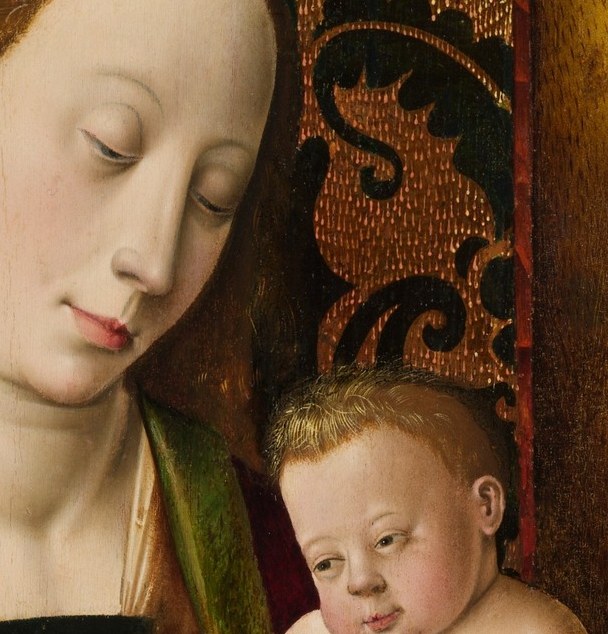
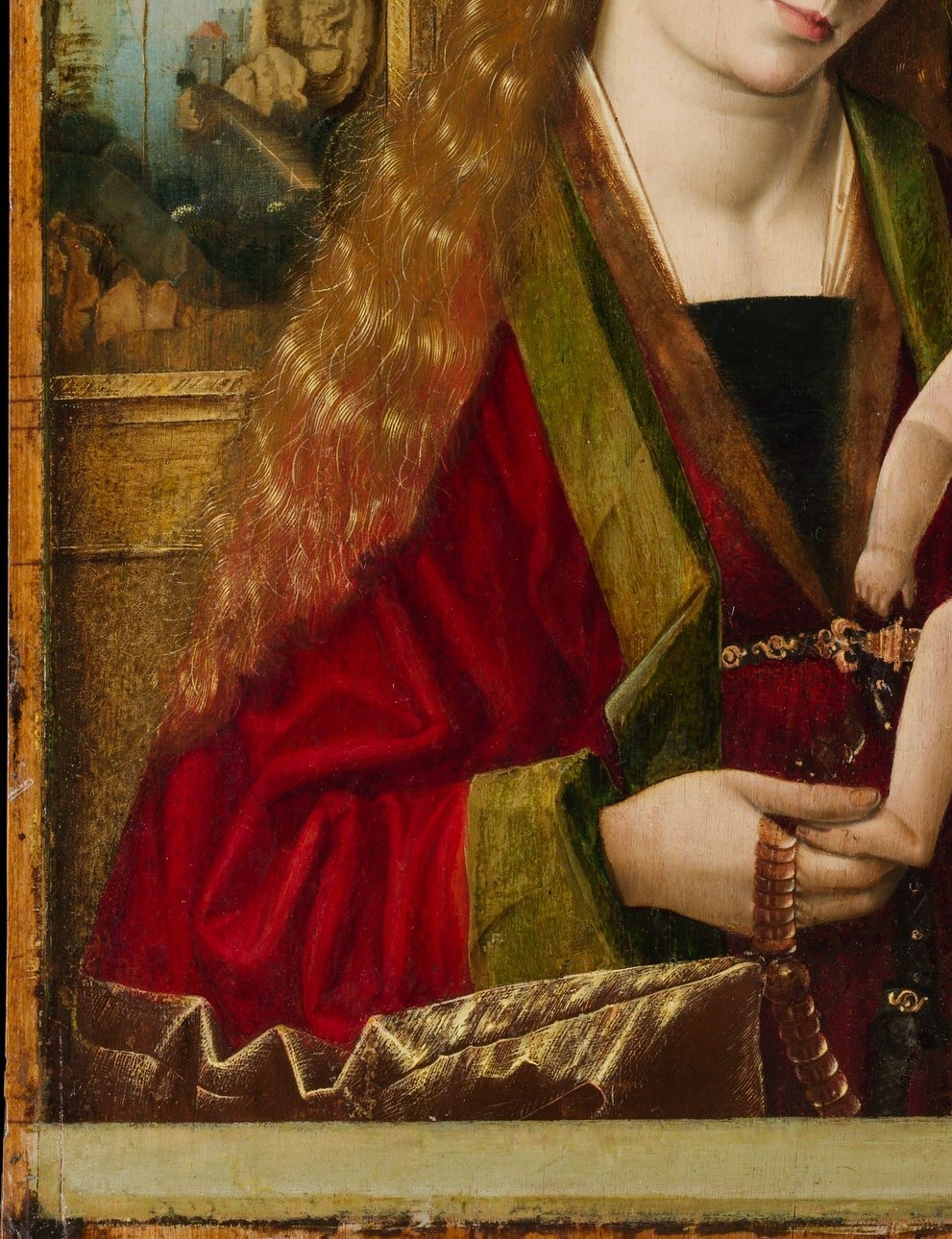
This is "Virgin and Child," painted around 1500 in the workshop of the early Netherlandish master Dieric Bouts. It is a tender devotional panel, but the most surprising detail is hidden behind the figures. The artist opened a small window onto the landscape, and deep inside it, he placed a real building.
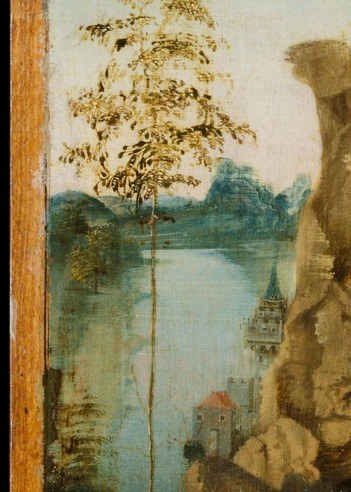
Look past the Virgin's red mantle to the left opening. A winding river cuts through a peaceful, hilly landscape. On the far bank, a faint architectural structure stands alone. It is barely a centimeter tall on the panel, easy to scroll past, but it grounds the sacred scene in a specific place and moment. The figures sit against an anachronistic gold ground, yet the world behind them is earthly and observed.
The undisputed fact is that Dieric Bouts was the city painter for Leuven. His workshop routinely tucked recognizable local buildings into backgrounds, mixing the heavenly and the everyday. The soft modeling of the infant's flesh against the hard gold leaf is a showpiece of oil technique, and the child's direct stare is a deliberate devotional device, inviting the worshipper in. But the landscape window answers a different impulse: it is the painter saying, I was here, I saw this.
Next time you stand before a late-medieval panel, step close and look into the corners. A whole world is waiting inside them.
Details
Transcript
She seems to exist outside of time. The gold behind her signals a heavenly realm. But the painter opened a window onto earth. Past the river, a building stands alone on the horizon. It is not imaginary. It echoes a real Flemish city. A heavenly throne, anchored in a recognizable world.