Sarah Ogden Gustin by Johnson, Joshua
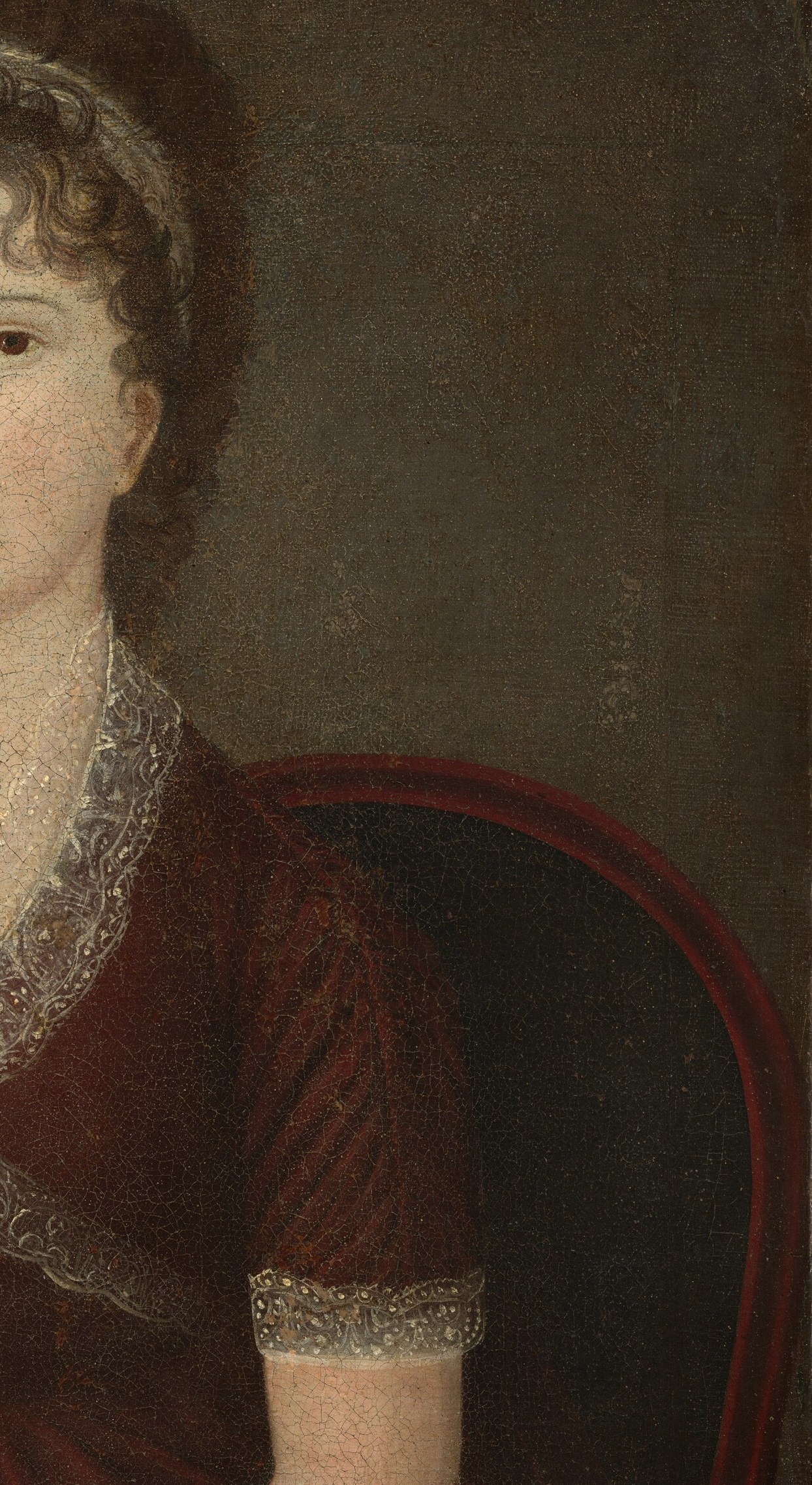
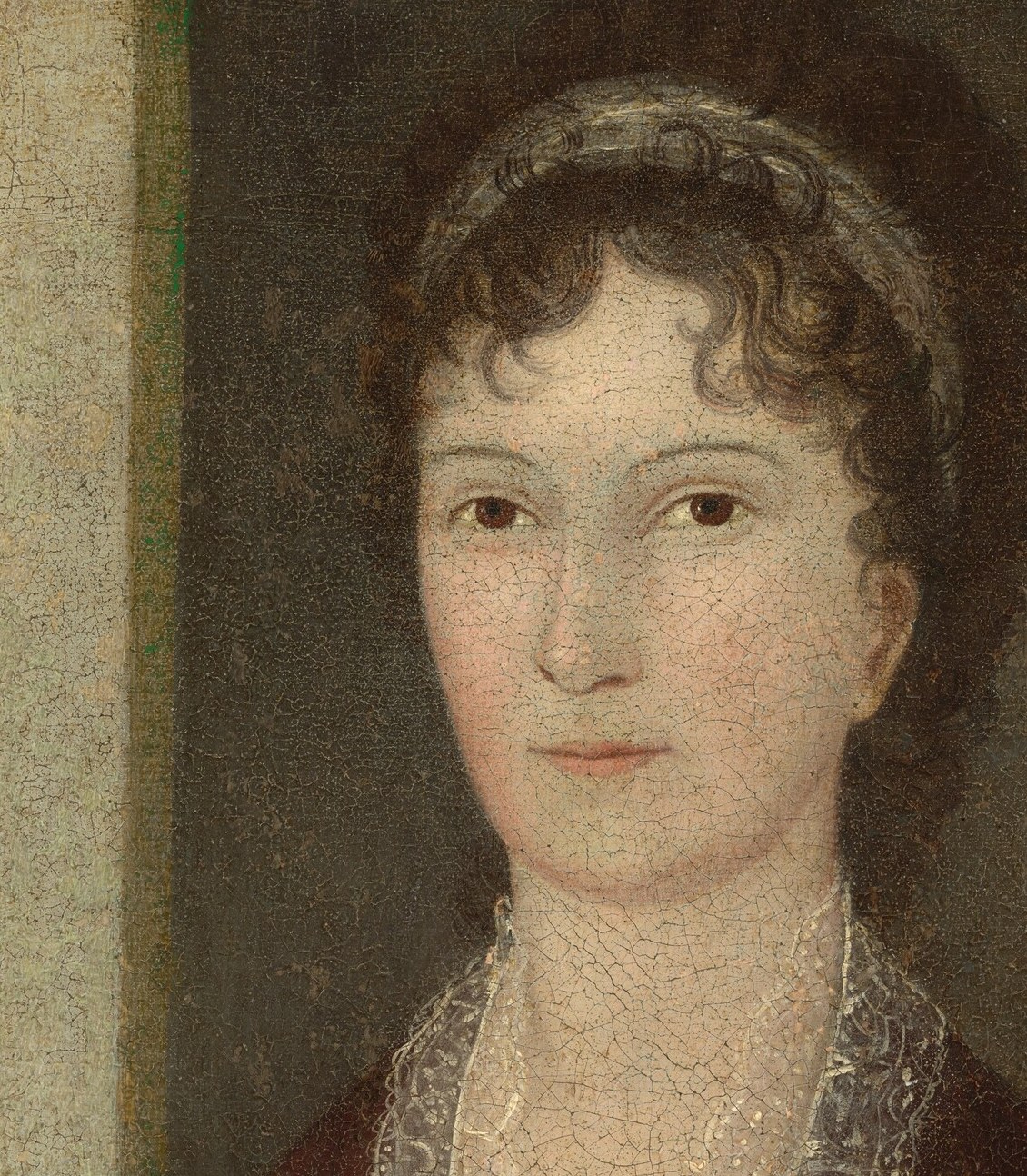
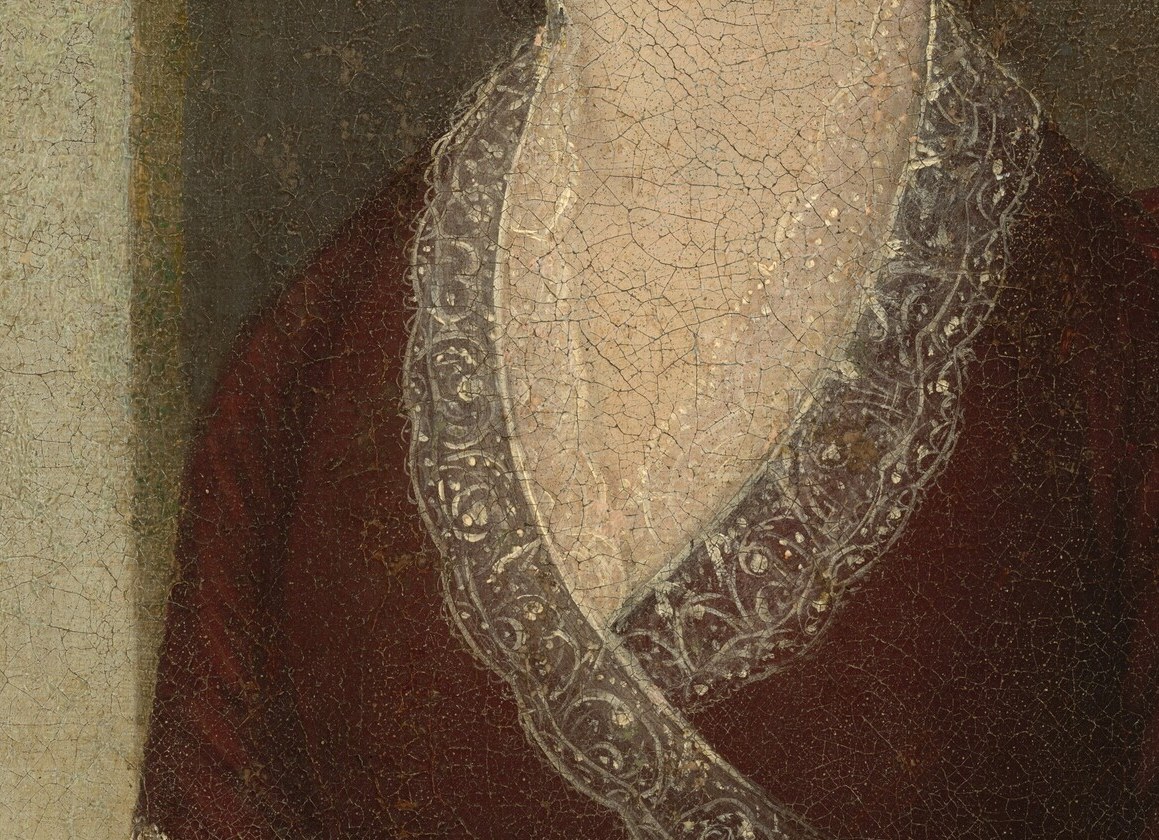
This is Sarah Ogden Gustin, painted around 1805 by Joshua Johnson. For much of the 20th century, her portrait sat in museum storage credited to an unidentified artist. Johnson was the first known professional African American portrait painter in the United States, working in Baltimore when the city's free Black community was small but growing. The erasure of his name from his own canvases was not an accident. It was a quiet, administrative kind of scandal that took art historians until the 1980s to begin to correct.
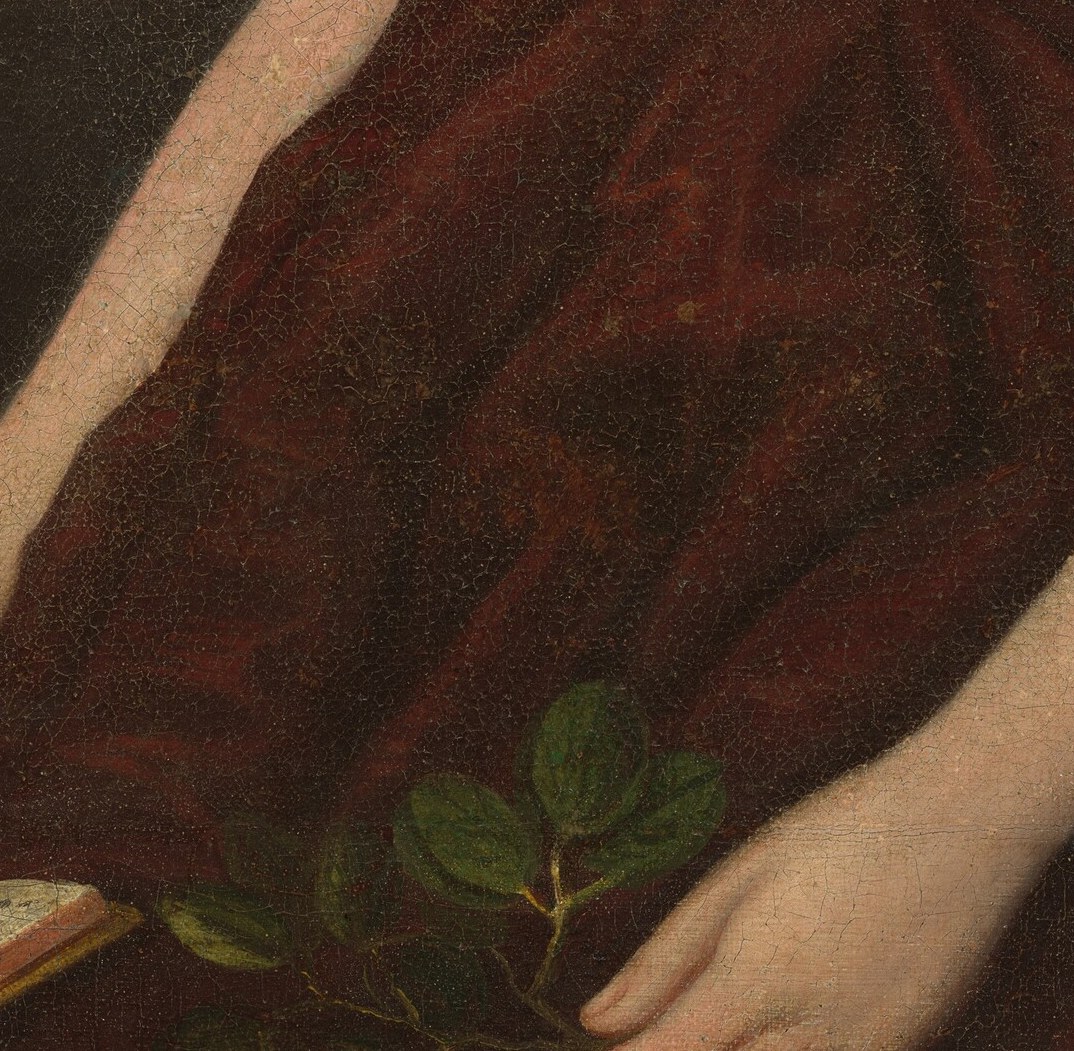
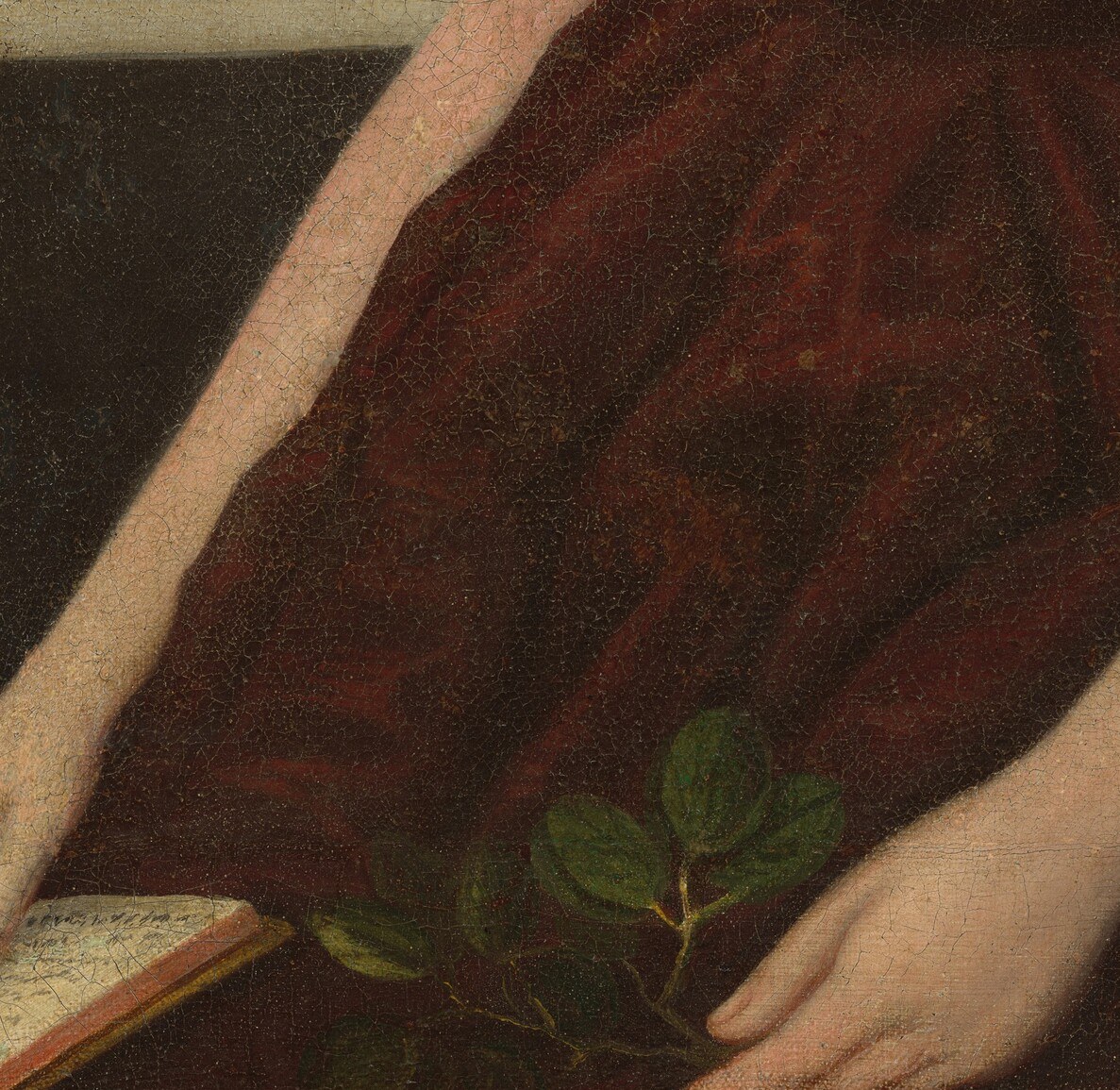
Look at her hands. They are the key. Johnson rendered fingers with an unusually sculptural, deliberate care, a signature visible across the eleven surviving portraits now attributed to him. The open book in her lap is a prop, a signifier of literacy and refinement in the early Republic, but she does not read it. Her eyes are elsewhere, a psychological choice unusual for Federal portraiture, where sitters typically faced the viewer directly.
Johnson advertised himself in the Baltimore press as a self-taught genius. He was born enslaved and freed by the time he began painting professionally. His clients were white, middle-class families who valued his direct, unadorned style. The Naive Art label often applied to his work can read as a dismissal; it is more accurately a record of an artist developing his own visual language outside the European academy system, while producing work his patrons wanted.
Seeing her now, with the artist's name restored, the painting does more than capture a moment of Federal-era gentility. It documents a career that was never supposed to exist.
Details
Transcript
For a hundred years, this painting was filed under the wrong name. Museums listed the artist as unknown. A nobody. But the hands gave him away. The same sculptural, careful fingers appear in eleven other portraits. All signed by a man the history books had dismissed. Joshua Johnson was never unknown. The art world just wasn't ready.