Cattleya Orchid and Three Hummingbirds by Heade, Martin Johnson
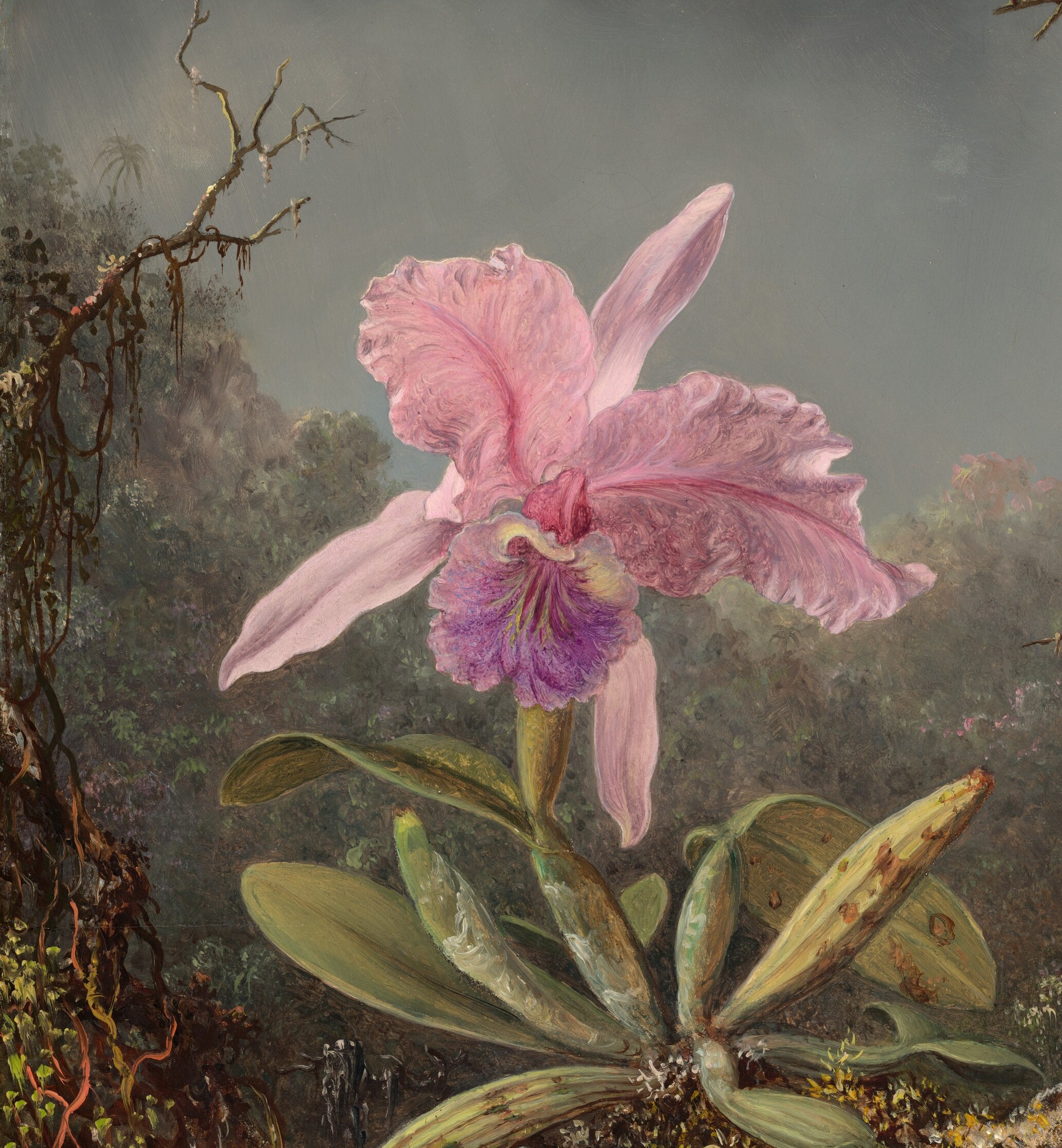
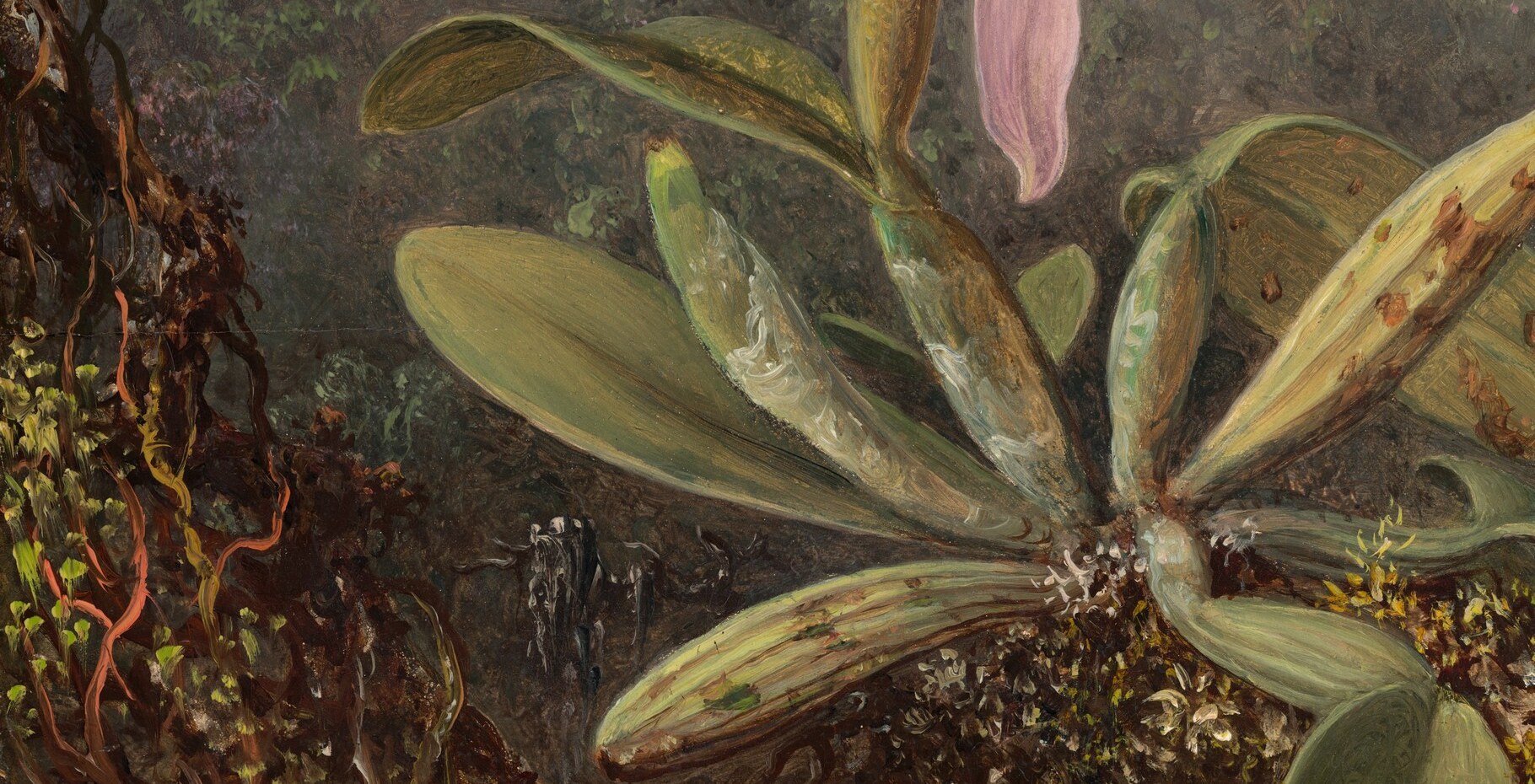
Martin Johnson Heade's "Cattleya Orchid and Three Hummingbirds" (1871) was painted from dead specimens and was later stolen. It now hangs in the National Gallery of Art in Washington, D.C.
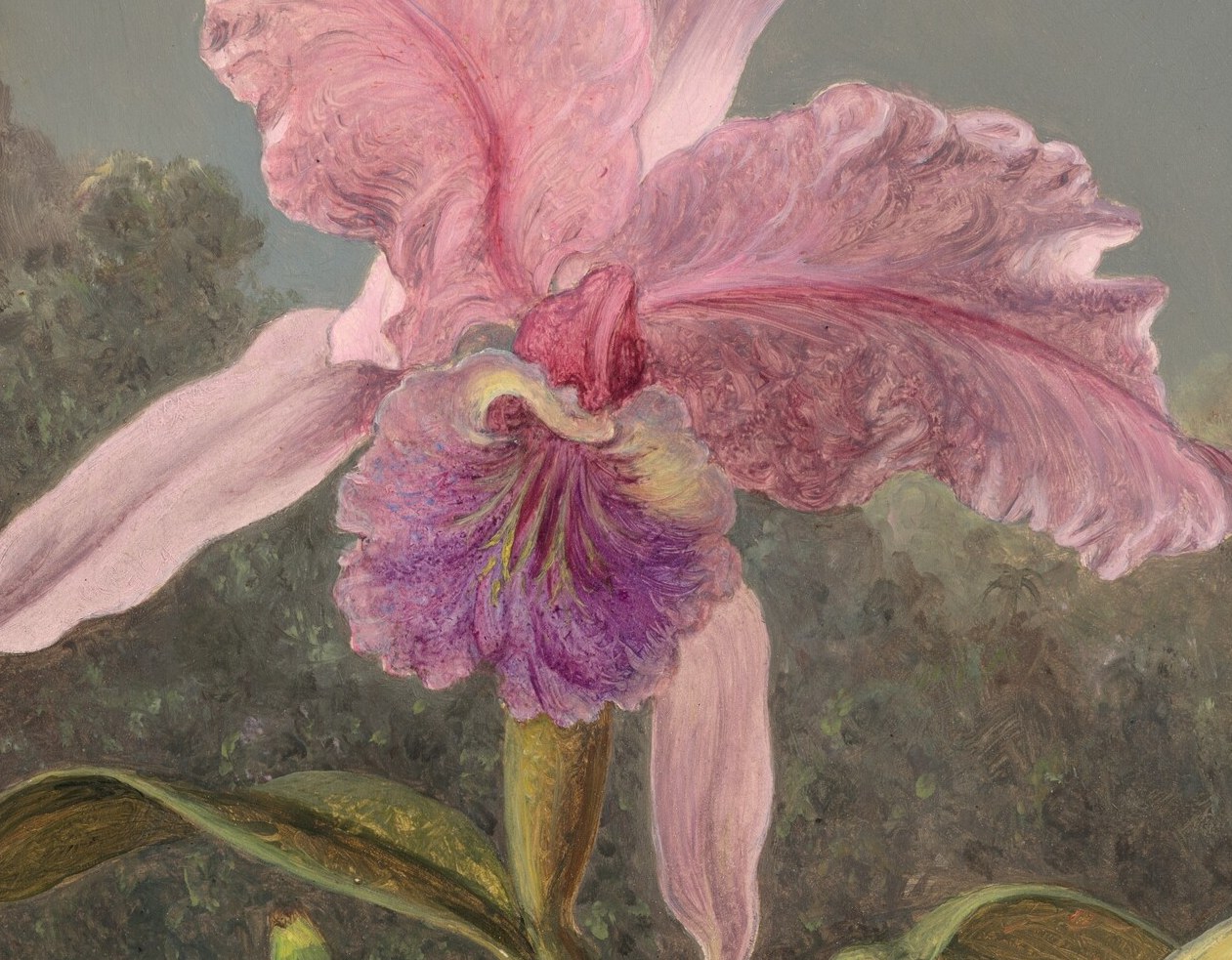
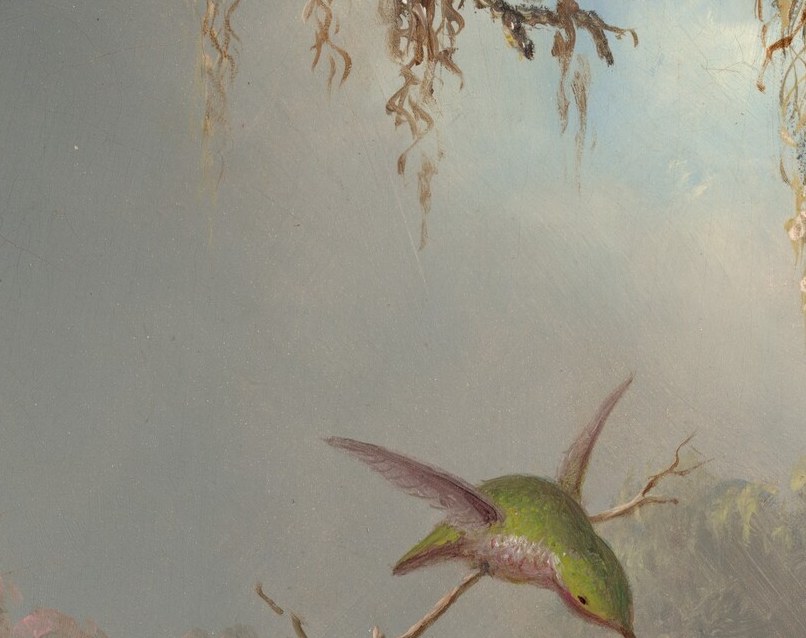
Look at the orchid's labellum. Heade painted the dark throat and yellow markings with microscopic precision. The petals glow because he used glazing, applying thin translucent layers of oil paint on a mahogany panel. The hummingbirds' wings are deliberately blurred, a virtuoso choice: in 1871, painting motion itself was still a radical idea.
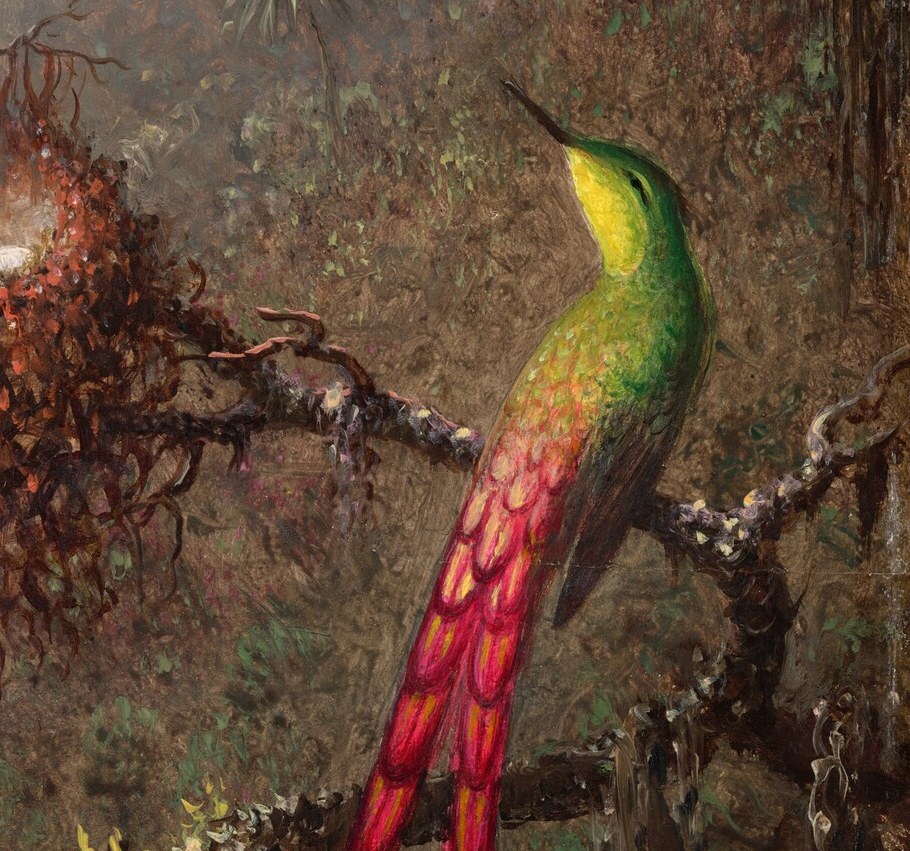
The Victorian era was gripped by "orchidelirium." Collectors paid fortunes for rare specimens shipped from the tropics, and theft from greenhouses and rival collectors was common. Heade never painted these scenes in the jungle. He worked in his studio from preserved birds and cut flowers, composing an idealized nature that never existed. He produced over a hundred such paintings.
The painting disappeared from a private collection in the 1970s and was missing for roughly ten years before surfacing in an art dealer's inventory. It entered the National Gallery's collection in 1982. A stolen, resurrected flower, painted from a corpse, now guarded by a museum.
Details
Transcript
The Victorians called it orchidelerium. A mania for orchids. And a market for thieves. This Cattleya was shipped dead. Heade painted from a corpse. He made the dead flower glow like it was breathing. Three hummingbirds. Their wings beat 80 times a second. The painting vanished from a private collector in the 1970s. It resurfaced in a dealer's back room a decade later. Now it lives under museum glass. No one touches it.