Charles IV, King of Spain by Agustín Esteve
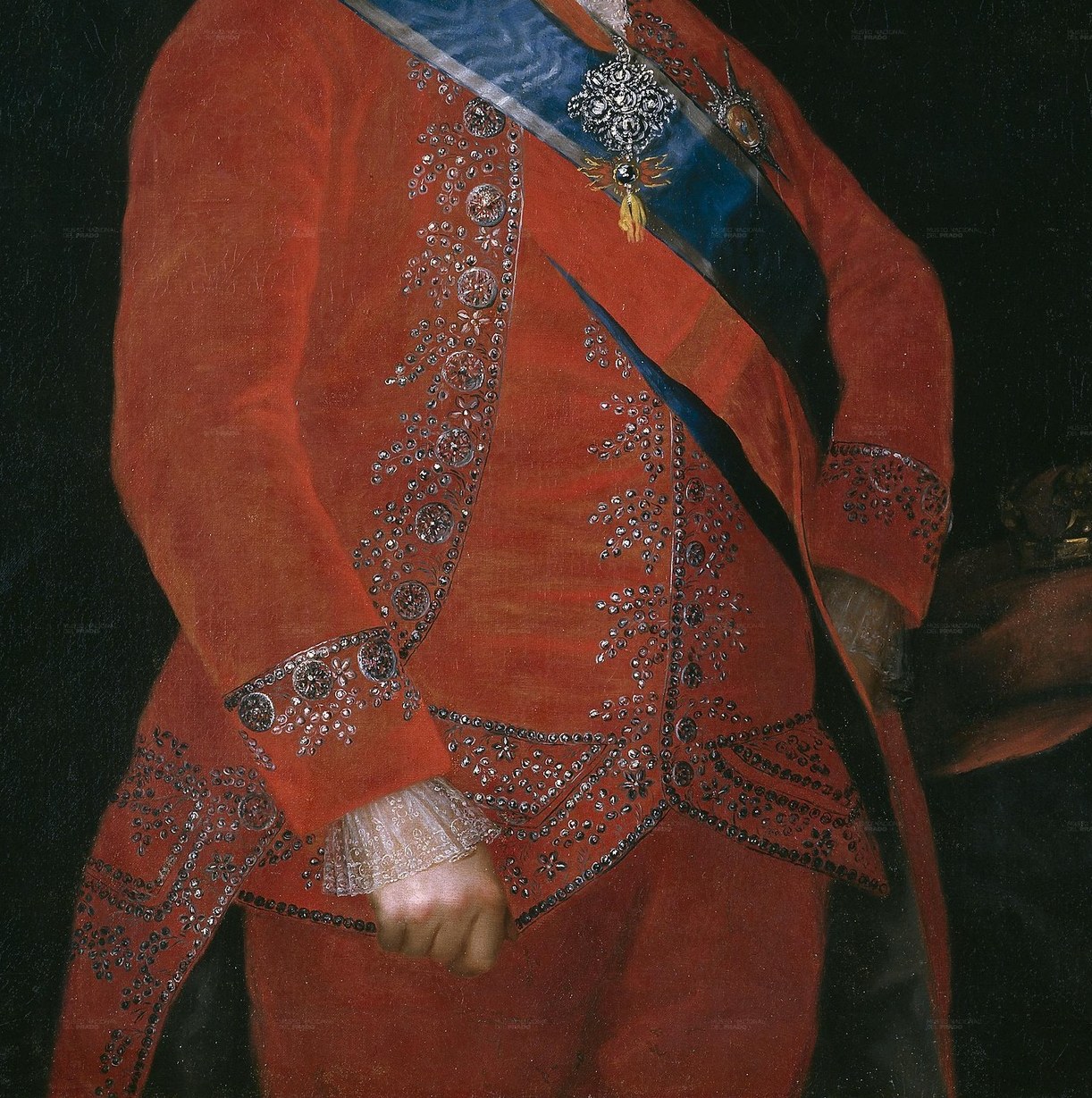
This portrait is Charles IV, King of Spain, painted by Agustín Esteve around 1795 and now at the Museo del Prado. It is a formal depiction of Spanish royalty, highlighting the king's ceremonial regalia and insignia.
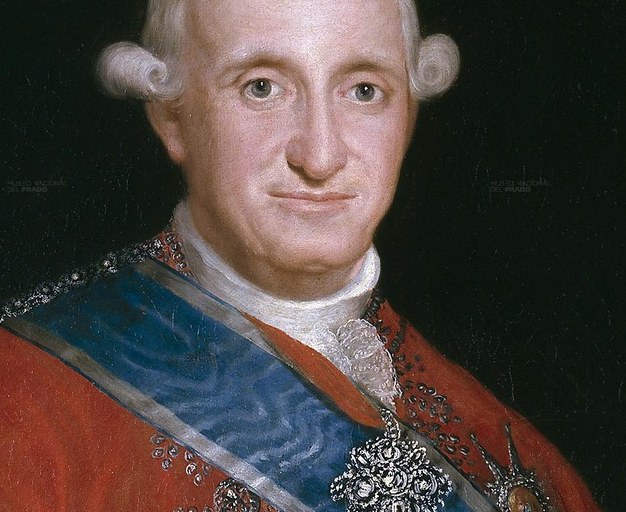
Look at the rich red robe with its silver embroidery and the prominent Golden Fleece and Order of Charles III symbols. Notice the king's direct gaze and his hand on his hip, a pose of relaxed yet authoritative composure. His face, while regal, hints at a certain weariness.
Agustín Esteve, born in Valencia in 1753, was a Spanish artist known for his formal royal portraits. This painting captures Charles IV at a specific moment, showcasing the visual markers of his power and position in late 18th-century Spain.
Despite the outward displays of grandeur, the portrait subtly conveys a sense of the monarch's inner state.
Details
Transcript
This is Charles IV, King of Spain. His red ceremonial robe signifies his importance. The Golden Fleece insignia shows his high rank. He wears the Order of Charles III star. The king's face shows a regal weariness. His eyes engage you directly. He poses with a relaxed authority. Esteve painted this in 1795.