The Sultan's Tiger by Jean-Joseph Benjamin-Constant
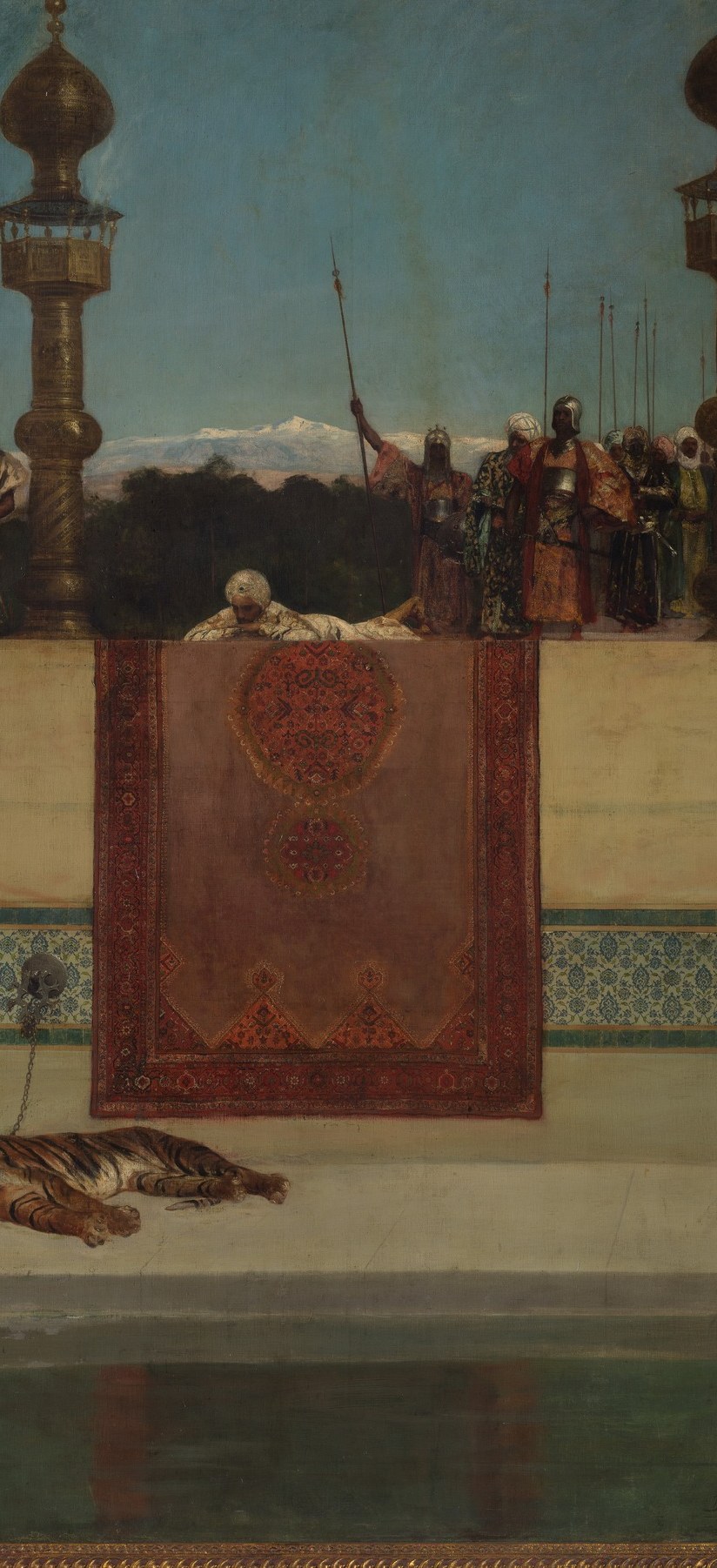
The Sultan's Tiger, painted in 1883, is a French fantasy of absolute power. Jean-Joseph Benjamin-Constant had never set foot in the palace he painted here, and he never met a sultan. The painting belongs to the Metropolitan Museum of Art, a textbook example of the 19th-century Orientalist movement that packaged North Africa and the Middle East for European living rooms.
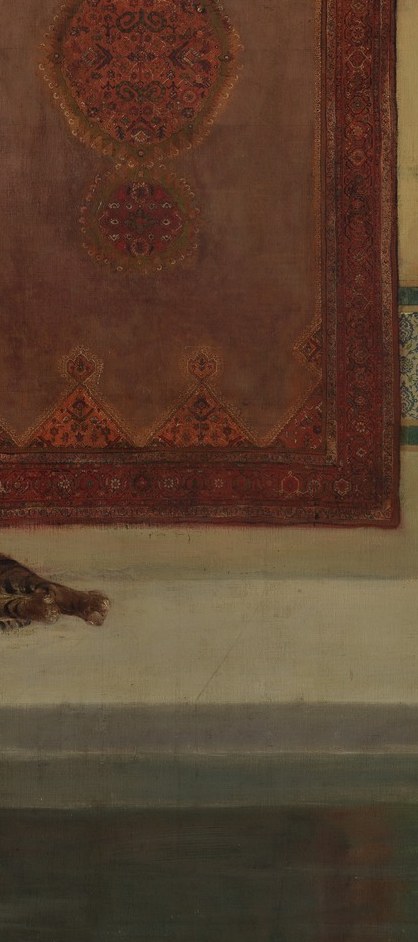
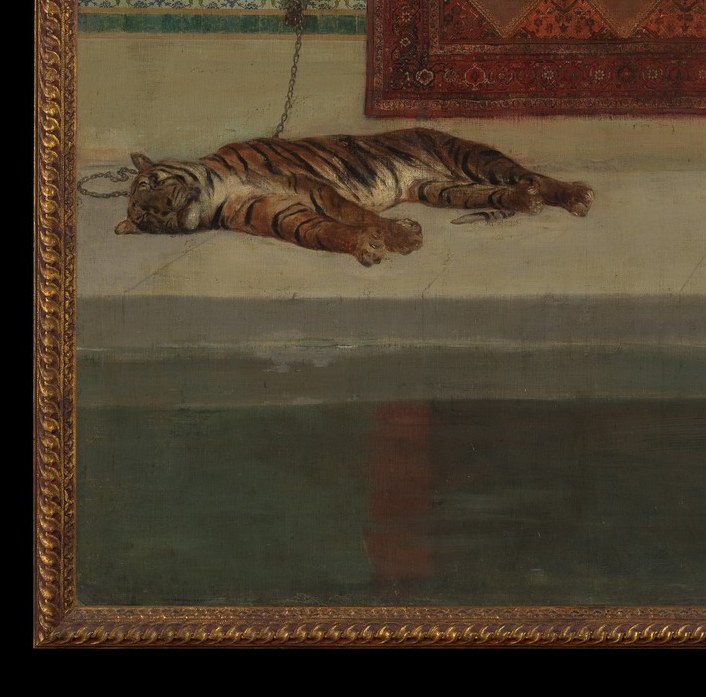
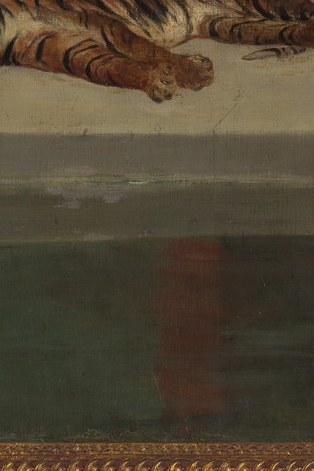
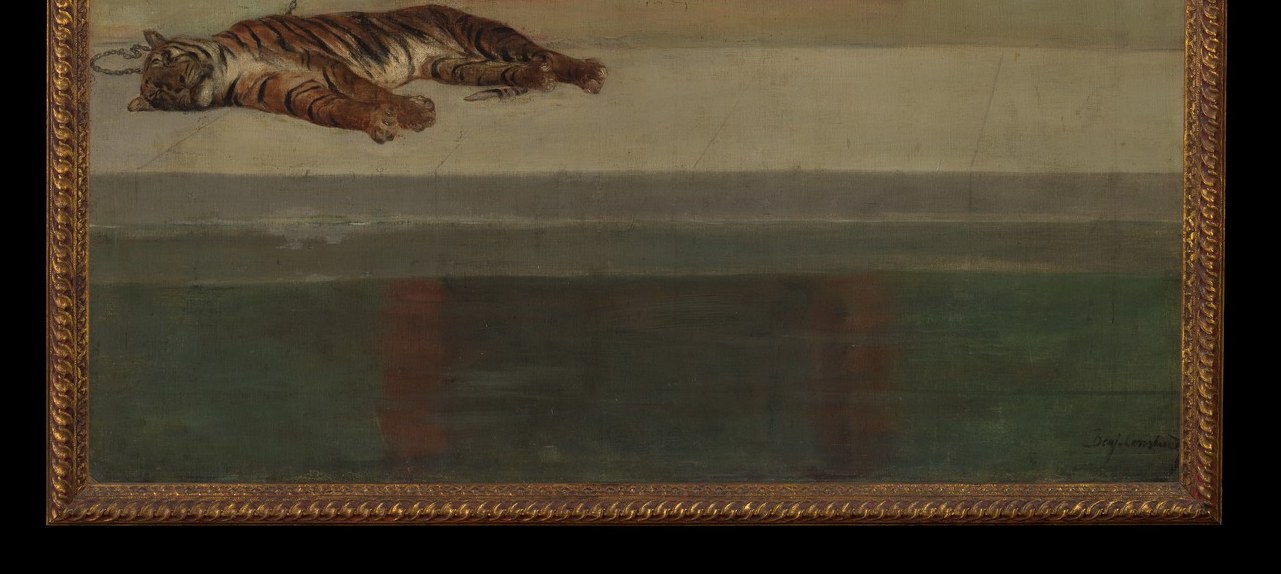
Look at the tiger and then follow the chain. At first glance it is a magnificent pet, resting tamely on the stone. But look closer: the chain runs not to a ring in the wall, but to a human skull. The wild thing is held captive by death itself. A roaring predator rendered silent beneath a vast palace door.
The painting arrived at the height of France's colonial expansion into North Africa. Orientalist painters sold European audiences an image of the 'exotic' East: decadent, luxurious, and available for inspection. Benjamin-Constant built his career on these scenes, and the public loved them precisely because they felt like a window onto a forbidden world.
The tiger is not just a tiger. It is an entire idea made visible: something wild and powerful, brought low and put on display for a spectator who stands safely outside the frame.
Details
Transcript
Paris, 1883. The French public could not get enough of the East. A painter named Benjamin-Constant had never seen this palace. He had never met a Sultan. But he knew what Paris wanted: a magnificent predator, tamed. Look at his eyes. This is not pet, but prisoner. The chain does not lead to a throne. It is anchored to a skull. Absolute authority built on a foundation of death. An entire fantasy of empire.