Cliffs at Pourville by Monet, Claude
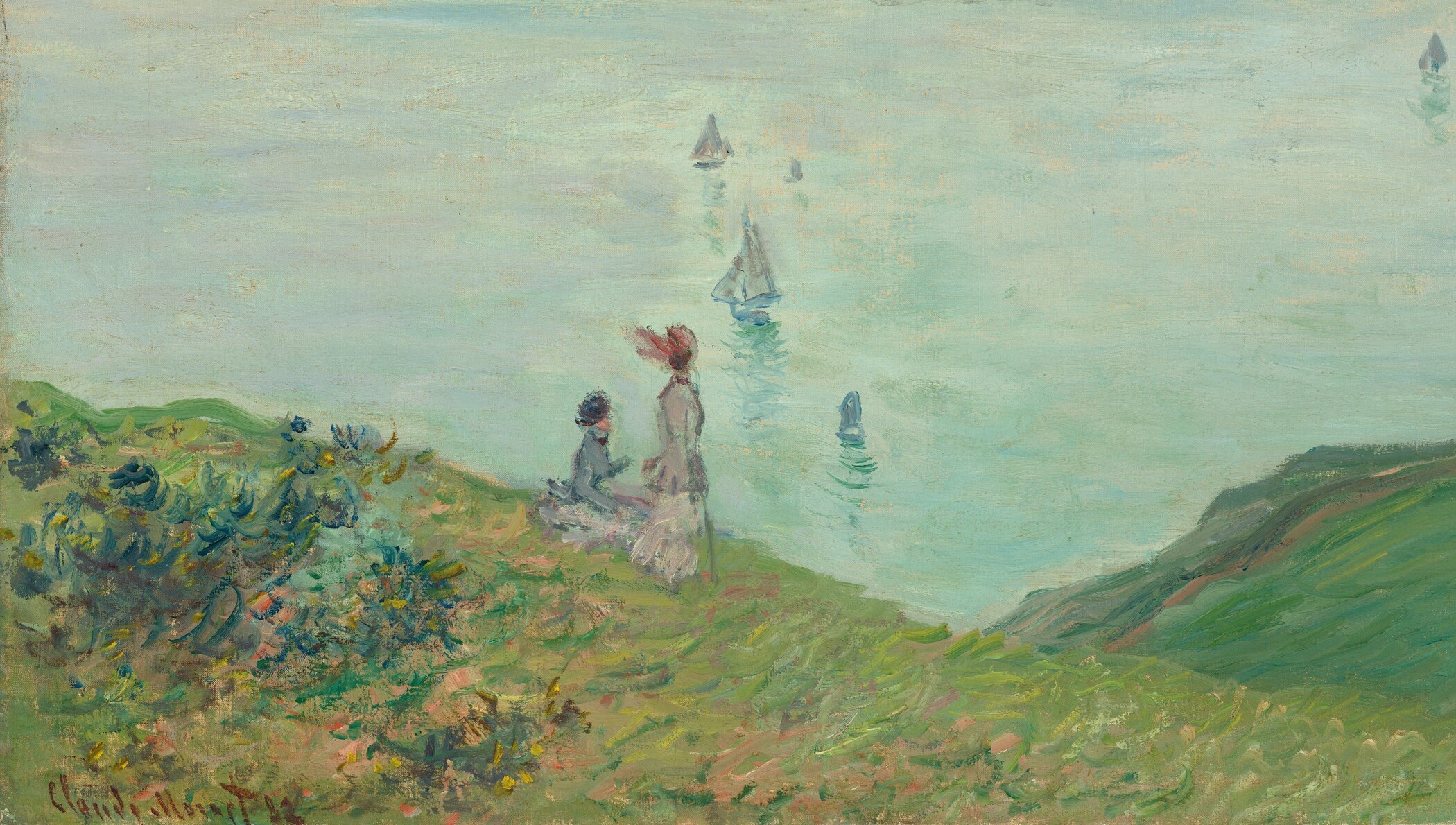
Claude Monet's "Cliffs at Pourville," painted in 1882 and now at the Museum of Fine Arts, Boston, exemplifies his dedication to capturing the transient effects of light and atmosphere.
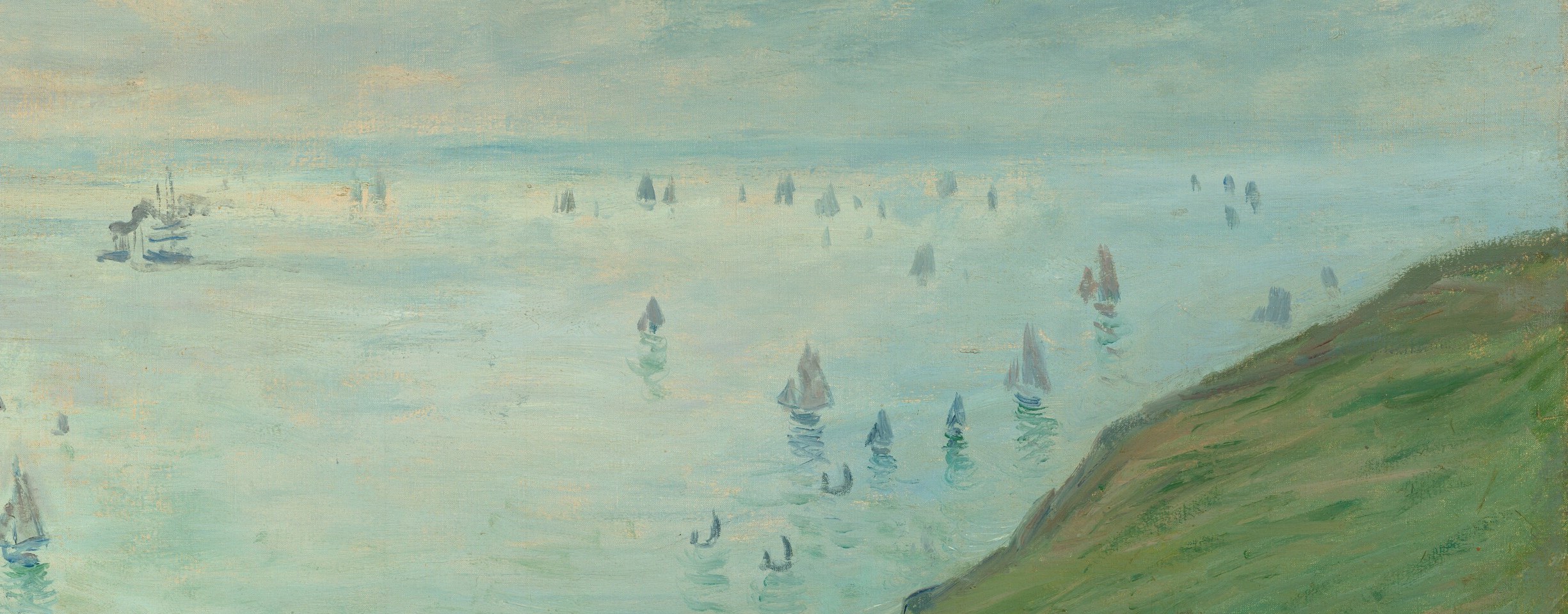
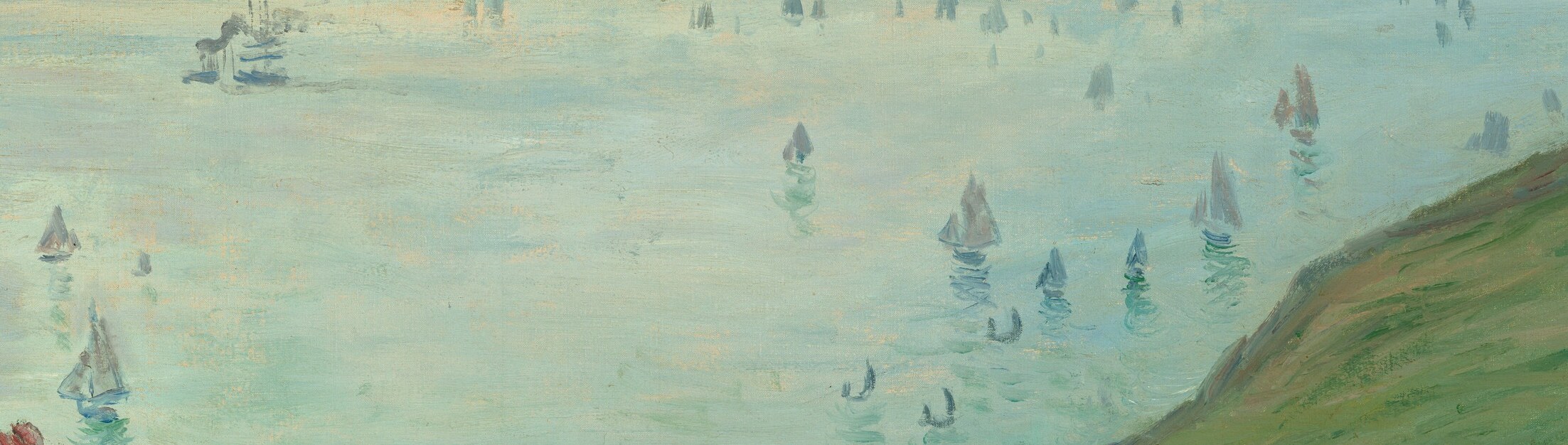
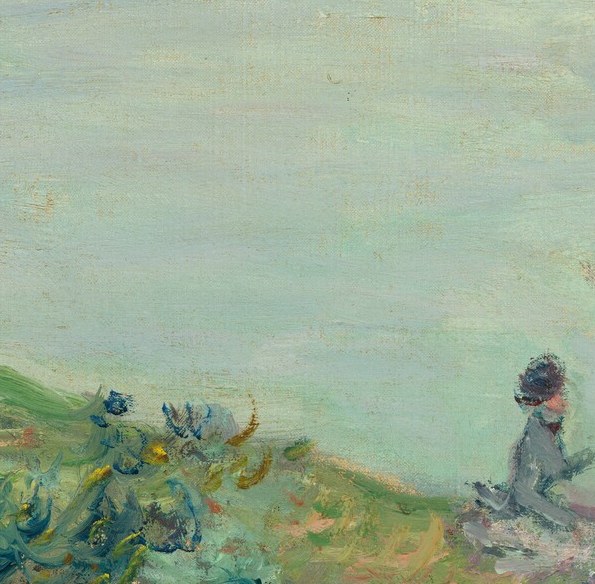
Monet's signature loose, expressive brushwork, evident across the entire canvas, brings the dramatic Normandy coast to life. Pay close attention to the sea between the cliff and the horizon, where quick, comma-shaped dabs of paint resolve into tiny figures bathing and wading, almost hidden within the movement of the waves.
This work emerged from Monet's pivotal 1882 stay in Pourville, a small coastal town in Normandy, where he painted extensively outdoors. This 'en plein air' method allowed him to directly observe and translate subtle shifts in light and atmospheric conditions onto the canvas, focusing on the immediate visual sensation rather than precise, static representation.
It's a wonderful example of how Monet could embed a lively human scene within a grand natural landscape, making the figures part of the overall atmospheric effect. What details do you notice first?
Details

Transcript
Monet painted this cliff during a decisive 1882 stay in Normandy. He sought to capture the fleeting effects of light on the coast. Look closely at the water between the cliff and the horizon. Tiny figures are bathing and wading in the choppy sea. This loose, expressive brushwork defines his Impressionist style. Even human figures are just dabs of color, part of the atmosphere.