Tobias Curing His Father's Blindness by Bernardo Strozzi
View the artwork: Tobias Curing His Father's Blindness →
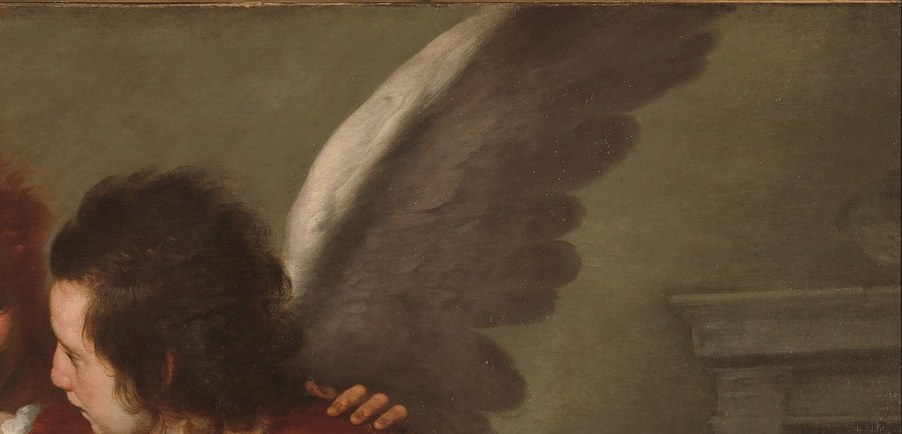
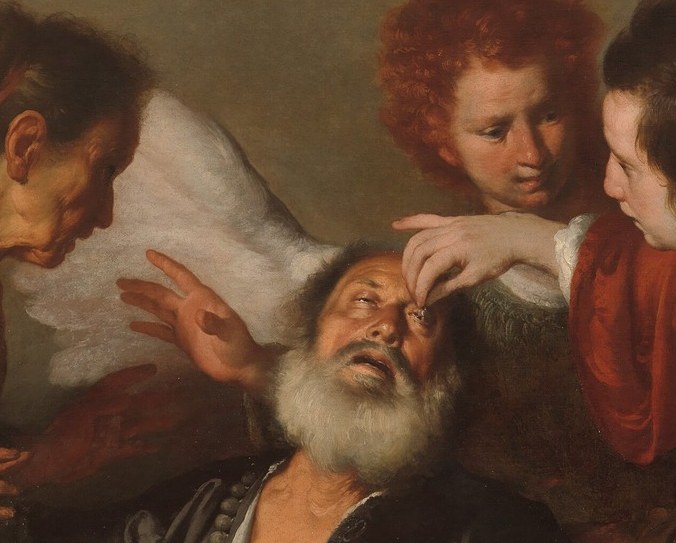
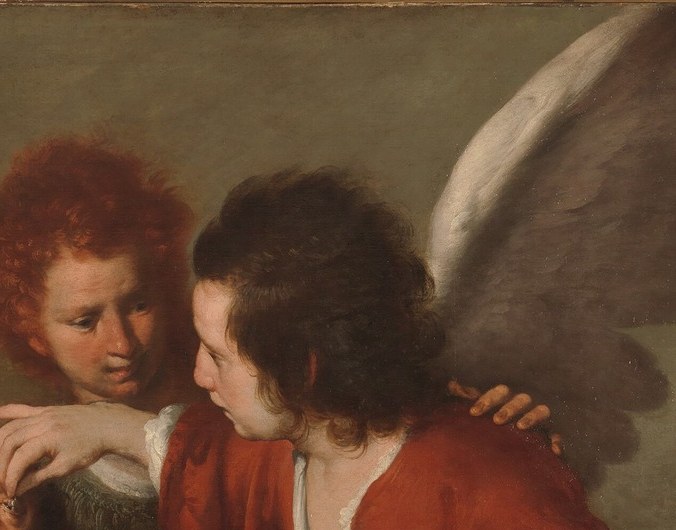
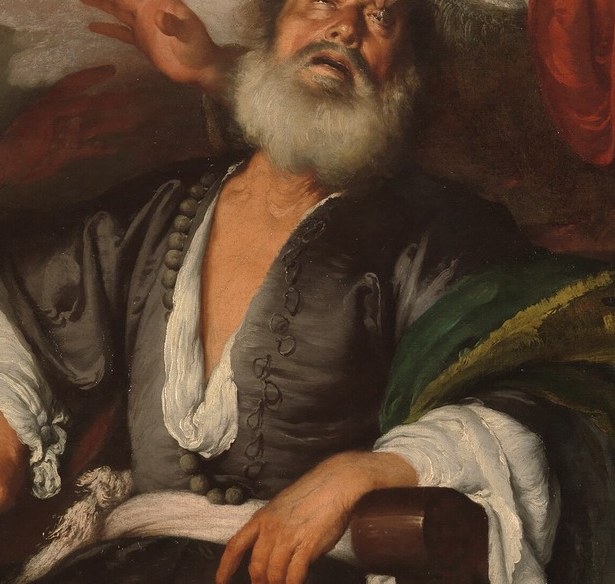
This is Bernardo Strozzi's "Tobias Curing His Father's Blindness," painted around 1630. The canvas freezes the exact moment from the Book of Tobit when Tobias applies a fish-gall cure to his blind father's eye while the Archangel Raphael looks on. A small dog at their feet, easy to miss, is not a genre detail but a literal textual cipher: the book names the dog as a companion on the journey home.
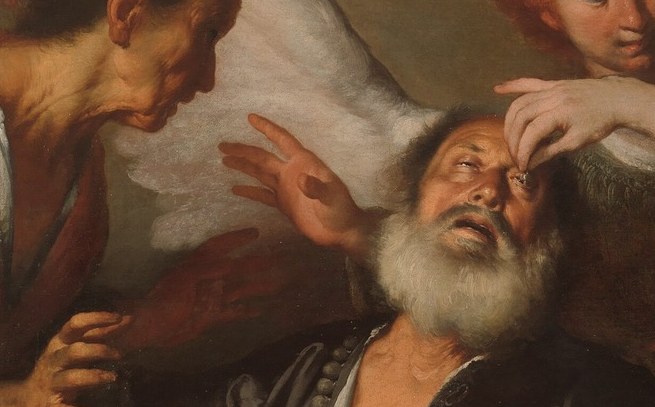
Strozzi choreographs your eye with a single warm light path. Follow the ochre-gold sleeve on Tobias's arm upward through the healing hand and into the old man's face. The brightest passage sits above, Tobit's cascading white beard, rendered in virtuoso white-on-shadow brushwork. Strozzi earned his early reputation in Genoa painting exactly this kind of luminous passage against deep void.
The structure is a teachable piece of Caravaggesque construction. Near-black shadow presses in from the corners, not decorative, but structural. Eliminate spatial distraction, force the flesh tones forward, let the light carry the story. Three tonal zones in one canvas: pure black void, mid-shadow drapery on Raphael's robe, and blazing white at the beard. Strozzi would later bring this technique to Venice and help found the Baroque style there.
A father's closed eyes, a son's steady hand, an angel who already knows the outcome. All of it riding on the warmest light in the room.
#arthistory #baroque #bernardostrozzi
Details
Transcript
The whole scene presses in from near-blackness. A Caravaggesque void, not empty, structural. Warm ochre pulls your eye straight to the center of the action. From the sleeve, up the arm, to the fingertips. Look at the old man's face, eyes closed at the moment of healing. And above that, the brightest passage in the whole painting. Strozzi made his name with white-on-shadow painting like this.