Artwork
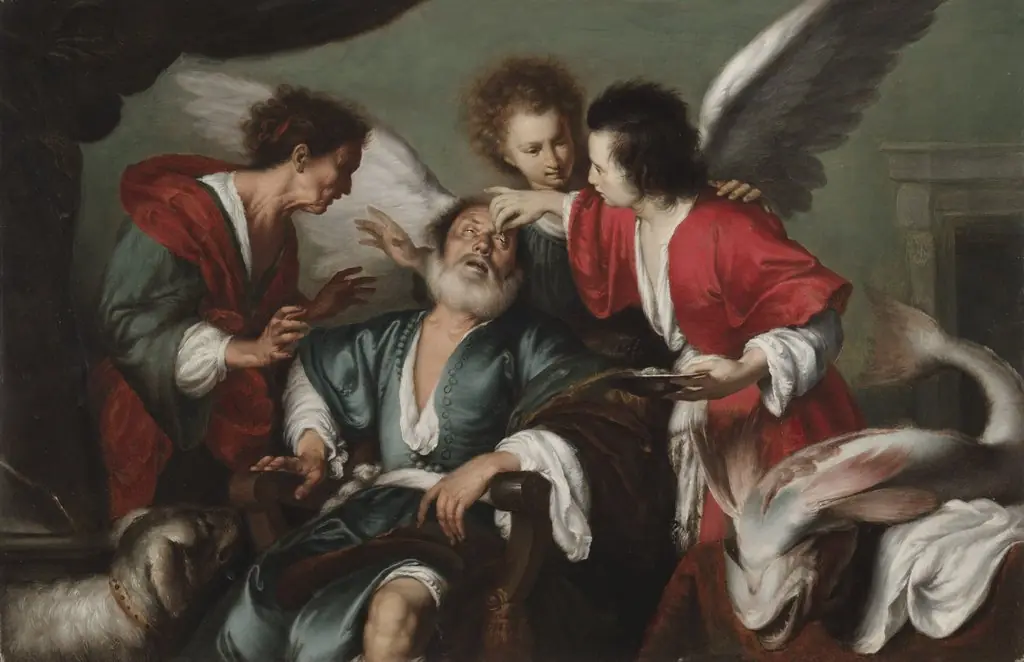
Tobias Curing His Father's Blindness
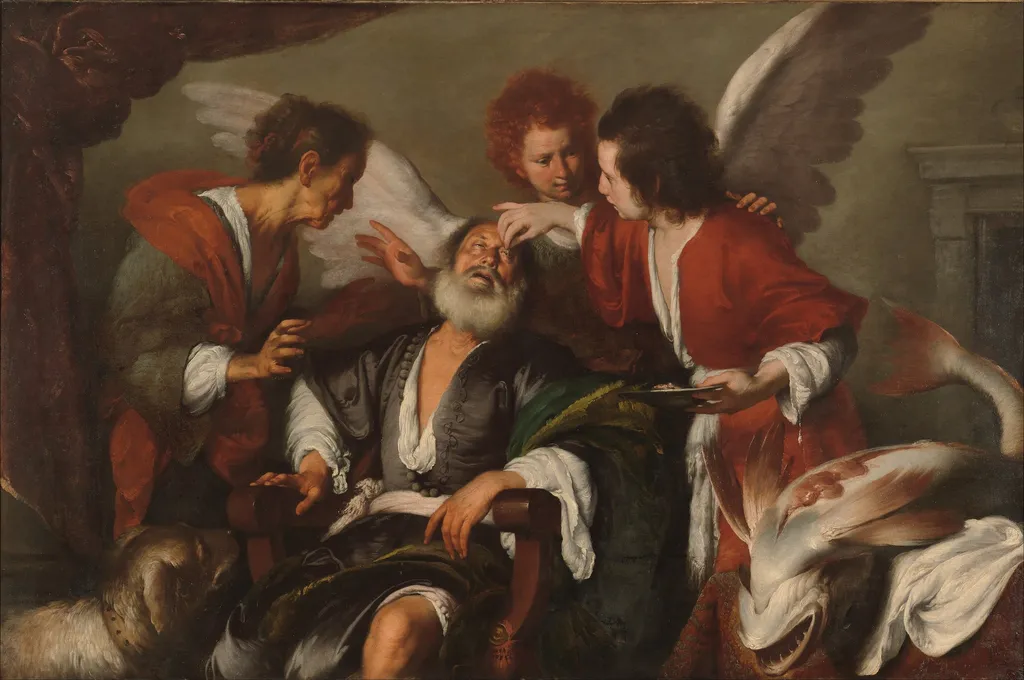
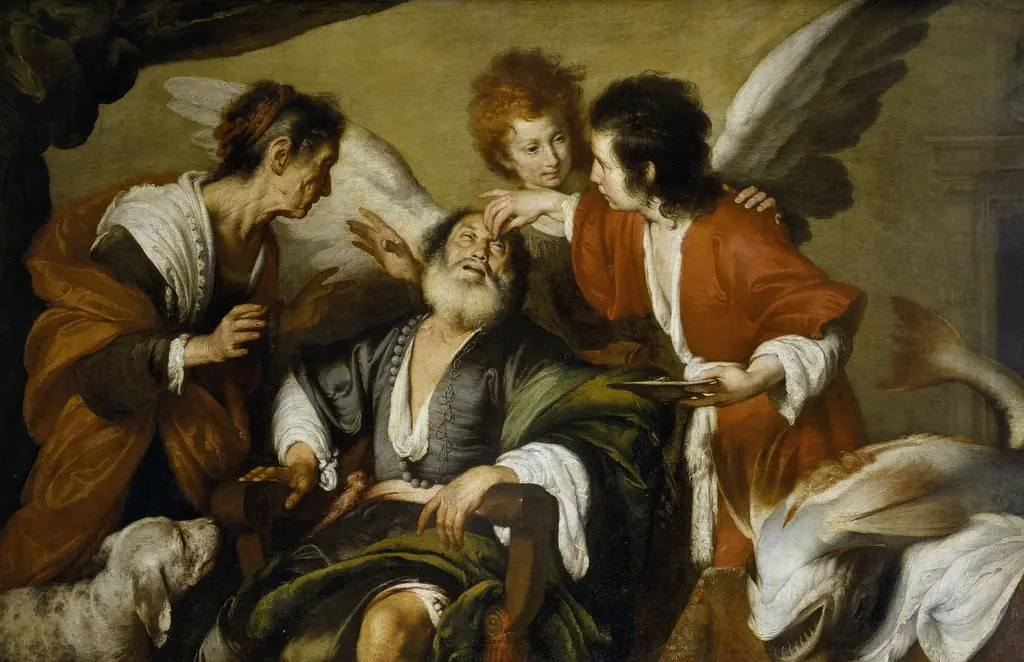
Tobias Curing His Father's Blindness is an oil painting by the Early Baroque Italian artist Bernardo Strozzi. It dates from 1630 and is held in the collection of the Metropolitan Museum of Art.
About this work
Subject & Meaning
A dog is also included, a traditional iconographic detail representing Tobias's faithful companion during his travels.
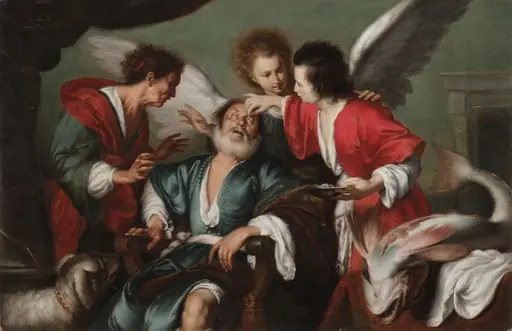
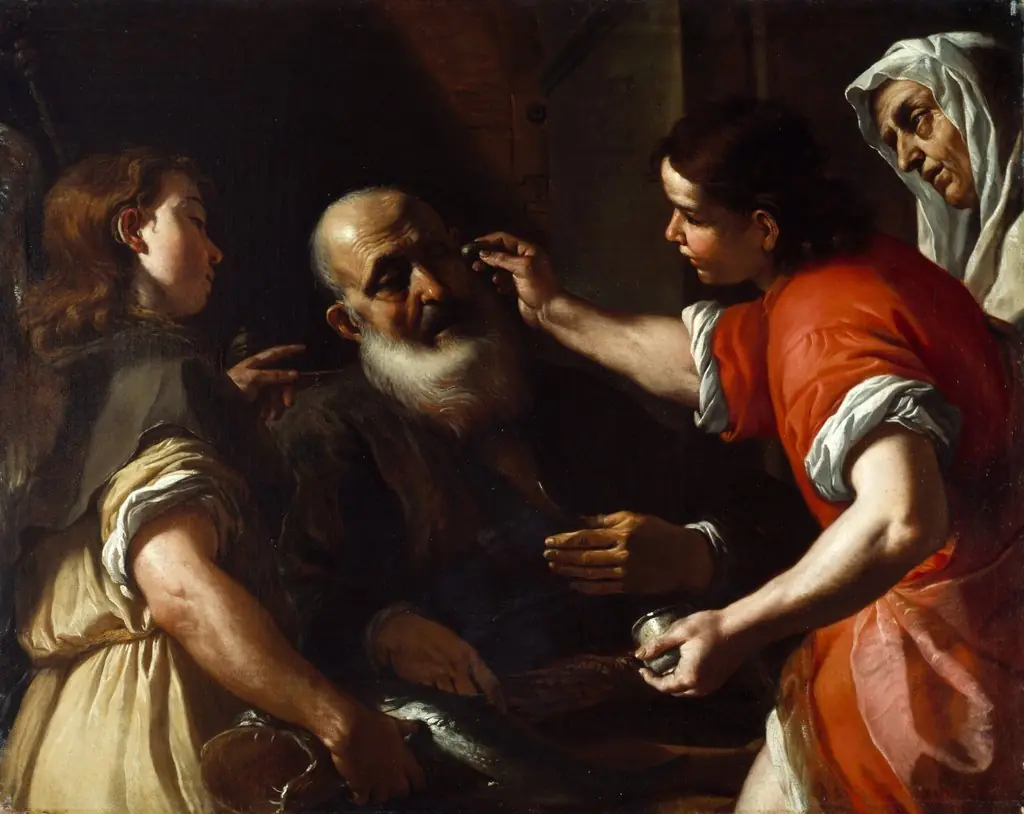
Bernardo Strozzi's painting illustrates the biblical episode of Tobias restoring his father Tobit's sight. The composition brings together key figures from the Book of Tobit, specifically depicting Tobit, his son Tobias, and the archangel Raphael, alongside an unnamed man and woman. Central to the narrative and the work's iconography is the fish, whose gall is used by Tobias to cure his father's blindness, representing healing and divine intervention.
The archangel Raphael, who guided Tobias on his journey, signifies God's protection and providence. A dog is also included, a traditional iconographic detail representing Tobias's faithful companion during his travels. Together, these elements convey themes of filial piety, miraculous healing, and divine guidance.
Technique & Style
Bernardo Strozzi's Tobias Curing His Father's Blindness is executed in oil paint on canvas, a support measuring 146.1 by 223.5 centimetres in a horizontal format suited to the multi-figure narrative. The choice of oil on canvas is consistent with Strozzi's practice as a Genoese-Venetian painter working in the early seventeenth century, allowing for the layered, painterly handling associated with his religious compositions. The work is classified as a religious painting and is held in the collection of the Metropolitan Museum of Art. No further technical documentation regarding condition or conservation history is provided in the available sources.
History & Provenance
The work was painted by Bernardo Strozzi around 1630. It entered the Metropolitan Museum of Art's collection among its holdings of Italian Baroque religious paintings, where it remains housed. The painting depicts the biblical scene of Tobias restoring his father Tobit's sight, aligning with the artist's known engagement with Old Testament narratives during this period.
Context
Bernardo Strozzi's 1630 oil on canvas, Tobias Curing His Father's Blindness, exemplifies his mature religious oeuvre and the Baroque predilection for vivid narrative composition. The work, documented in the Metropolitan Museum of Art collection, illustrates Strozzi's synthesis of Venetian colorism with naturalistic storytelling, reflecting contemporary devotional practices. Its depiction of Tobit, Tobias, Raphael, and associated figures aligns with Counter-Reformation themes of divine intervention and healing.
Overview
Bernardo Strozzi's 'Tobias Curing His Father's Blindness,' executed in 1630, depicts the biblical narrative from the Book of Tobit where the archangel Raphael restores sight to the elderly Tobit. The composition centers on the intimate moment of healing: Tobit sits in a darkened interior, his head tilted back in anticipation, while the winged angel Raphael, distinguished by a vibrant red tunic, applies fish gall to the old man's eyes. The younger Tobias stands beside the angel, gesturing to guide the action, creating a triangular arrangement that focuses attention on the miraculous touch.
Strozzi employs his characteristic Venetian-Baroque style, utilizing rich, warm tones and dramatic chiaroscuro to model the figures with volumetric solidity. The inclusion of a small dog at the foreground anchors the scene in domestic reality, a common device in Strozzi's religious works to humanize sacred events. Painted during the artist's mature period in Genoa, this work exemplifies his ability to blend spiritual gravity with naturalistic detail and emotional immediacy, marking a high point in his exploration of genre-inflected religious subjects.
Own this work as a print
Artist & collection
Artist
Bernardo Strozzi, named il Cappuccino and il Prete Genovese (c. 1581 – 2 August 1644), was an Italian Baroque artist who was a painter and engraver. A canvas and fresco artist, his wide subject range included history,…