Victorian Interior II by Horace Pippin
Horace Pippin never sat in this room. The Victorian parlor he painted in 1945, now in the Metropolitan Museum of Art, was a composite of aspiration and memory rather than a real place. Pippin, a self-taught Black artist from Pennsylvania, spent his final years painting domestic scenes like this one while his own reality remained far more modest. The stiff symmetry and untouched formality tell you immediately: this is not a room for living in.
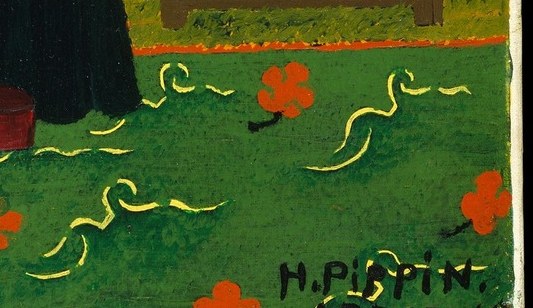
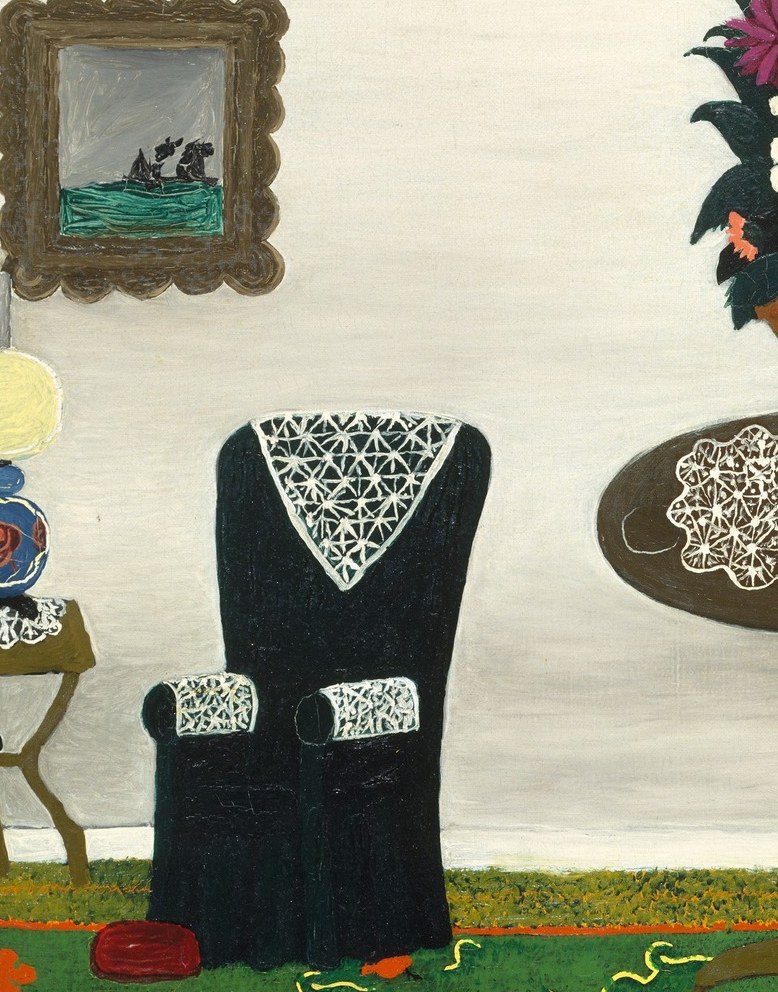
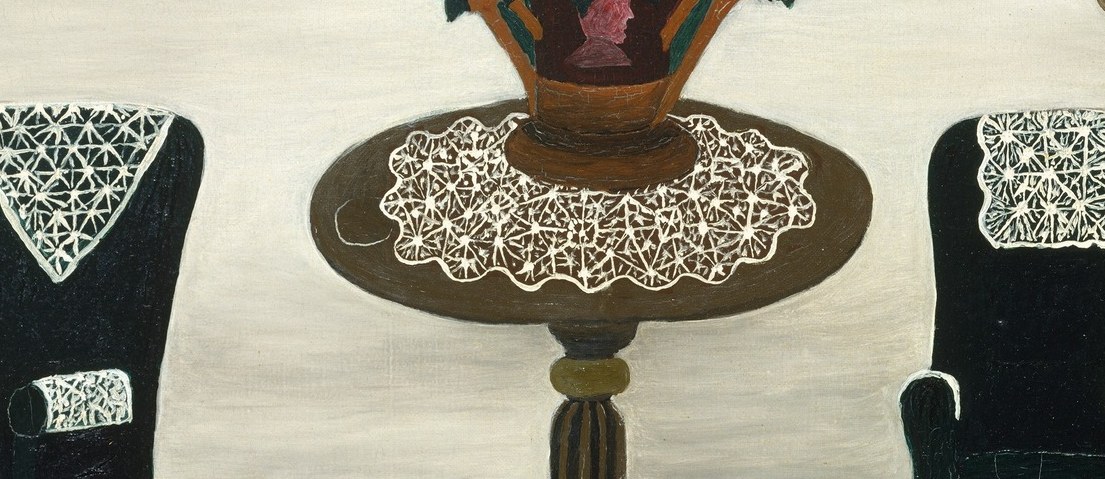
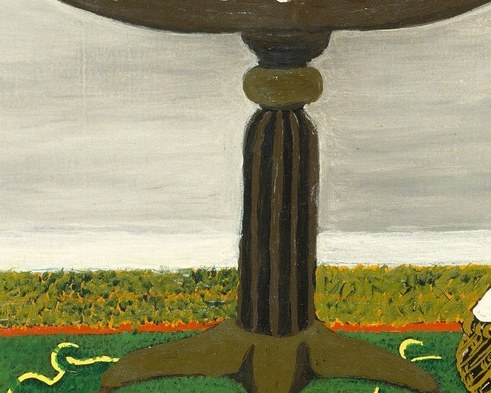
Look at the empty armchairs flanking the table. They are dressed with white antimacassars, the little lace cloths Victorians used to protect upholstery from hair oil. The lace doily under the flower vase and the matching frames on the wall all signal a household that prized order, gentility, and care. And then, almost hidden, a tiny white cat rests on the green carpet, the only breathing thing in the whole painting.
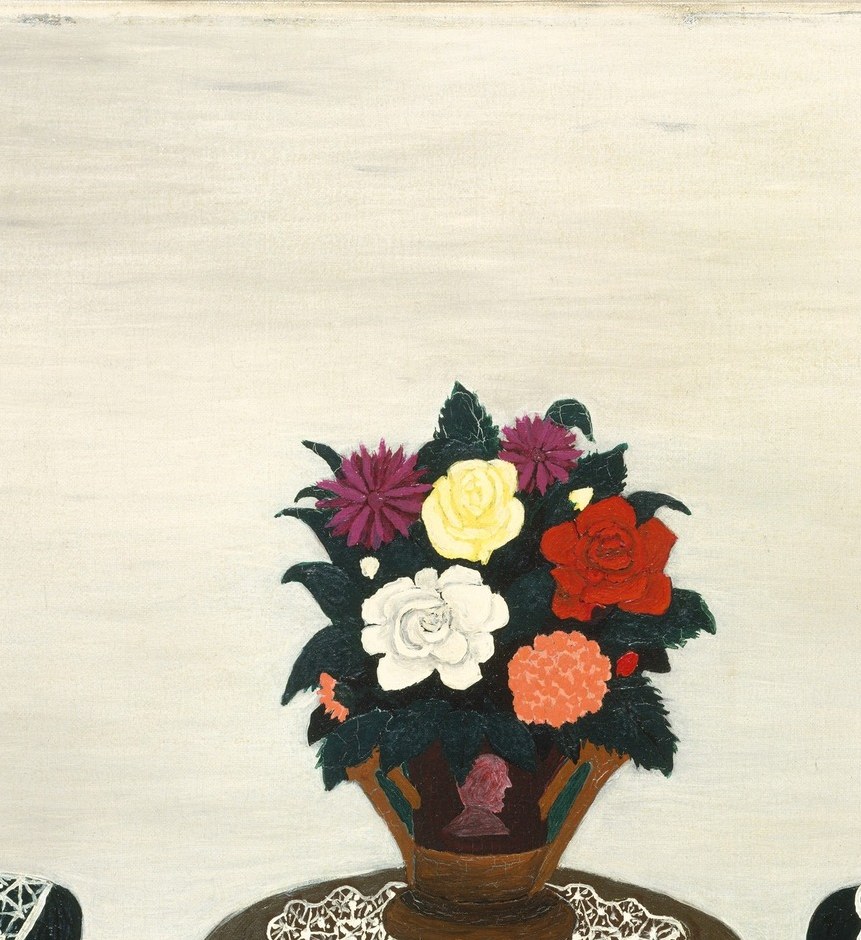
Pippin painted this with a body that had been broken by war. A sniper’s bullet in World War I paralyzed his right arm; he taught himself to paint by holding the brush in his right hand and using his left to push it across the canvas. That he produced this meticulous, flat, glowing surface, every red rose a deliberate decision, is part of the work’s meaning. He was the first Black artist to be the subject of a monograph, and The New York Times eulogized him as “the most important Negro painter” in American history.
What does it cost a man to paint an empty, perfect room he will never occupy? Pippin answers with color.
Details
Transcript
It looks like a tidy, ordinary parlor. Horace Pippin painted this in 1945. A self-taught Black artist, he signed his work with quiet pride. The chairs are empty. No one ever sits here. The lace is museum-grade, but this room was a memory. Pippin painted with an arm paralyzed by a sniper's bullet. He held the brush with his right hand and pushed it with his left. A small white cat, the only living thing, keeps watch.