Alfonso XII by Enrique Estevan y Vicente
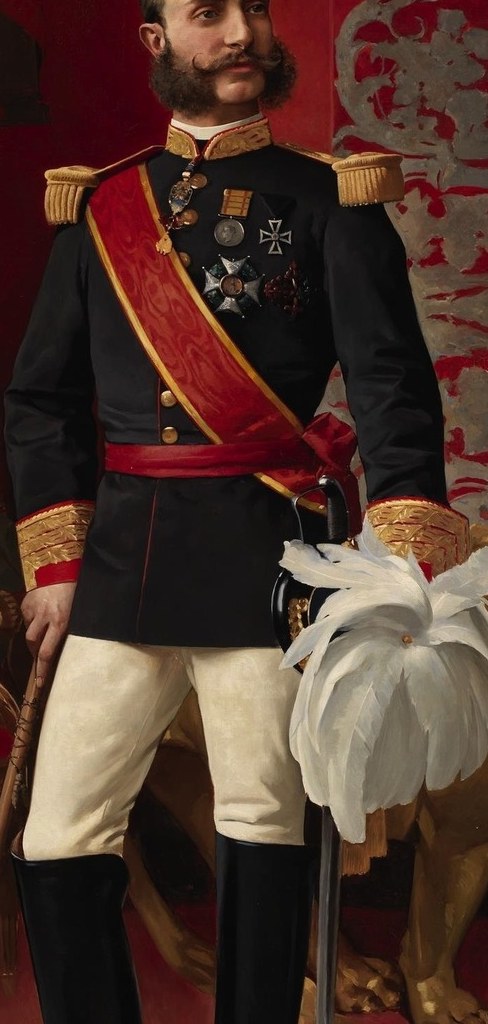
This formal portrait, "Alfonso XII" by Enrique Estevan y Vicente, was painted in 1895 and is held at the Museo del Prado. It captures King Alfonso XII of Spain in his military coat, adorned with an impressive array of medals that signify his achievements and status.
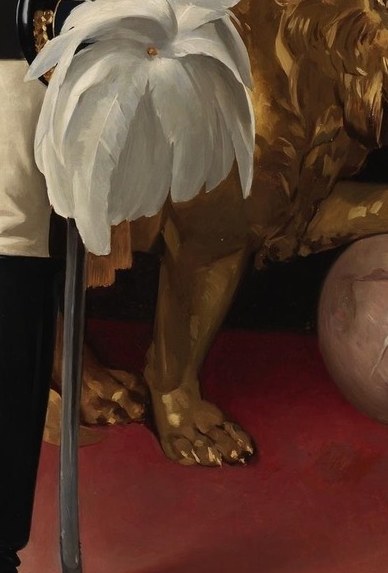
The painting's opulent setting, with the deep red curtain and a gilded lion sculpture, emphasizes the king's authority and royal lineage. While the king's confident gaze and regal posture dominate the composition, a closer look reveals a subtle, yet significant, detail.
In the lower right corner, an inscription clearly identifies "ALFONSO XII. 1884." This detail not only confirms the subject's identity but also provides the precise year of the artwork's creation, grounding it in its historical context.
This work is a fine example of late-nineteenth-century Spanish portraiture, reflecting the era's focus on portraying military and royal figures with grandeur. What other small details do you notice that add to the painting's story?
Details
Transcript
This is a portrait of King Alfonso XII of Spain. He wears his military coat and an array of medals. A gilded lion sculpture reinforces his royal power. His face is confident, as befits a king. But look closely, bottom right, for a hidden detail. This identifies the king and the painting's year.