Johann (1498–1537), Duke of Saxony by Lucas Cranach the Elder
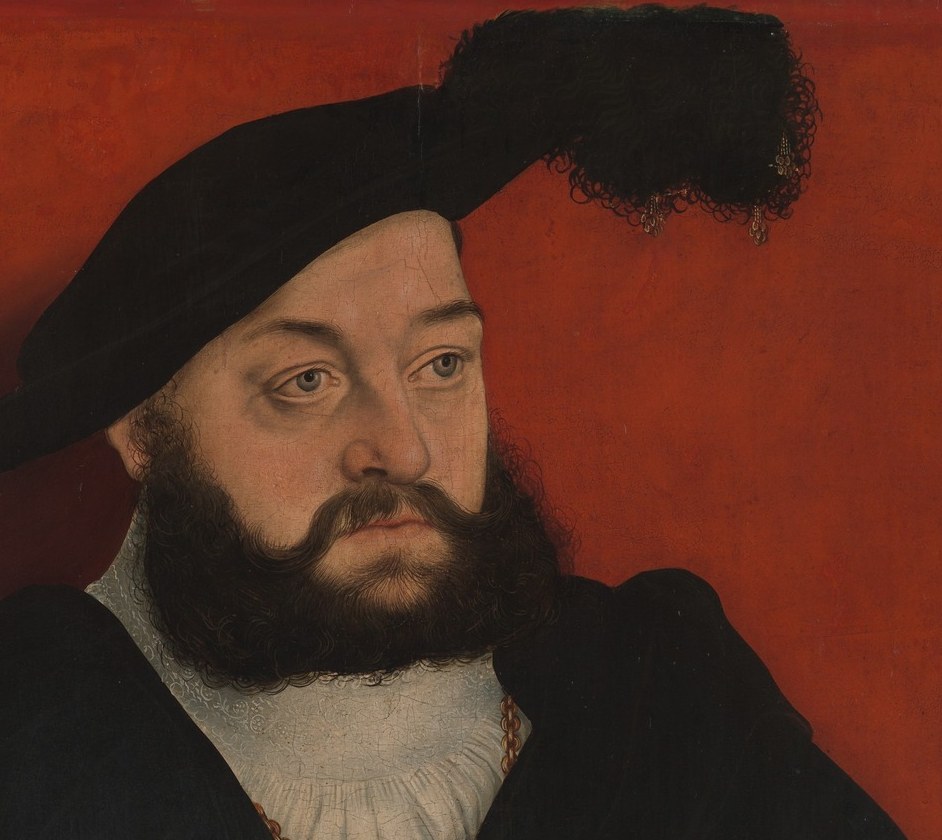
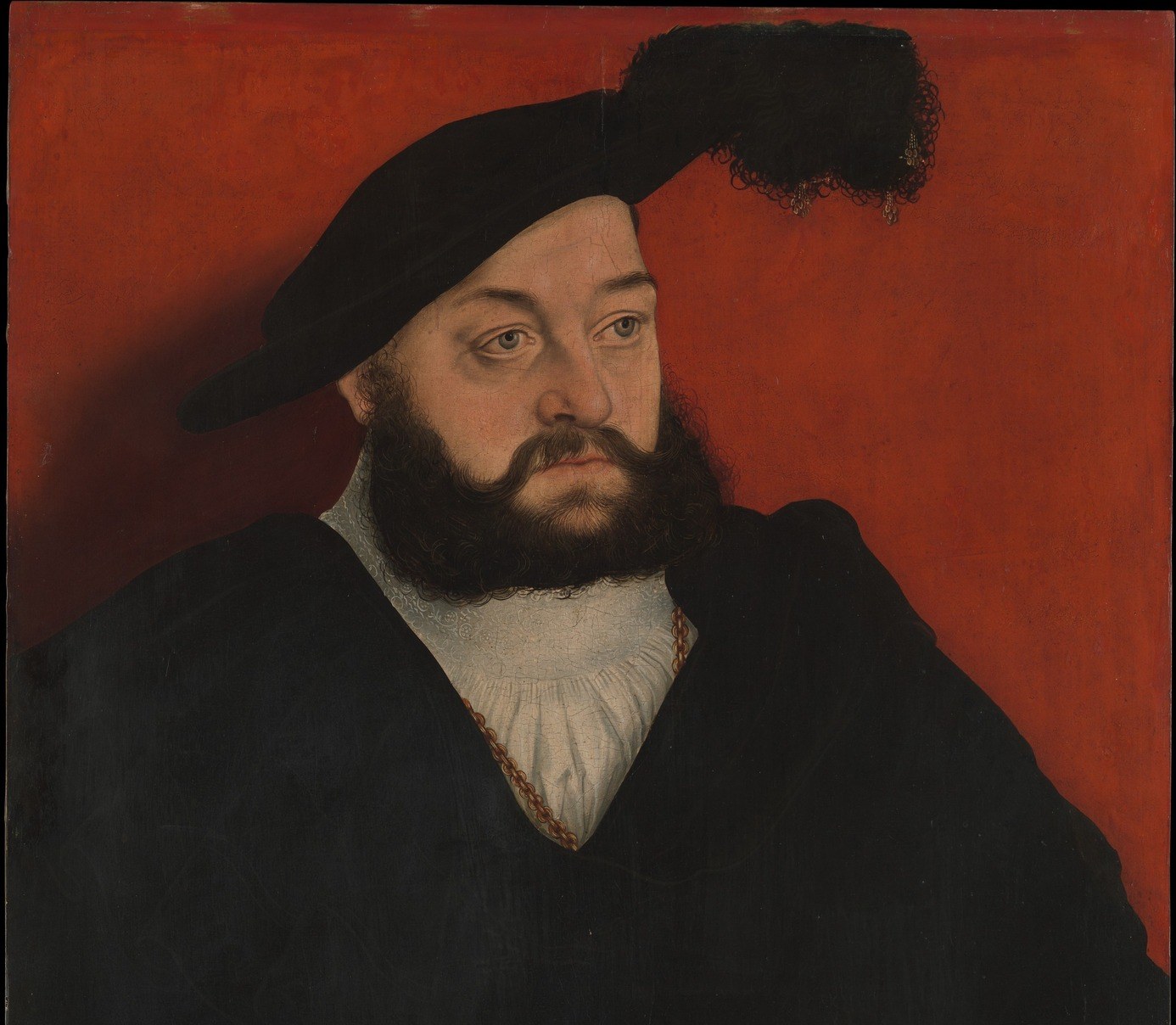
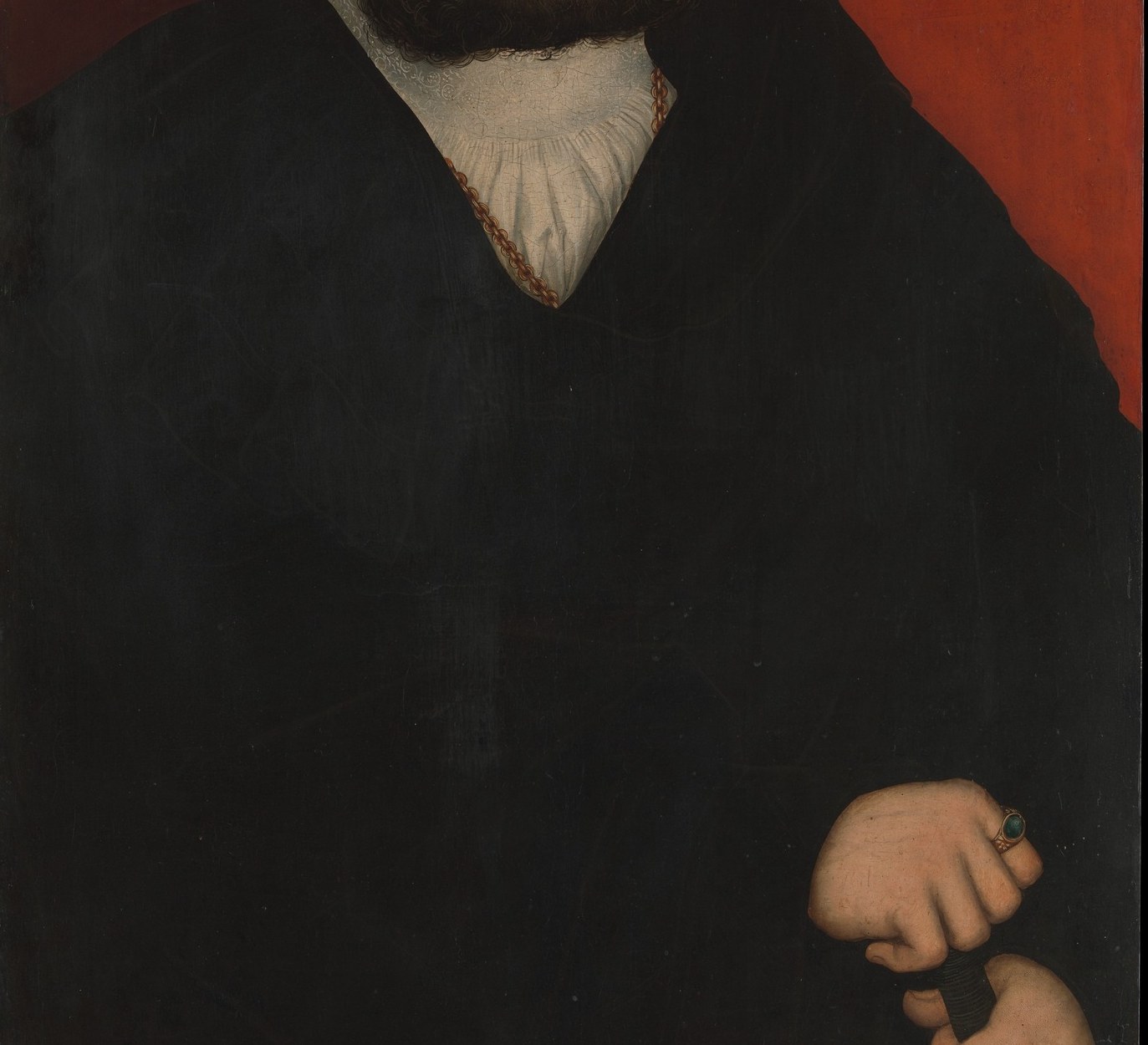
This is Johann the Steadfast, painted in 1534 by Lucas Cranach the Elder. He succeeded his brother Frederick the Wise as Elector of Saxony and became the political backbone of the early Reformation. The portrait hangs at The Metropolitan Museum of Art.
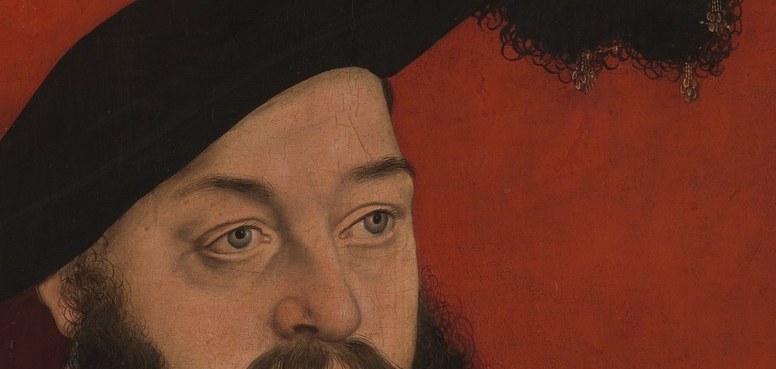
Look at the flat, deep red background. Cranach used this saturated monochrome ground repeatedly, it was not just a style choice but a form of visual branding for the Saxon court. The red isolates the sitter completely, forcing your eye onto his face and his steady, unflinching gaze. Then notice the beard: it is one of the few places where Cranach's brushwork loosens into confident, individual strokes.
Cranach was court painter to the Electors of Saxony and Martin Luther's closest friend. He and his workshop essentially invented the visual language of the Lutheran Reformation, producing portraits of reformers, altarpieces for Protestant churches, and pointed anti-papal woodcuts. This portrait of Johann was made at the height of that project: a ruler who held the line, captured by an artist who defined how that line looked.
A face can be a policy. Here, it is.
Details
Transcript
He looks steady. Unshakeable. That is why they called him Johann the Steadfast. His brother was Frederick the Wise, Luther's protector. When Frederick died, Johann inherited a Reformation. The painter, Cranach, was Luther's closest friend. He designed the propaganda that sold Protestantism to Europe. So this red background is not just color. It is a brand. A man who would not bend, painted by a man who shaped how a faith was seen.