Heart's Ease by William P. W. Dana
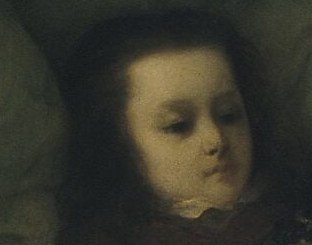
William P. W. Dana's "Heart's Ease" (1863) is a quiet masterpiece that rewards close inspection. Created during a period often defined by grand historical narratives, this painting offers a profound appreciation for everyday beauty and childhood innocence. Dana, an American artist who spent much of his life in Europe, infused his work with a deeply personal and naturalistic style.
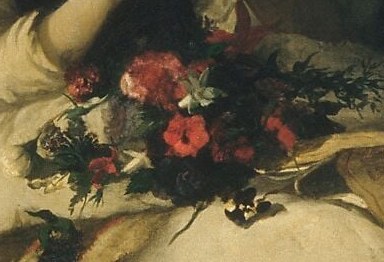
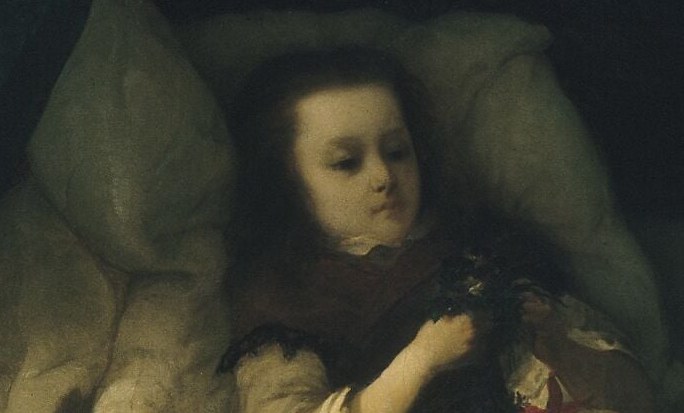
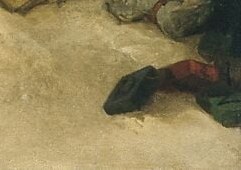
Look closely at the young girl's delicate hands cradling a bouquet of vibrant pink and red flowers. Notice the soft, voluminous white pillow, suggesting comfort and rest, perhaps hinting at a more intimate narrative than first meets the eye. Even the barely legible inscription on the book spine invites further contemplation.
Dana's approach, though influenced by European traditions and known to have engaged with French Impressionists, retained a distinctively familiar and intimate touch. This oil on canvas, sometimes linked to American folk art, stands as a testament to the beauty found in simple moments and the quiet dignity of humble subjects.
What hidden stories do these subtle details tell us about the girl's world?
Details
Transcript
They look like simple flowers and soft bedding. But this was painted in 1863. The painter was American but lived in Europe. Look at the girl's hands holding the blossoms. Her flowers show botanical precision. The pillow suggests comfort or perhaps illness. The inscription on the book is barely legible. Dana's style was intimate and deeply personal.