Sulking by Edgar Degas
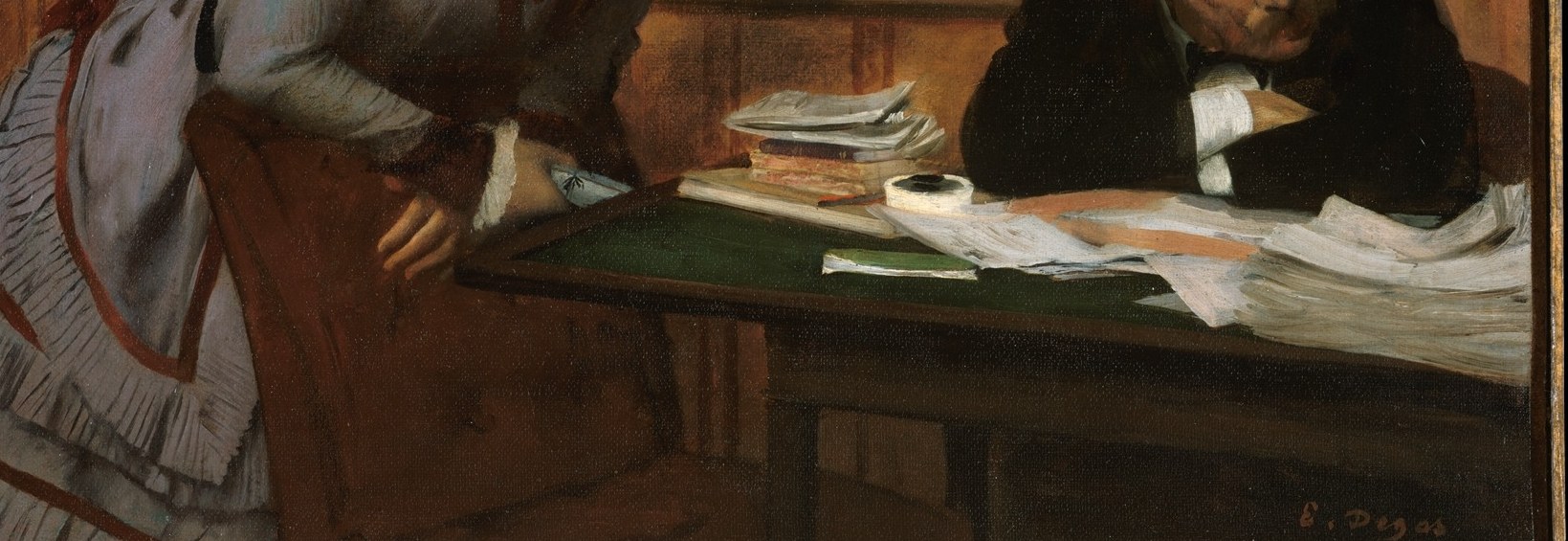
Edgar Degas's "Sulking," painted around 1870, now held at the Musée d'Orsay, Paris, masterfully captures a moment of quiet domestic tension. The painting's power lies in its unspoken narrative, where body language tells a complete story of emotional distance.
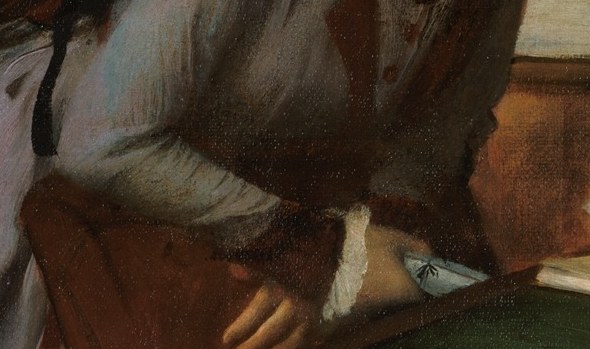
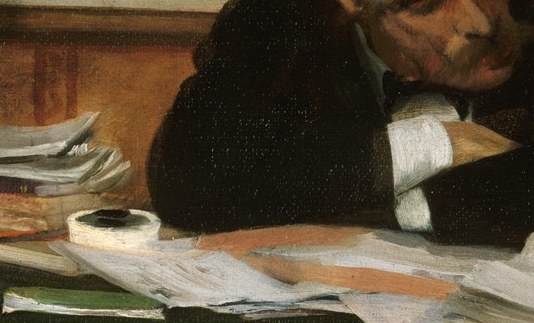
Observe the woman's posture, leaning into the desk with her arm, yet turning her face away from the man. Her averted gaze and the man's absorbed focus on his papers create a palpable sense of disconnect, amplified by his hand resting on the documents like a shield.
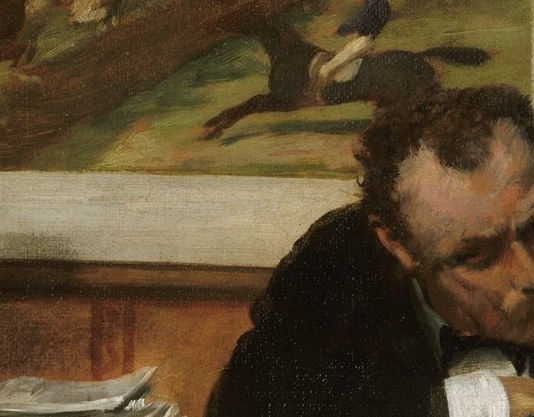
Degas, known for his keen observation of modern life, brings the precision of a history painter to this intimate scene. He uses a subdued palette and dramatic lighting to enhance the melancholic mood, drawing attention to the psychological states of his subjects. The small horse-racing picture in the background, a nod to Degas's own passions, subtly contrasts with the static indoor drama.
What do you imagine led to this silent standoff?
Details
Transcript
This painting is called “Sulking.” See how the woman leans into the man's space. She looks away, refusing to meet his eyes. He keeps his head bent, focused on his papers. His hand rests over the documents, a barrier between them. The painter captures a universal, unspoken domestic drama.