Springtime by Józef Chełmoński
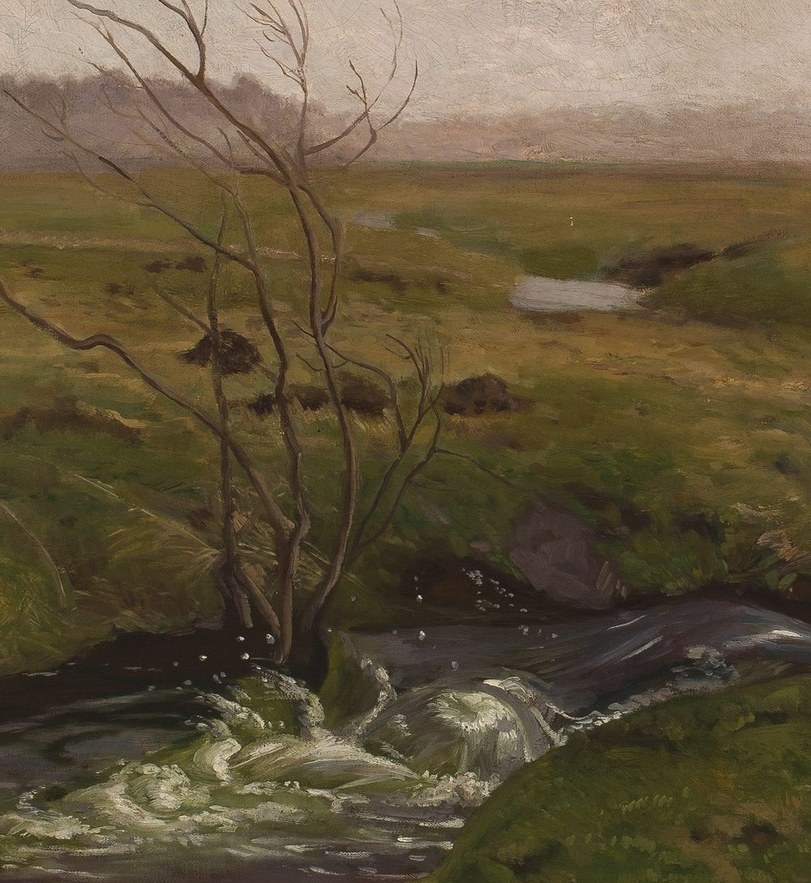
Józef Chełmoński painted "Springtime" in 1896, an oil on canvas now at the National Museum in Warsaw. At first glance it reads as a simple wetland scene: a bare tree, a stream, a misty horizon. But the painter tucked a few things in plain sight that reward a longer look.
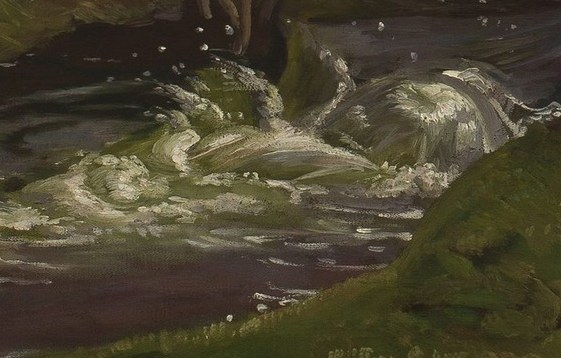
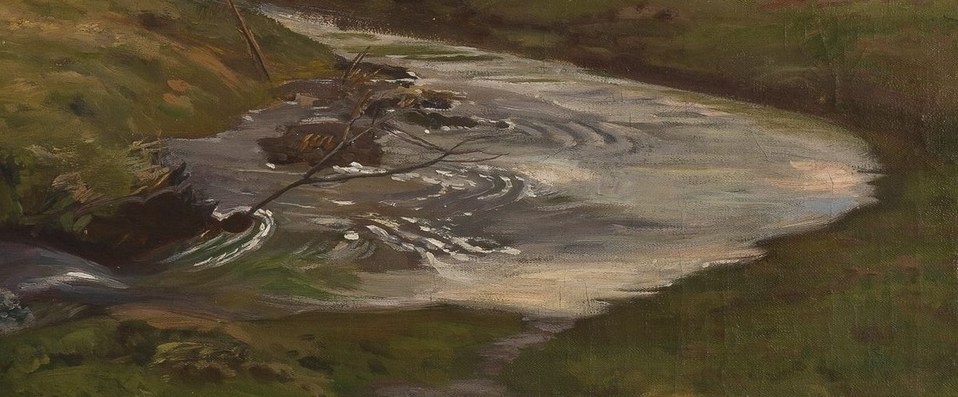
Follow the water past the tree and watch the sky. Three small birds cut across the haze in a tight V, their bodies rendered with little more than two brushstrokes each. Below them, on the near bank, Chełmoński scratched his name into the brown pigment, not on a elegant plaque, but as if he had just passed through the marsh himself.
Chełmoński spent his career documenting the Polish countryside during the late Romantic period, often on large, heroic canvases. This smaller Impressionist work turns inward: no figures, no drama, just the quiet pivot between frost and green. The museum acquired it among a broader group of his rural landscapes.
Next time a landscape looks empty, stay a moment. The birds were there all along.
Details
Transcript
A wide, quiet marsh at the edge of winter. A bare tree stands alone, waiting for leaves. Beneath it, a stream rushes through dead grass. Chełmoński painted this in 1896, as winter gave way. Now look above the stream, against the mist. Three birds fly in tight formation. The painter signed his name in the mud at lower right.