View of Toledo by El Greco
View the artwork: View of Toledo →
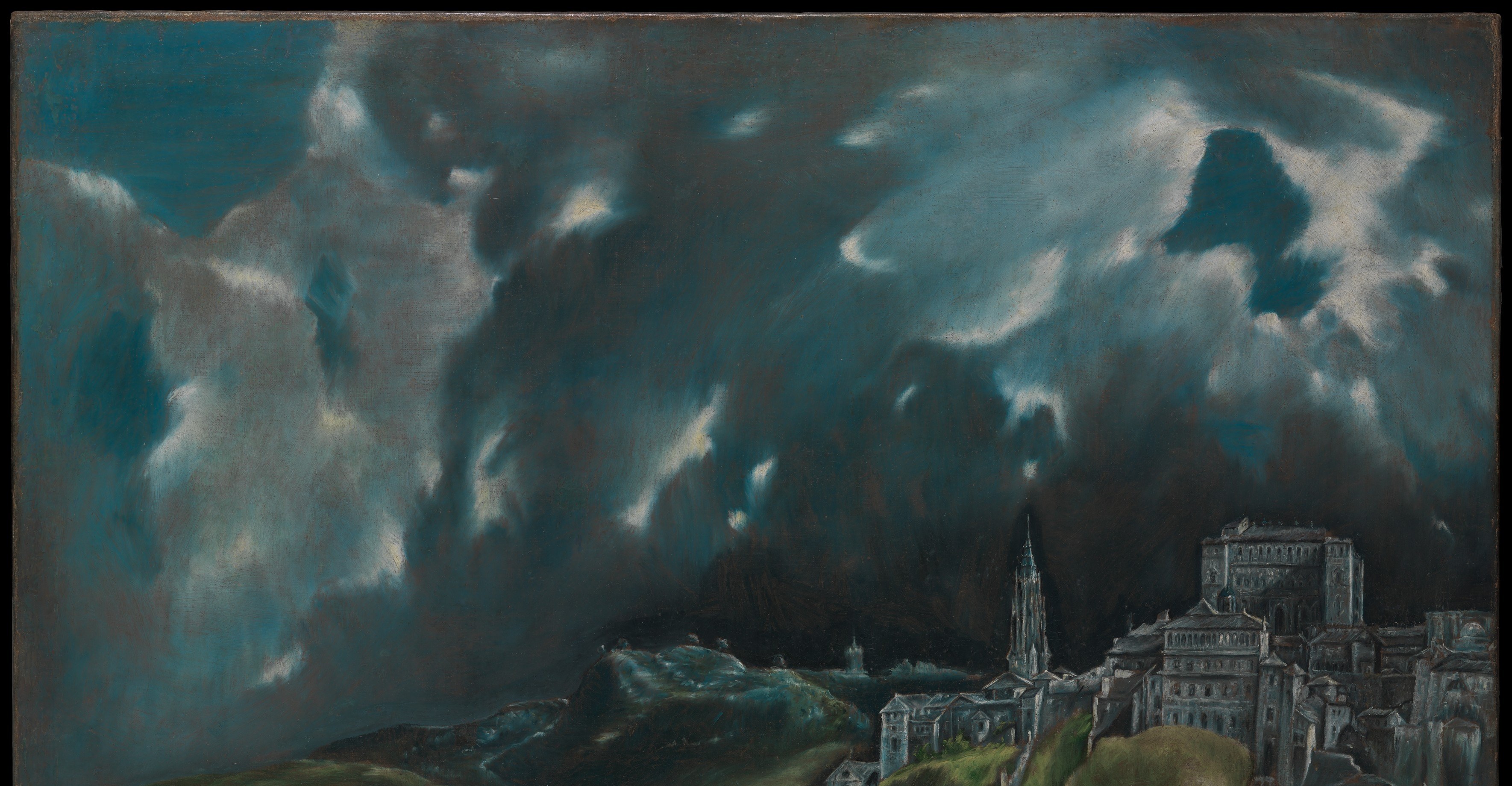
View of Toledo is one of only two pure landscapes El Greco ever painted, and arguably the most celebrated sky in Western art alongside van Gogh's Starry Night. It hangs in the Metropolitan Museum of Art in New York, where it has been since 1929, but it was almost certainly never meant for a museum wall. El Greco painted it around 1596-99 for a private chapel or personal patron, a devotional object made to be looked at in silence.
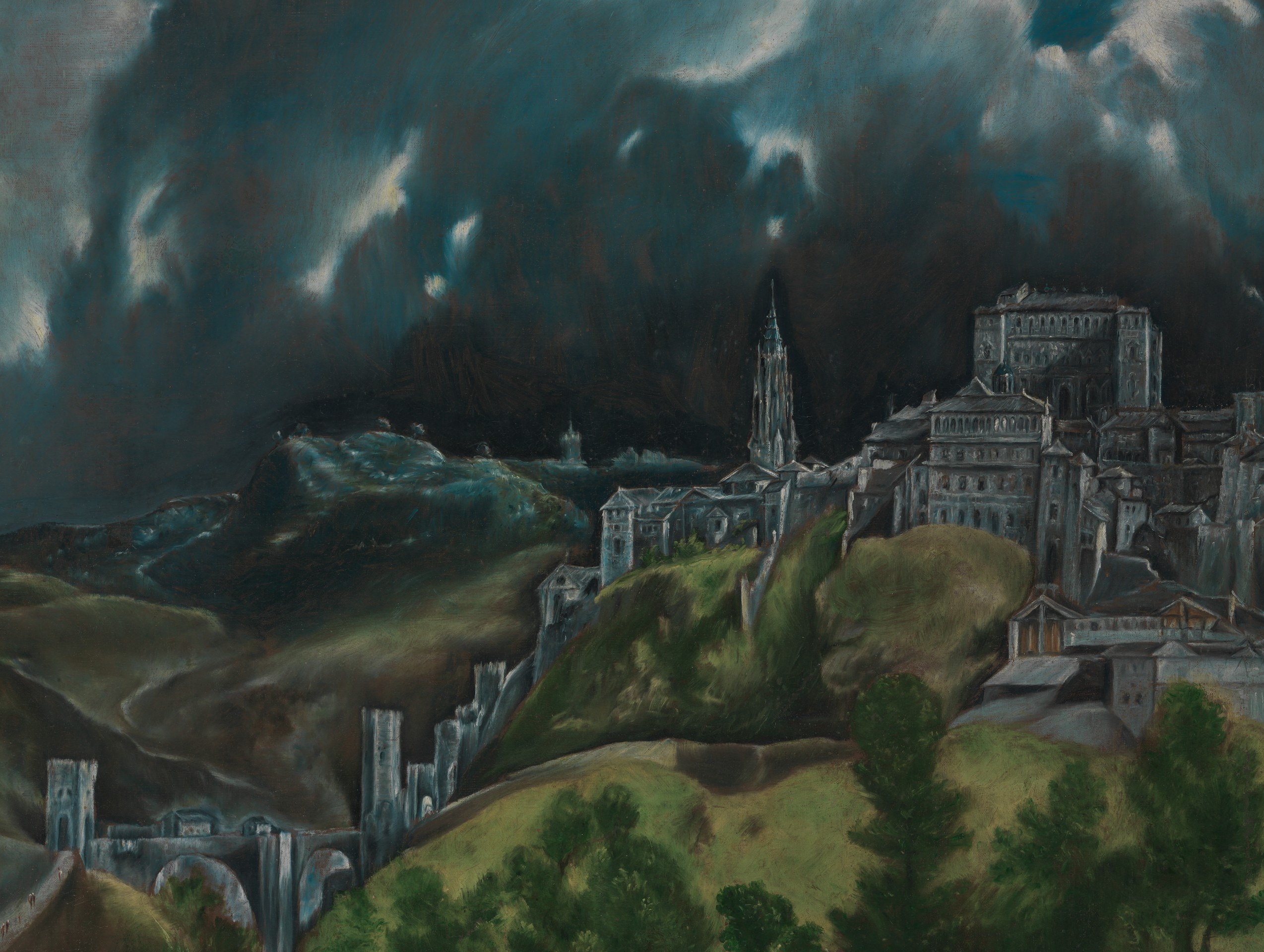
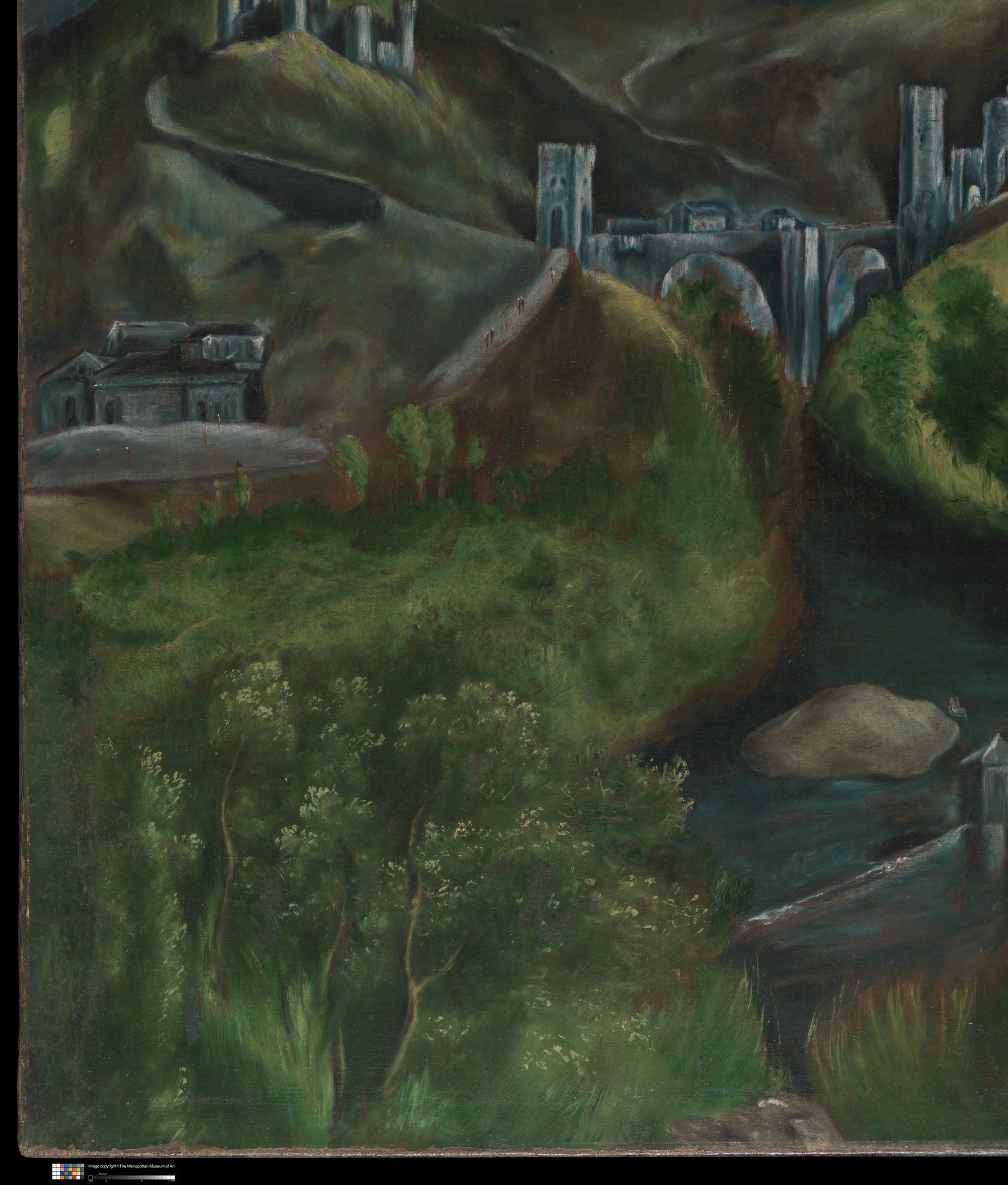
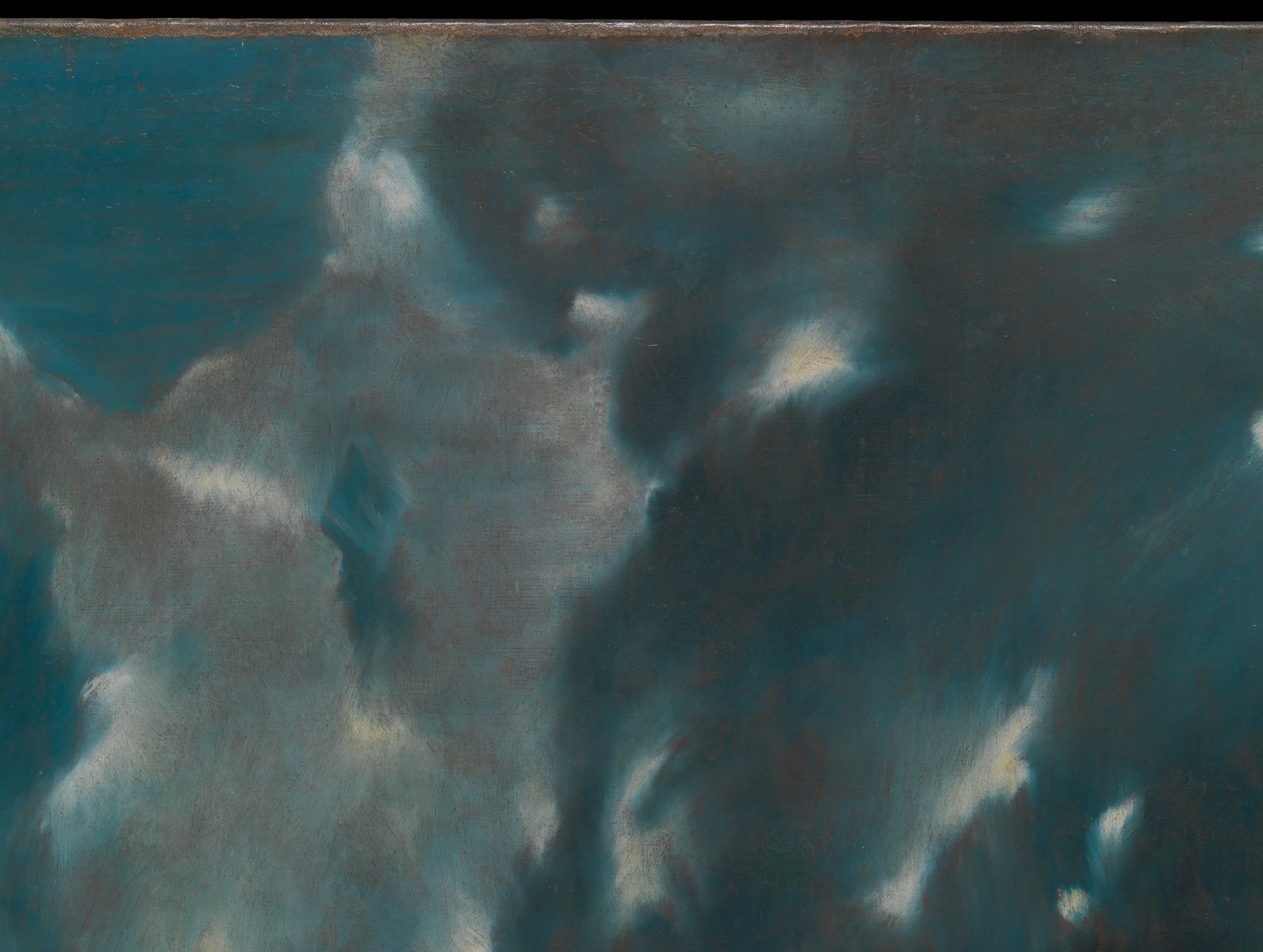
Look at the geography of the city. The cathedral spire sits on the left and the Alcázar fortress on the right. That is backwards, in the actual city of Toledo, the cathedral is on the right of the Alcázar. El Greco swapped them. He wasn't careless. He was building a composition where architecture and sky could speak the same charged language. The green hillside glows with an electric unnaturalness, and the boundary where cloud meets land is deliberately ambiguous, as if the city were dissolving into revelation.
Doménikos Theotokópoulos, called El Greco, was born in Crete in 1541 and trained as a Byzantine icon painter before passing through Venice and Rome. He settled in Toledo in 1577 and never left. His Mannerist distortions, elongated figures, unreal color, impossible light, baffled many of his contemporaries but found a fierce audience in Spain's Counter-Reformation church, which wanted art that felt like a direct encounter with the divine. View of Toledo is that encounter, rendered in oil paint.
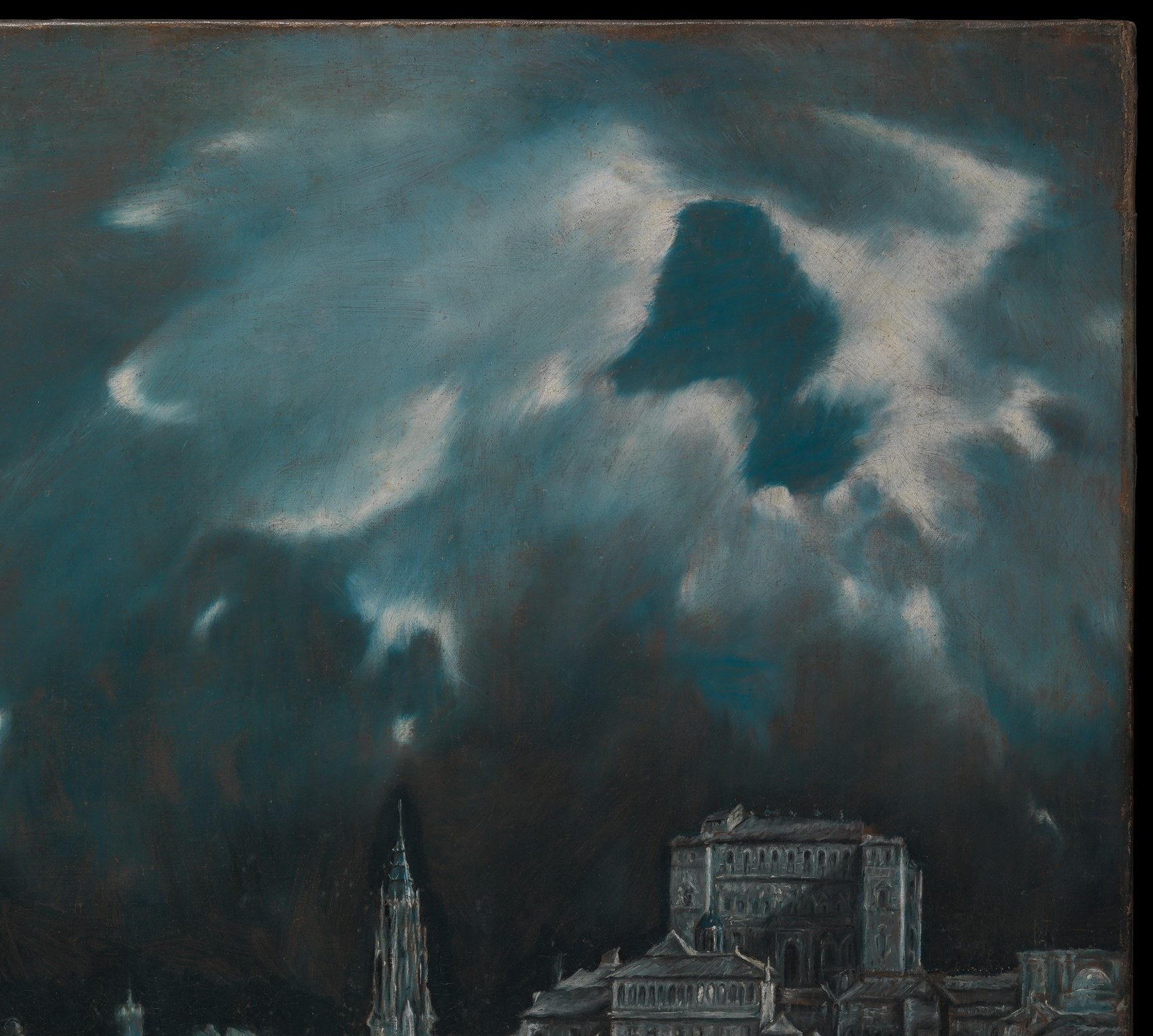
Every brushstroke in the sky is visible. The swirl of the clouds and the phosphorescent break of light are built from layered impasto and almost violent brushwork, a technique no other painter of his time was using at this scale. The painting is small, about four feet by three, but the sky feels vast. That is the trick: he made paint behave like weather.
#arthistory #elgreco #metmuseum
Details
Transcript
It looks like a storm over Toledo. But El Greco was not a reporter. He moved buildings. The cathedral tower is on the left. In the real city, it's on the right. And the sky: no storm ever looked like this. Look at the light breaking through. It doesn't cast a shadow. This is a vision, not a landscape. He painted heaven and earth as one continuous, charged substance. It belongs to a museum now, but El Greco made it for a private chapel.