Artwork
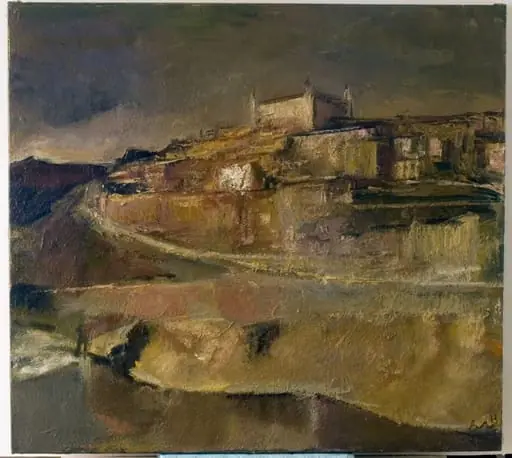
View of Toledo
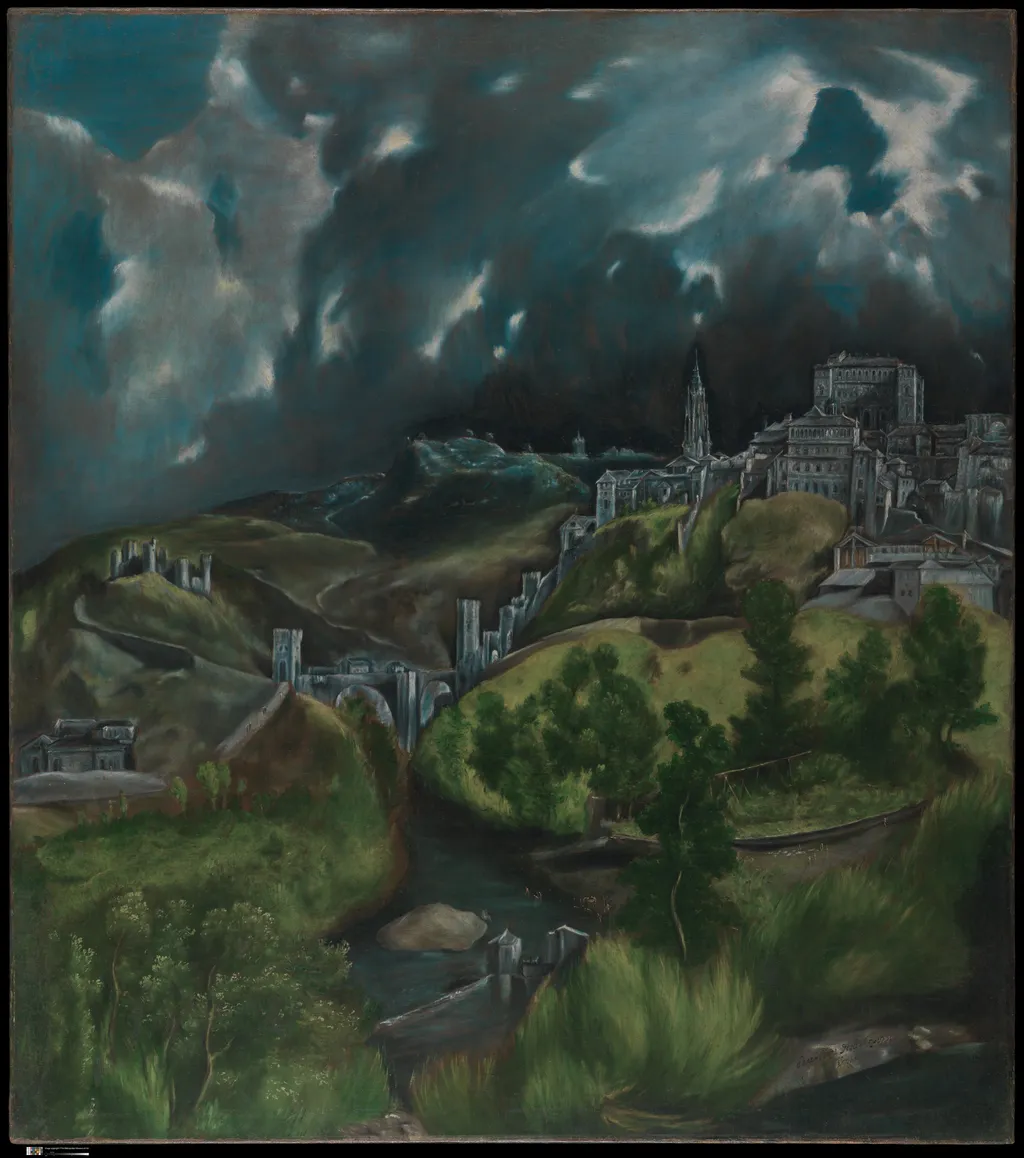
View of Toledo is an oil painting by the Mannerist artist El Greco. It dates from 1598 and is held in the collection of the Metropolitan Museum of Art.
About this work
Storm clouds press down on the Alcázar and cathedral of Toledo, which El Greco rearranged for spiritual effect. Painted around 1596 to 1599, it is one of only two surviving independent landscapes by the Cretan-born artist. He shifted the cathedral left of the royal palace and set the Tagus glinting below the Alcántara Bridge. The Met acquired it in 1929 from the Havemeyer Collection.
Subject & Meaning
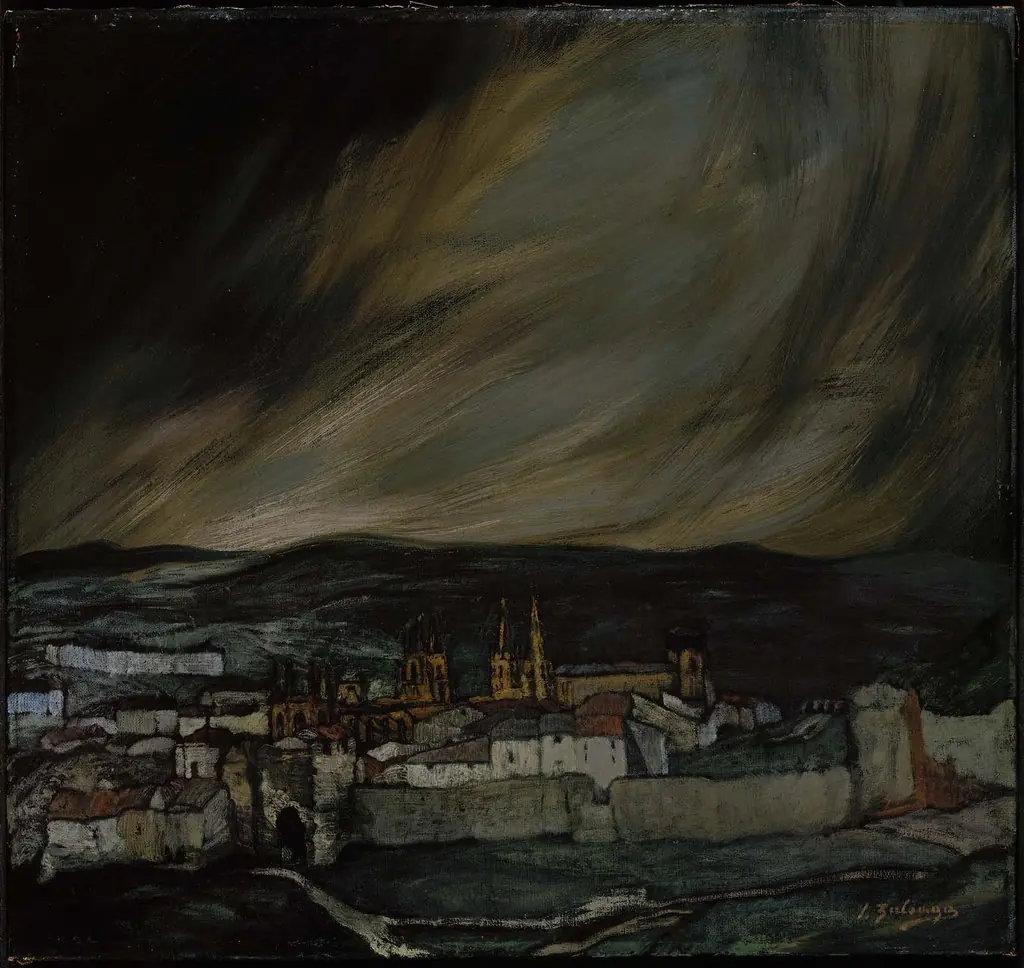
This arrangement, combined with the stark contrast between the dark sky and illuminated structures, imbues the scene with a mystical, otherworldly quality.
The subject is the Spanish city of Toledo under a stormy sky, featuring identifiable landmarks such as the Alcázar, cathedral, Castle of San Servando, and the bridge over the Tagus River. However, El Greco deliberately rearranged these elements: he omitted the city wall, altered the river's course, and repositioned buildings to create an idealized, spiritual vision rather than a literal topographical record. The city is placed atop a hill, symbolizing its proximity to heaven, with the hills serving as a pedestal that elevates it.
This arrangement, combined with the stark contrast between the dark sky and illuminated structures, imbues the scene with a mystical, otherworldly quality. Art historians interpret the painting as expressing "a city of the spirit," reflecting the religious mysticism that permeated Toledo during the period. The altered geography may also reference civic pride and the city's historical importance.
Technique & Style
El Greco executed View of Toledo in oil on canvas, measuring approximately 121.3 × 108.6 cm. The handling is notably expressive: the sky is built with broad, fluid brushstrokes in deepening blues and blacks, creating a tumultuous, storm-laden atmosphere that sharply contrasts with the vivid greens and earth tones of the hills below. Architecture and landmarks are rendered with crisp, precise outlines, while natural forms such as trees and meadows blur into the landscape, heightening a dramatic chiaroscuro. El Greco manipulated topographical accuracy, displacing and inventing buildings, to serve a symbolic, spiritually charged composition.
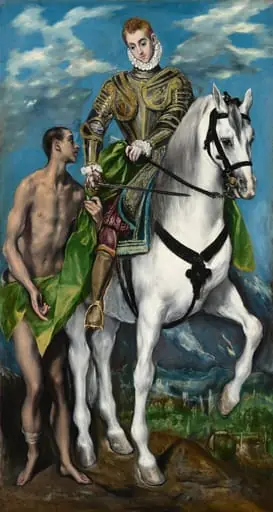
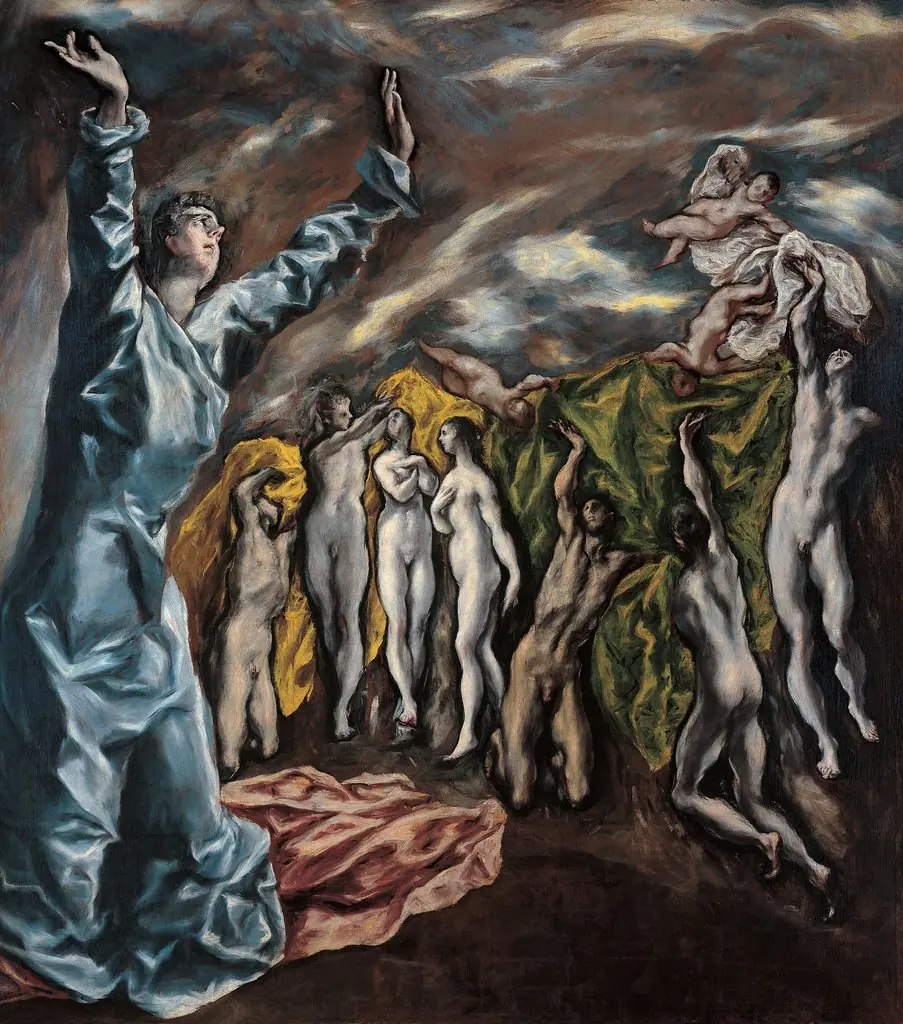
Stylistically, the work fuses Mannerist elongation and anti-naturalism with Byzantine iconographic echoes, resulting in an uneven, dynamic line and an eerie, ghostly illumination that has been celebrated for its modernist premonition.
History & Provenance
The painting remained in El Greco's studio until his death, then passed to his son Jorge Manuel, who kept it until at least 1621. By 1629 it belonged to Pedro Salazar de Mendoza in Toledo. It later entered the collection of the Condessa de Añover y Castañeda in Madrid's Oñate Palace.
In 1907, the dealer Ricardo de Madrazo acquired it for the Parisian art house Durand-Ruel, which sold it in 1909 for 70,000 francs to American collector Louisine Havemeyer. She bequeathed it to the Metropolitan Museum of Art in 1929. The dating is debated: Harold Wethey placed it between 1595 and 1600 based on stylistic links to other works, while earlier accounts suggested after 1600; the most commonly accepted range is 1596–1600. It is one of only two surviving landscapes by El Greco.
Context
View of Toledo is celebrated as one of the most ambitious landscapes in Western art, with art historian Keith Christiansen ranking it among El Greco's masterpieces. Its dramatic sky has drawn comparisons to works by van Gogh, Turner, and Monet. Critical reception has been vivid: Ernest Hemingway called it the best painting in the Metropolitan Museum, while Paul Claudel described its green as "venomous."
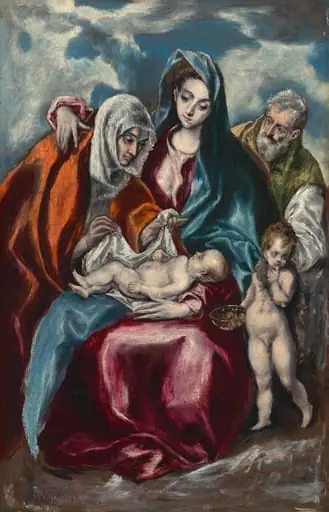
Twentieth-century Expressionists and Surrealists, notably Salvador Dalí, admired the painting's modernist qualities. Scholarly debate has centered on dating: Harold Wethey places it between 1595 and 1600, linking it to Saint Joseph and the Christ Child, while others argue for a later date. The work belongs to the Mannerist movement and is remarkable as one of very few surviving pure landscapes by El Greco, possibly the first Spanish landscape painting of its era. Its style reflects the artist's Greek and Italian influences, with interpretations invoking Platonism and Byzantine traditions.
Legacy
By the 20th century, View of Toledo had achieved iconic status. Art historian Keith Christiansen ranked it among Western art's most celebrated landscapes, and it is often cited alongside Vincent van Gogh's The Starry Night and works by J. M. W. Turner and Claude Monet as a masterful depiction of sky. The painting's modernist sensibility and dramatic expressiveness resonated deeply with later movements.
It was particularly admired by Expressionists and Surrealists; Salvador Dalí was a noted devotee. Ernest Hemingway called it "the best painting in the entire museum" (the Metropolitan Museum of Art), while Paul Claudel remarked on its "vert vénéneux." These appraisals cemented the work's reputation as a profoundly influential landscape.
Overview
El Greco's View of Toledo, an oil painting from approximately 1596–99, stands as one of only two independent landscapes by the Cretan-born artist. This dramatic depiction of the Spanish city is housed in the Metropolitan Museum of Art in New York City. The work is notable for its expressive portrayal of the urban landscape under a turbulent sky, offering a distinct artistic interpretation rather than a topographical rendering.
Own this work as a print
Artist & collection
Artist
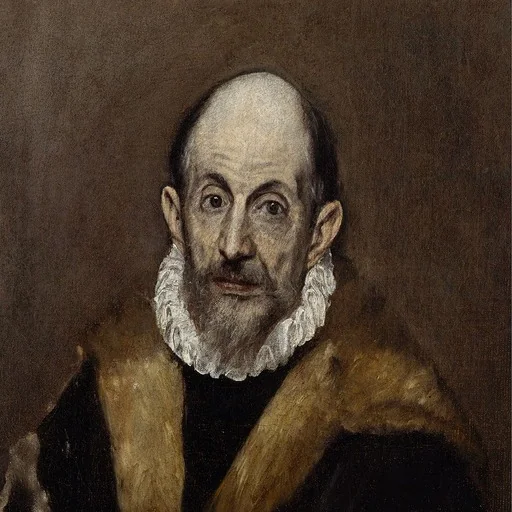
Doménikos Theotokópoulos was born in 1541 in Candia (modern Heraklion), the capital of Venetian-ruled Crete, where he was trained in the post-Byzantine tradition of icon painting.