Delaware Water Gap Village by Louis Eilshemius
Louis Eilshemius painted *Delaware Water Gap Village* in 1894. It hangs today at The Metropolitan Museum of Art in New York, a gift from the artist himself.
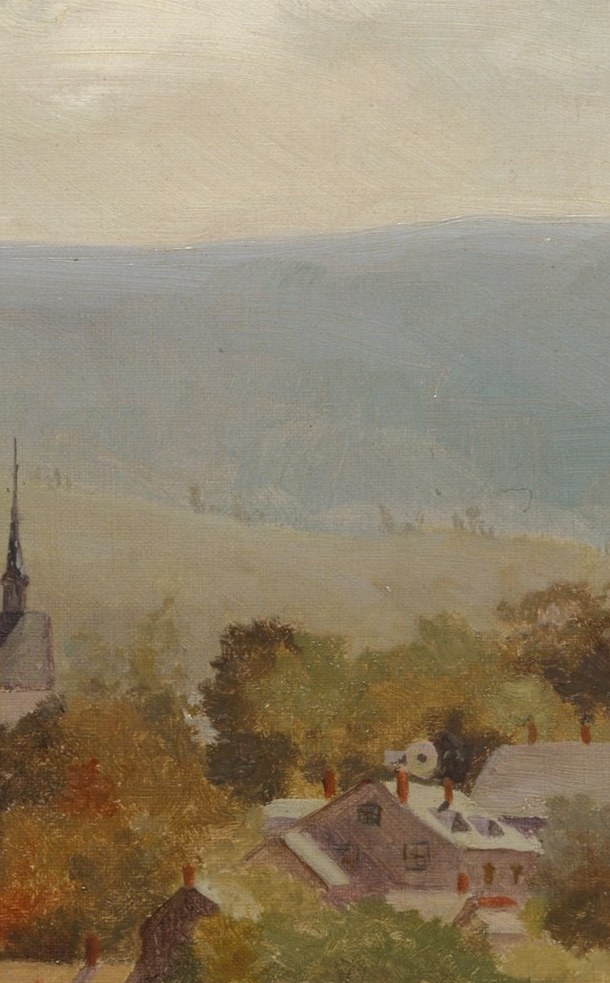
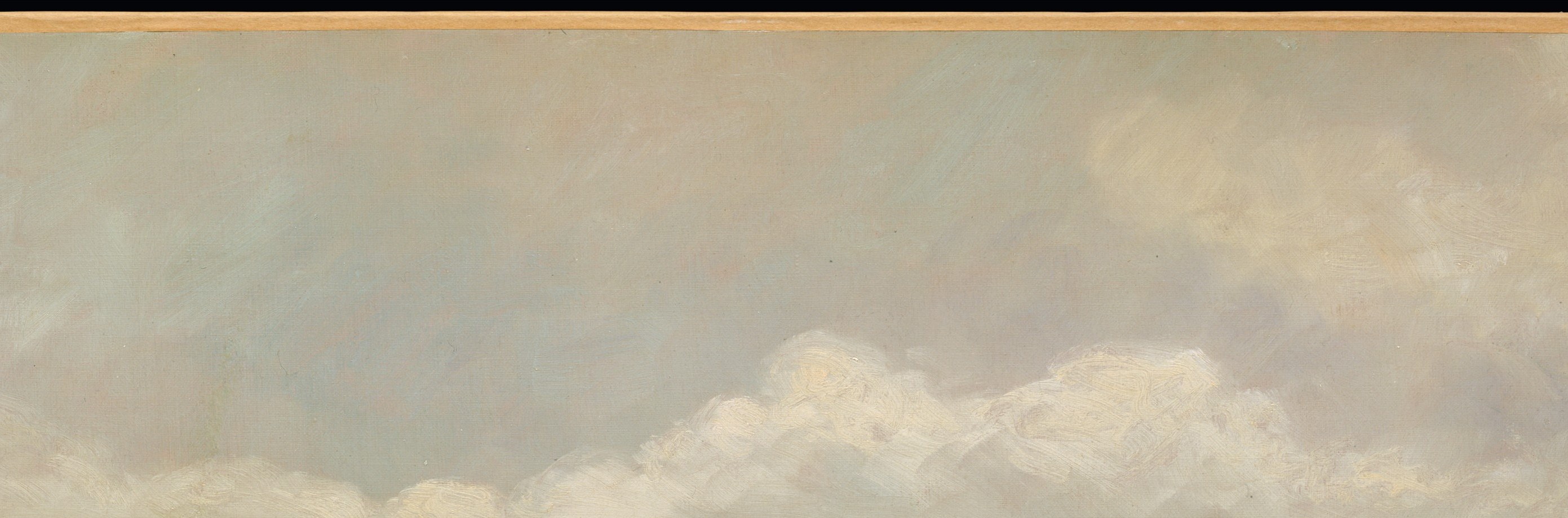
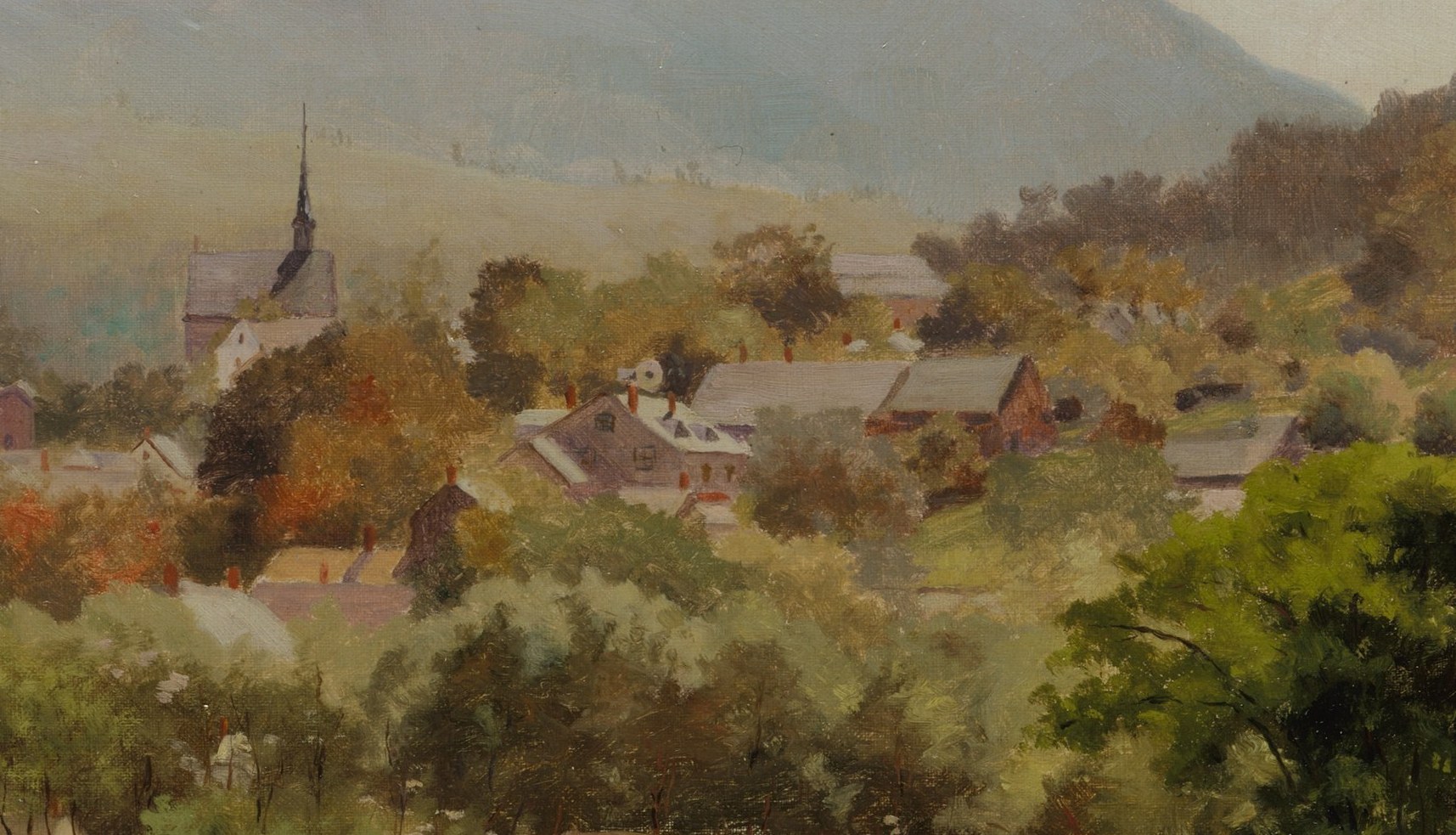
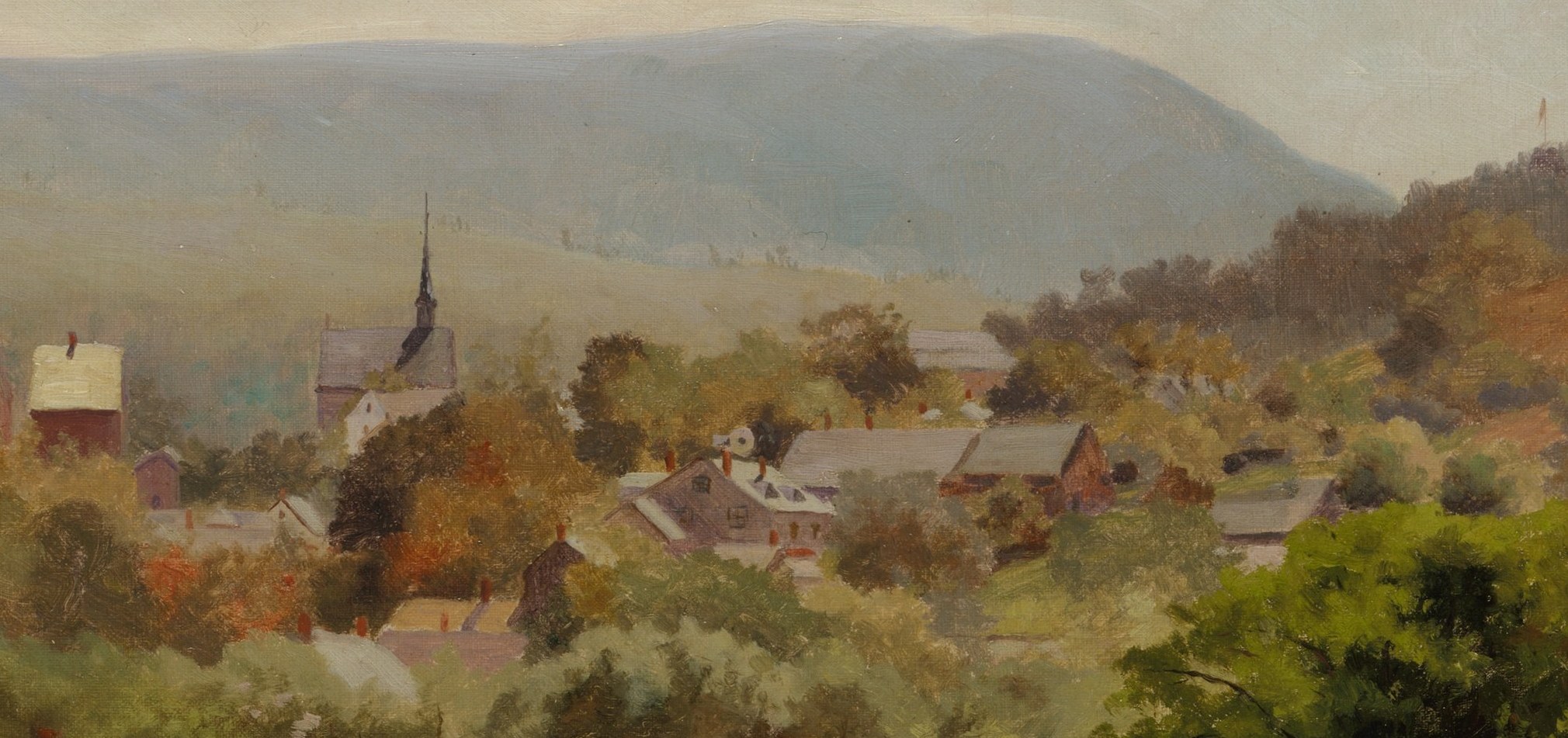
The painting shows a quiet settlement tucked into the Delaware Water Gap. A white church steeple anchors the village, above it a band of hazy light softens the mountain ridge. The brushwork is loose, American Impressionist, catching a late-afternoon atmosphere rather than precise detail. Look to the right margin: scattered white structures reveal the village is larger than it first appears, a hidden discovery in the margins.
Eilshemius was the son of a wealthy New Jersey importer. He studied in Europe, then returned to New York determined to be taken seriously as an artist. But the critics were indifferent, the market worse. So he used his inheritance to buy back his own work, pulling paintings out of circulation rather than see them sold cheap. He wanted the world to believe he was a genius. For most of his life, it did not.
It is hard to say whether giving this painting to The Met was an act of generosity or a last attempt to be seen. The museum accepted it. But for decades, the man who had once priced his own genius as priceless remained effectively invisible.
Details

Transcript
In 1894, a wealthy young New Yorker painted this valley. His name was Louis Eilshemius. He had studied in Europe. Look at the loose, hazy light behind the mountain. He painted American Impressionism before it was a market. Critics ignored him. So he bought his own paintings. He spent a private fortune to keep his work off the market. He gave this one to The Met himself. His price: zero. He thought they would see him. They barely did.