After the Hunt by Gustave Courbet
View the artwork: After the Hunt →
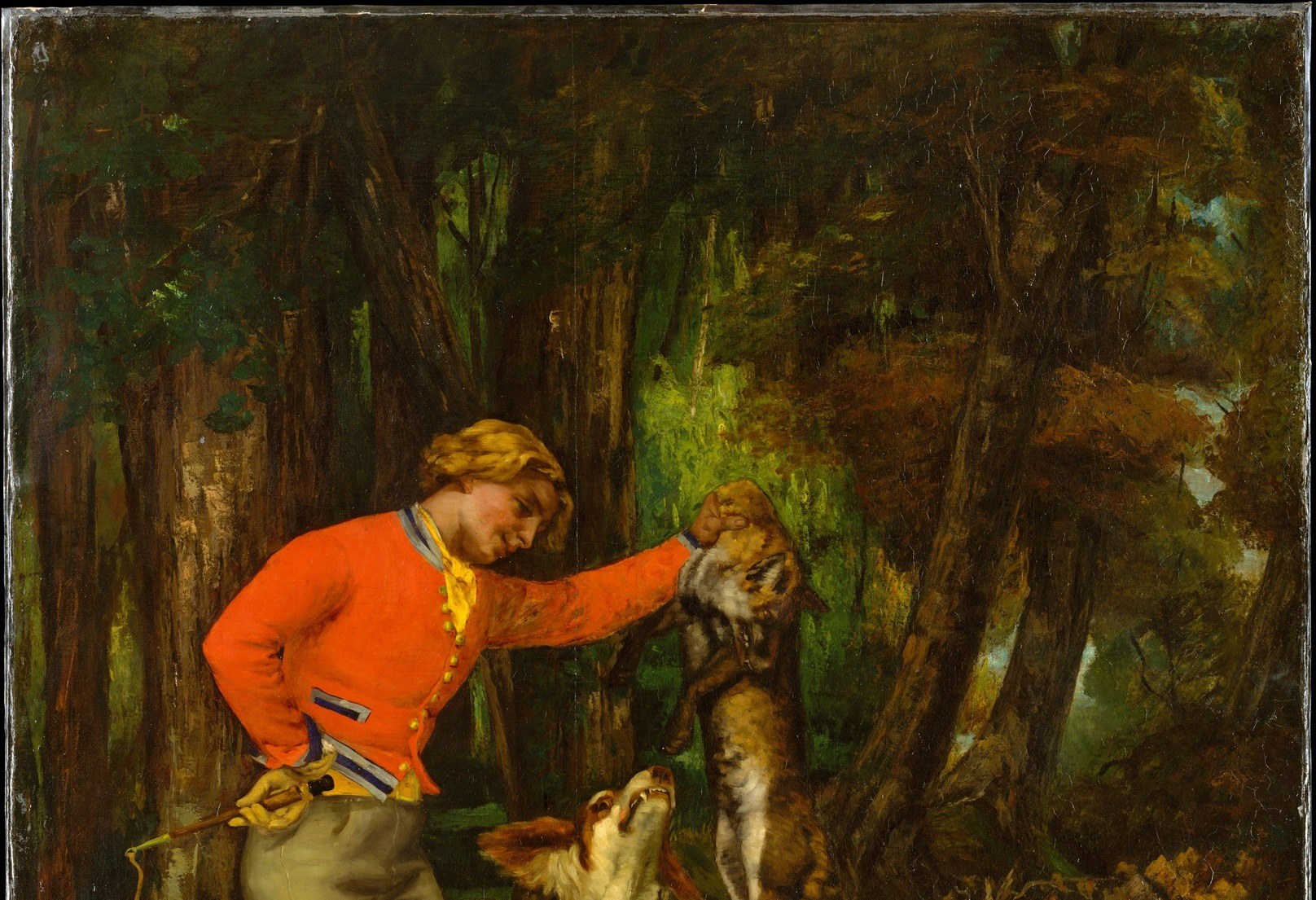
Gustave Courbet's 'After the Hunt' (c. 1859) lives in a private collection, seen far less often than his grand provocations like 'The Stone Breakers' or 'A Burial at Ornans'. It comes from the same hand that scandalized Paris by painting peasants at the scale of gods. But this canvas asks something quieter of us.
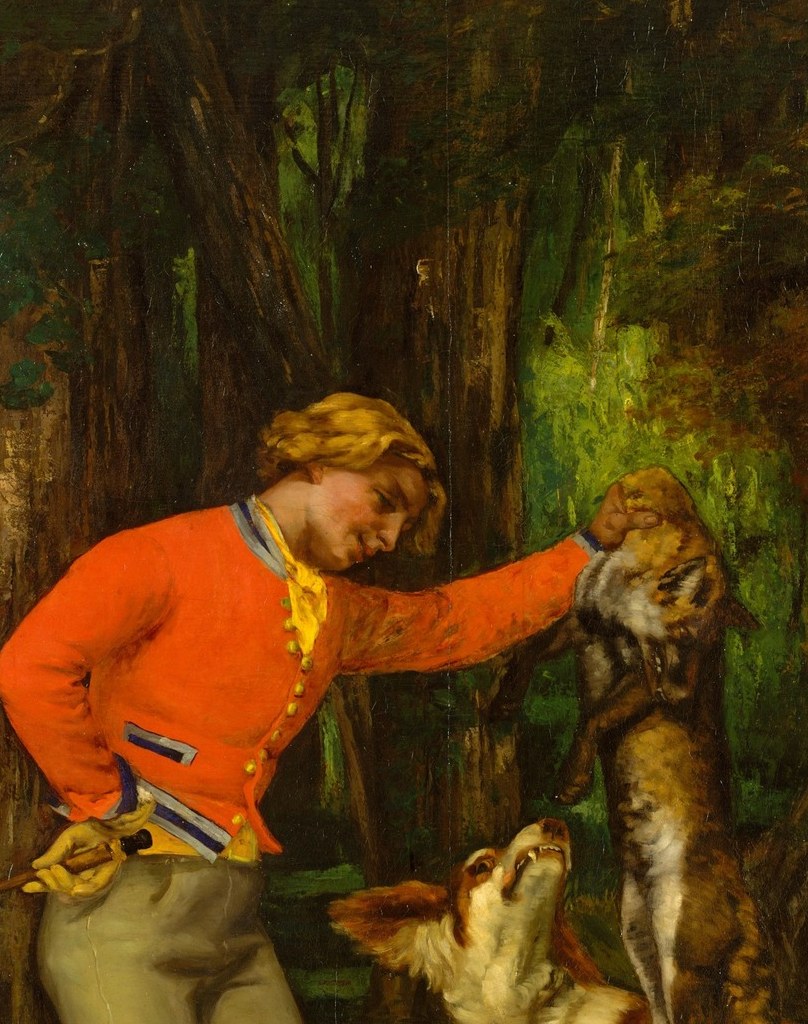
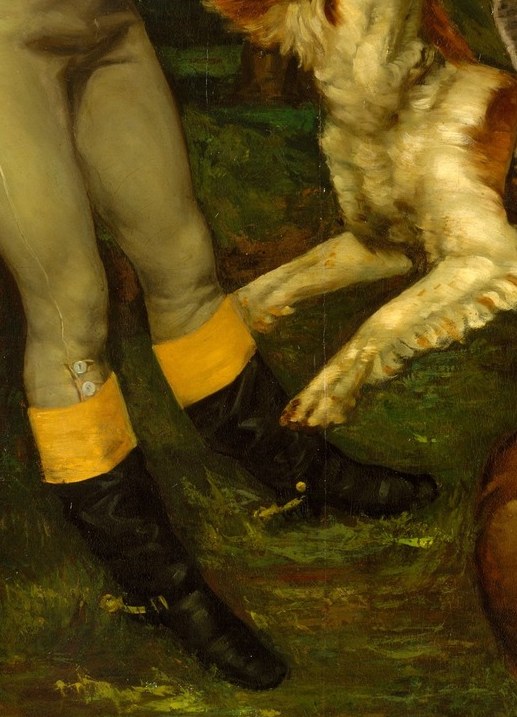
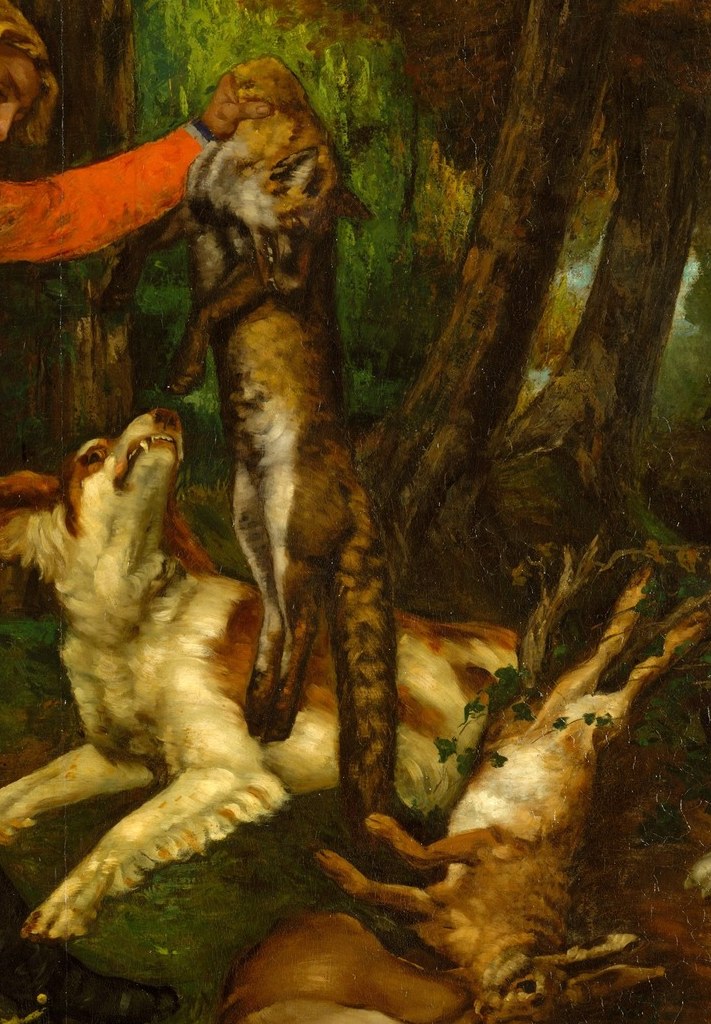
Look at the hunter’s face under the flat-brimmed cap. He does not meet our gaze. His expression is not the pride of a trophy kill but something closer to bone-deep fatigue. Courbet gives the drama to the dogs instead, one still lunging upward with an open mouth, the other collapsed on the forest floor, its body a soft counterweight of pure exhaustion. The dead hare on the ground reads like a classical vanitas, a reminder tucked beside the day’s success.
Courbet painted hunting scenes with real knowledge; he was an avid hunter. By 1859 he was France’s most notorious realist, having declared he would paint only what he could see, rejecting the imaginary worlds of academic and Romantic art. Twelve years later his conscience would land him in prison for six months for his role in the Paris Commune, and from 1873 he lived in Swiss exile until his death four years after that.
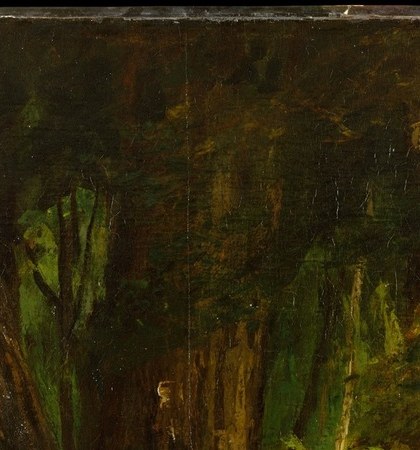
The forest he builds here is dense, near-black, slabs of paint laid down with a trowel’s authority. It presses inward. And at the center, in a jacket the color of a wound, stands the painter who lost his country but never stopped insisting that the truth was enough. Is he alone in these woods? Yes. But he is not lonely. He has the dogs, the trees, and a world he can still trust with his eyes.
#arthistory #gustavecourbet #realism
Details
Transcript
Gustave Courbet spent his last years in exile. He had led a revolution in painting. Then a real one. Imprisoned, then banished, he hunted to find stillness. The man in the red jacket is likely the painter himself. He looks down at his dogs. Not at us. One dog will not stop reaching for the day's catch. The other has given in to the weight of the forest. He painted exactly what he saw. This quiet was true.