Artwork
After the Hunt
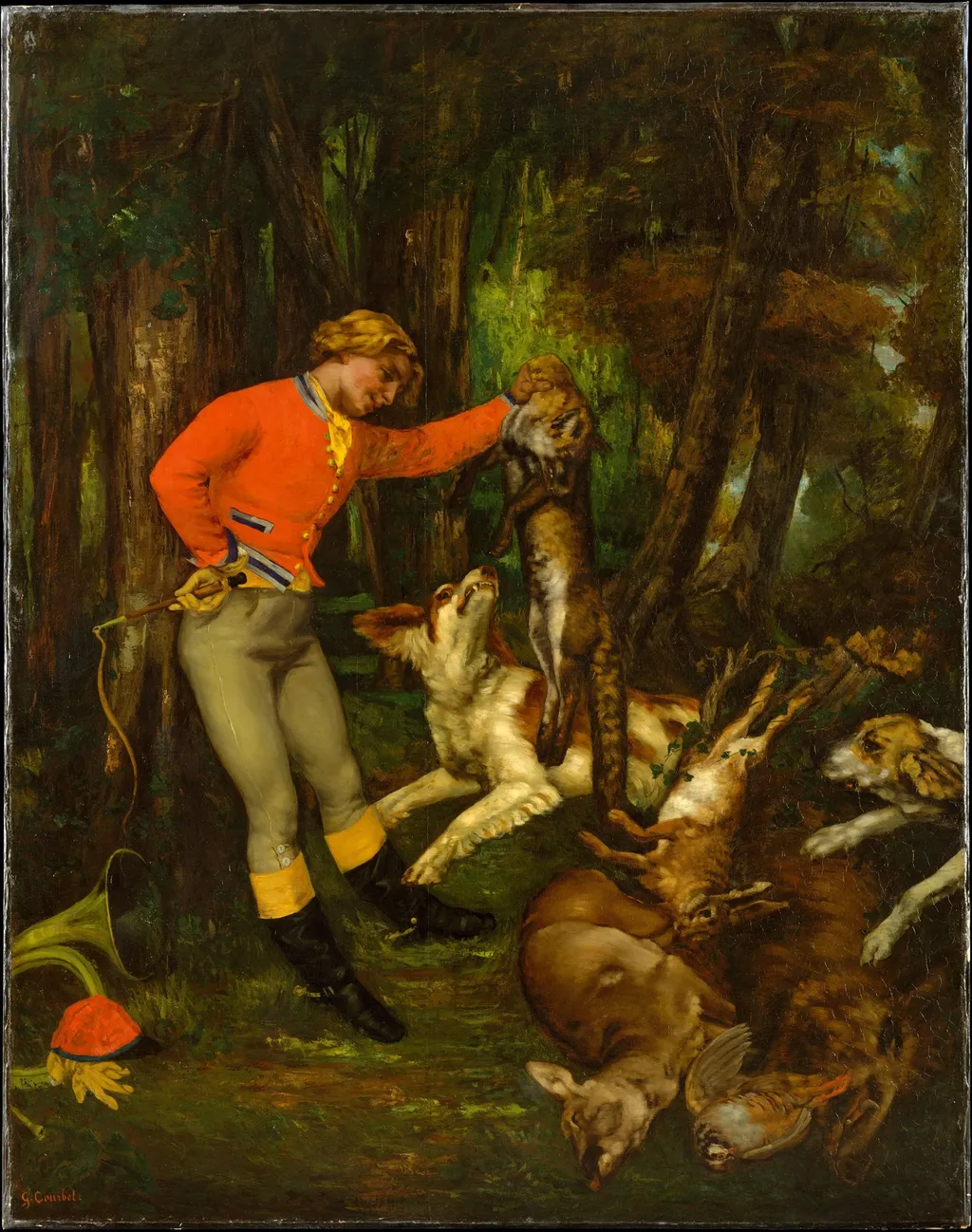
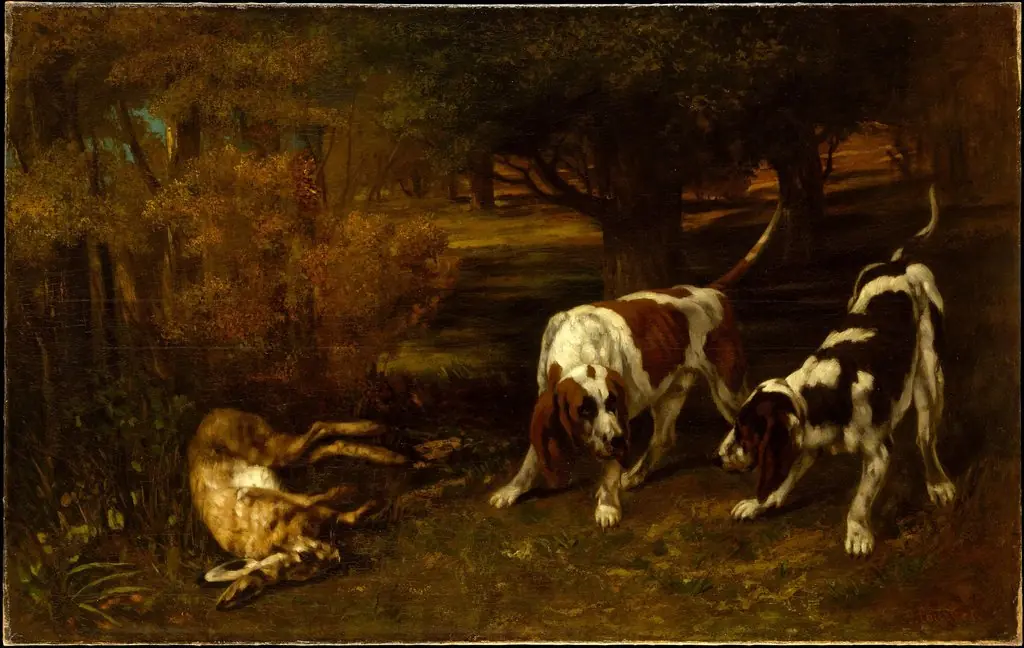
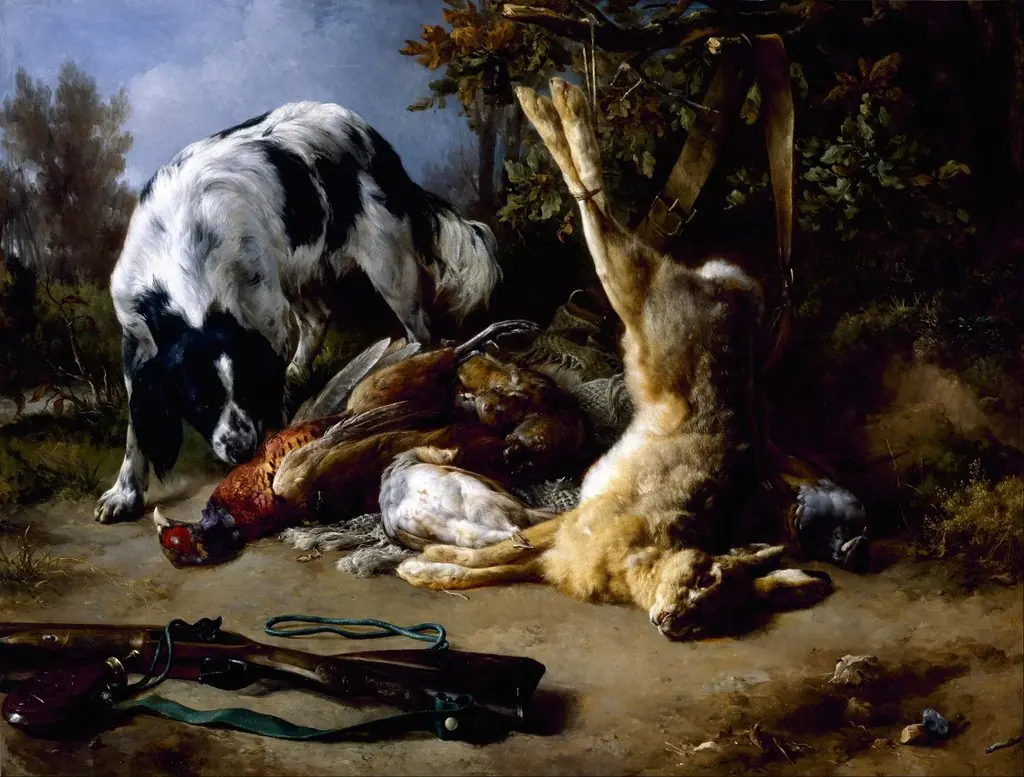
After the Hunt is an oil painting by the Academic Art artist Gustave Courbet. It dates from 1859 and is held in the collection of the Metropolitan Museum of Art.
About this work
Subject & Meaning
The scene is set in a realistic landscape that underscores the academic art tradition of detailed natural observation.
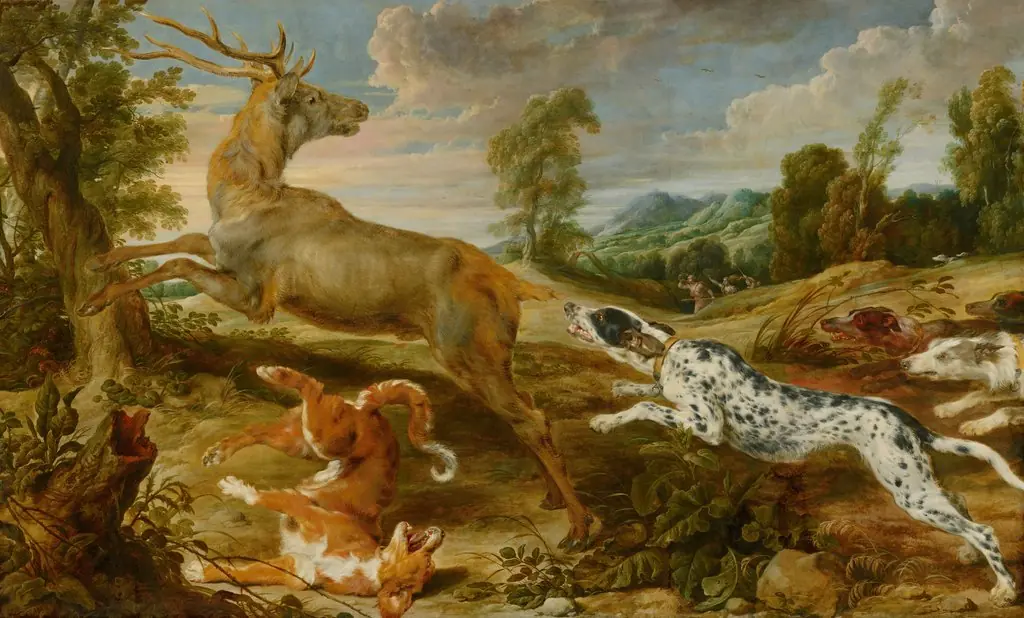
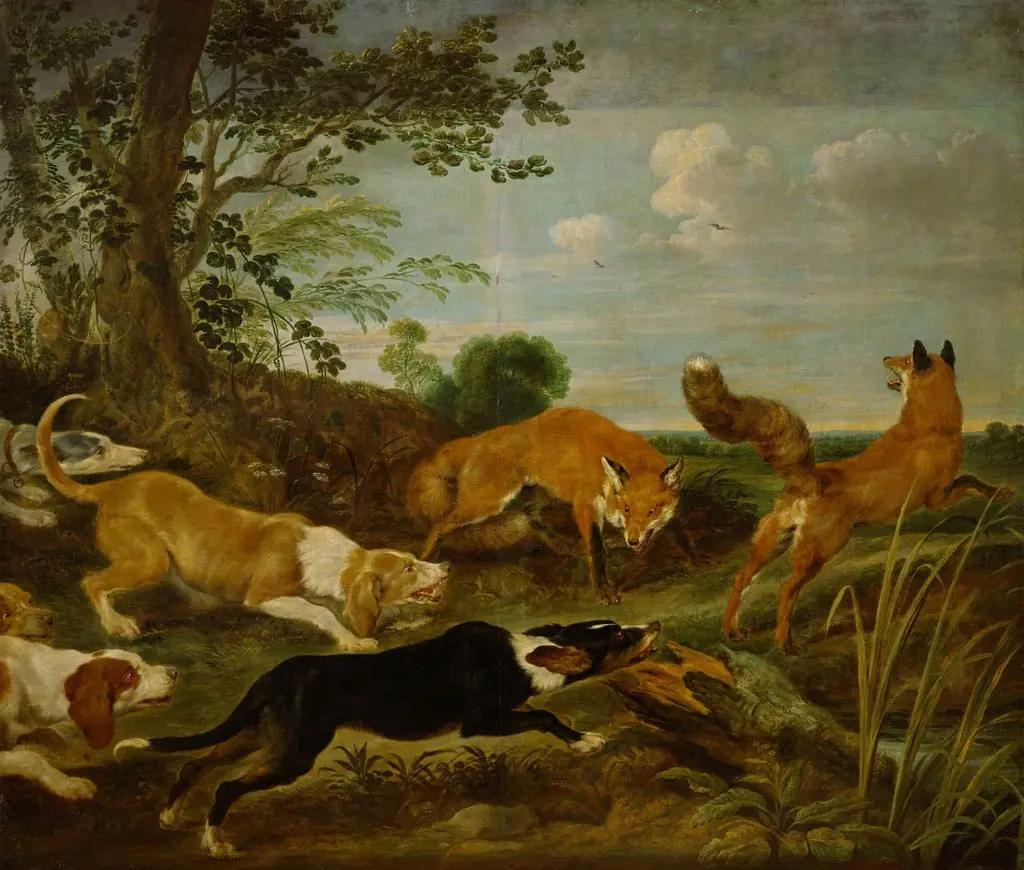
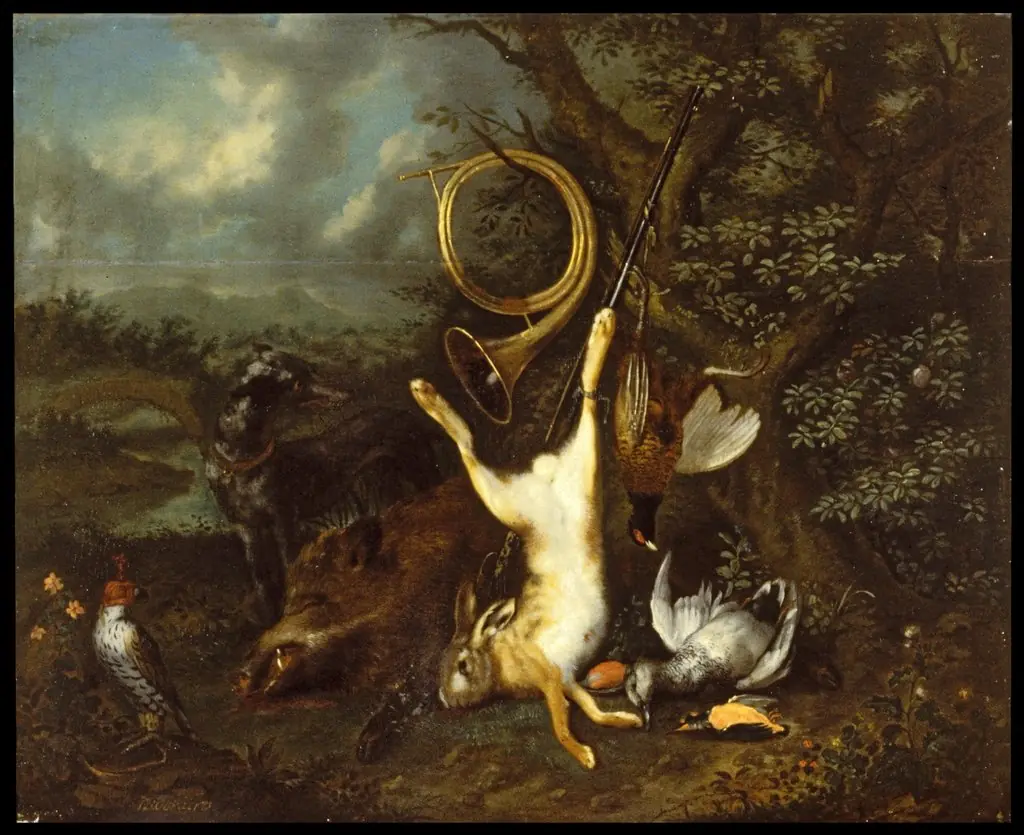
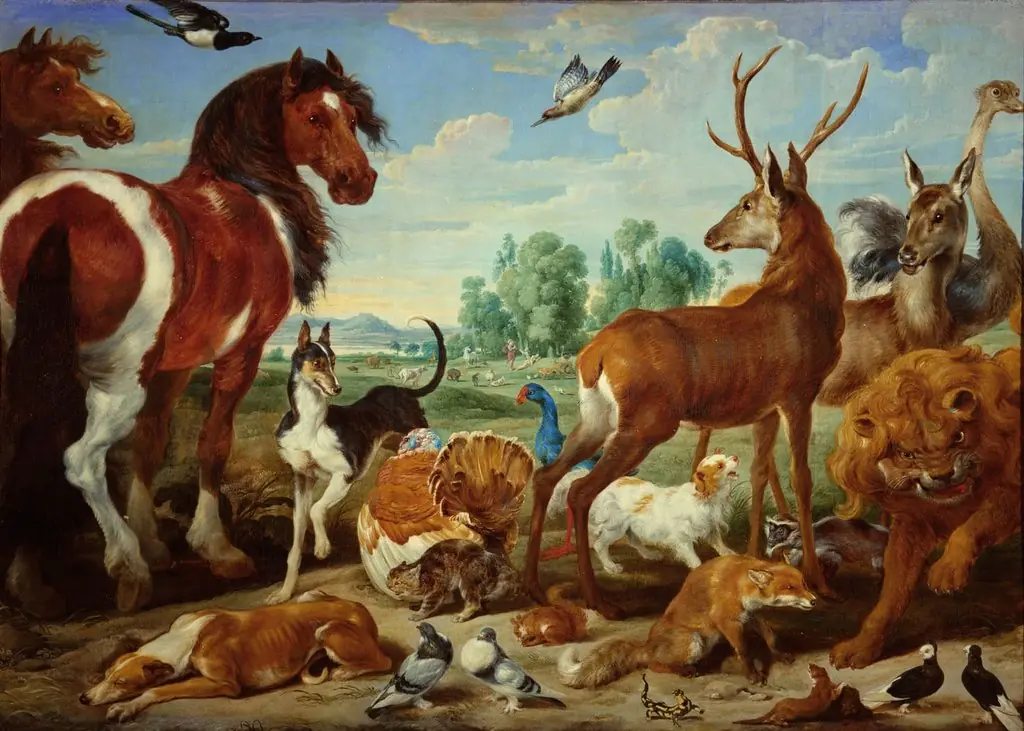
The canvas presents a hunting tableau in which a man, identified as a hunter, stands beside a dog while a dead fox and rabbit lie on the ground and a bird soars above. The composition emphasizes the sport of hunting and the relationship between human, animal, and nature, reflecting 19th-century French interests in outdoor pursuits and the natural world. By arranging the dead game alongside the living bird, the work juxtaposes themes of mortality and vitality, suggesting a commentary on the transient nature of sport and the environment.
The scene is set in a realistic landscape that underscores the academic art tradition of detailed natural observation.
History & Provenance
Gustave Courbet created the oil-on-canvas painting After the Hunt in 1859. The work, measuring 236.2 cm in height and 186.1 cm in width, depicts a still-life arrangement of hunted game, including a fox, rabbit, and bird, alongside a dog and a man. The painting was previously owned by Louisine Havemeyer and is currently held in the collection of the Metropolitan Museum of Art.
Legacy
After the Hunt entered the Metropolitan Museum of Art's collection through the bequest of Louisine Havemeyer, where it remains on display. Its acquisition by one of the United States' foremost art institutions underscores the painting's enduring reputation within Courbet's oeuvre and its continued relevance as an example of his academic hunting scenes. The work's presence in a major public collection ensures accessibility for scholars and visitors interested in 19th-century French painting.
Overview
"After the Hunt" is an oil painting depicting the aftermath of a hunting expedition. The composition centers on a figure in a red jacket, accompanied by several dogs and recently caught game, situated within a natural, wooded environment. The work captures a moment of quiet reflection following the pursuit, emphasizing the relationship between the hunter, his animals, and the natural world.
Technique & Style
The scene unfolds within a dense woodland, characterized by a backdrop of trees and lush foliage that establishes a naturalistic setting. The artist employs a subdued color palette, predominantly featuring various shades of green, brown, and tan. This choice contributes to a grounded, realistic atmosphere, allowing the subject matter to convey its narrative without vibrant chromatic distraction.
Context
This work exhibits stylistic affinities with the Realist movement of the 19th century, particularly recalling the approach of Gustave Courbet. Courbet was noted for his commitment to depicting ordinary subjects with meticulous detail and an unvarnished truthfulness. "After the Hunt" similarly presents a common activity with a direct, unidealized portrayal, aligning with the Realist emphasis on observable reality.
Own this work as a print
Artist & collection
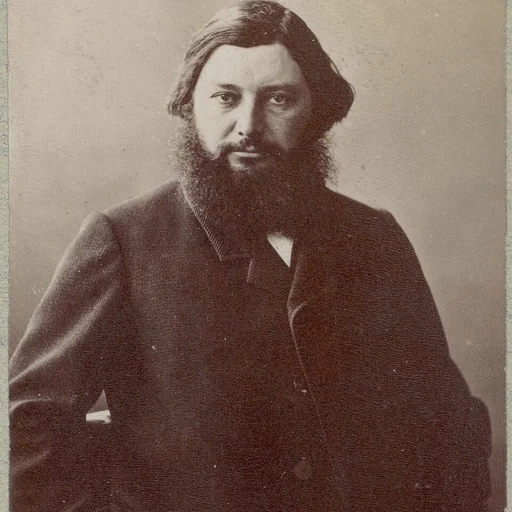
Artist
Jean Désiré Gustave Courbet (UK: KOOR-bay; US: koor-BAY; French:; 10 June 1819 – 31 December 1877) was a French painter who led the Realism movement in 19th-century French painting.