Lion Hunt by Eugène Delacroix
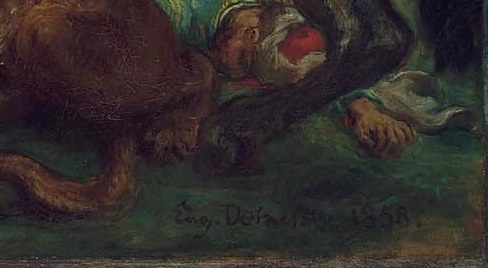
Eugène Delacroix's "Lion Hunt," painted in 1858, is a vibrant example of French Romanticism from the Museum of Fine Arts, Boston. Delacroix, a master of color and movement, captures a dramatic and chaotic encounter between mounted hunters and ferocious lions.
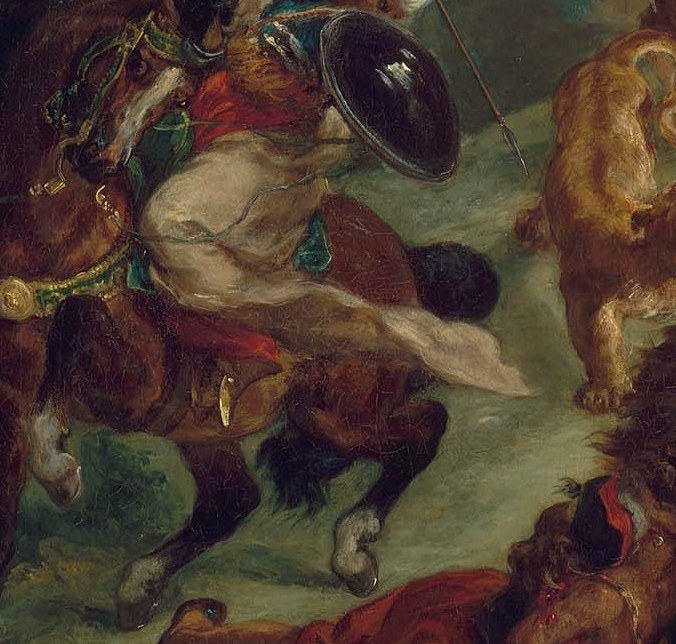
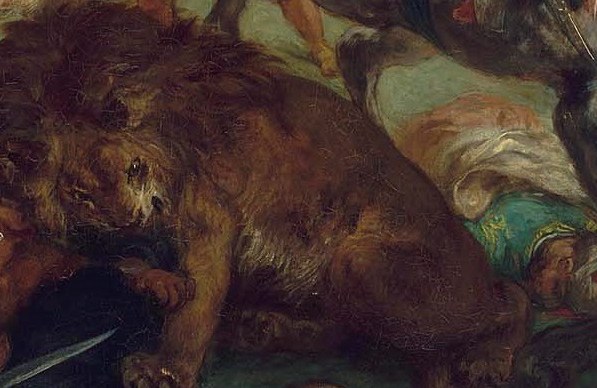
Look closely at the swirling composition, the rearing horses, and the snarling beasts. His vigorous brushwork emphasizes the raw energy and peril of the scene, a hallmark of his style.
Delacroix drew inspiration from the dramatic compositions of Peter Paul Rubens and the Venetian Renaissance. His fascination with exotic subjects, often fueled by his travels to North Africa, is evident in the rich, dynamic portrayal of this intense struggle. This painting showcases his preference for emotional intensity over classical precision.
The artwork remains a powerful testament to Delacroix’s enduring legacy as a leader of the Romantic movement. What do you notice first in this powerful scene?
Details
Transcript
This painter was a leader of French Romanticism in 1858. He was known for capturing intense emotion and movement. Such as the chaos of this lion hunt. He found inspiration in the dramatic works of Rubens. And in exotic subjects from his travels in North Africa. His brushwork captures the struggle between man and beast.