The Baptism of Christ by Poussin, Nicolas
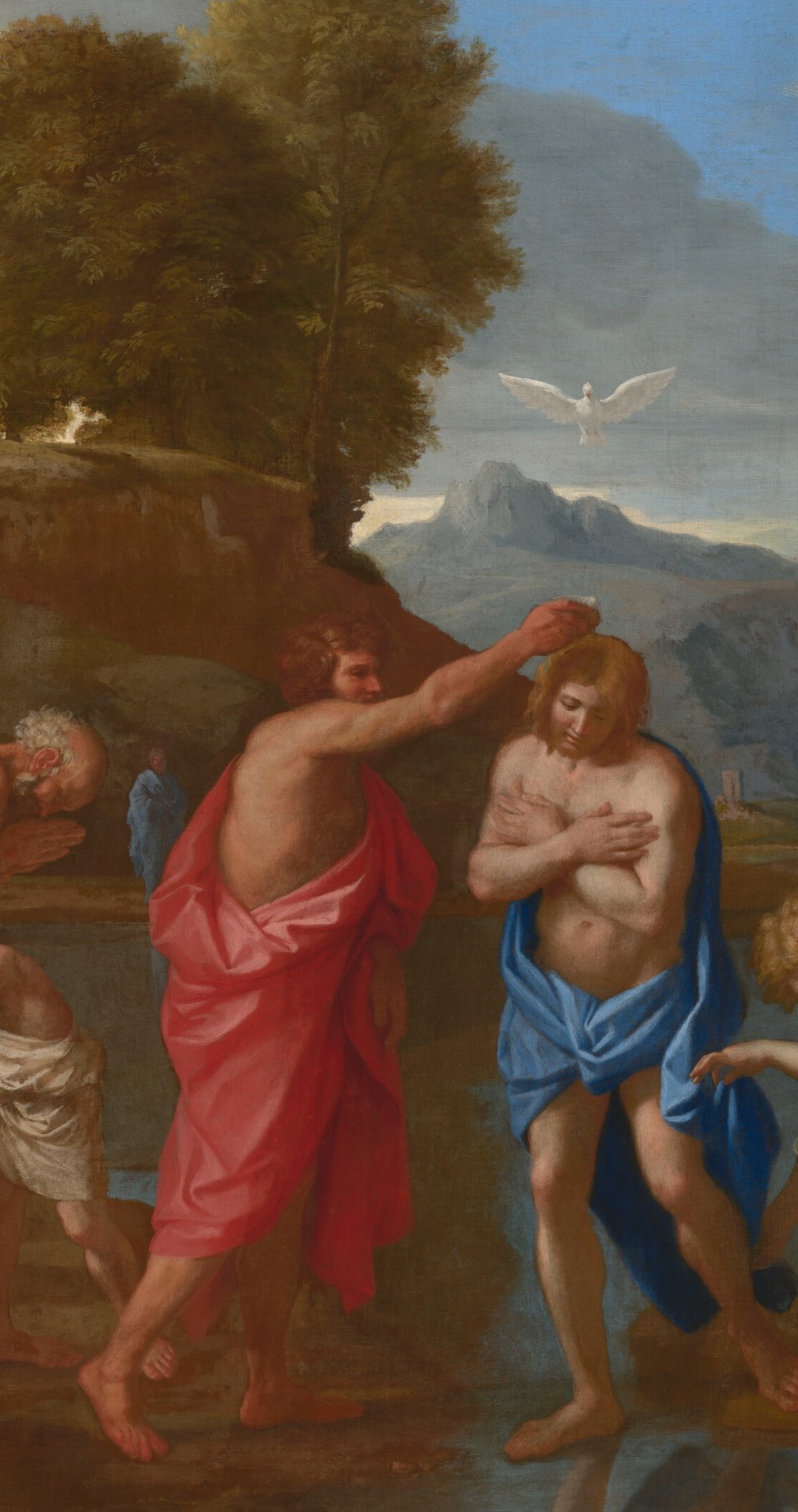
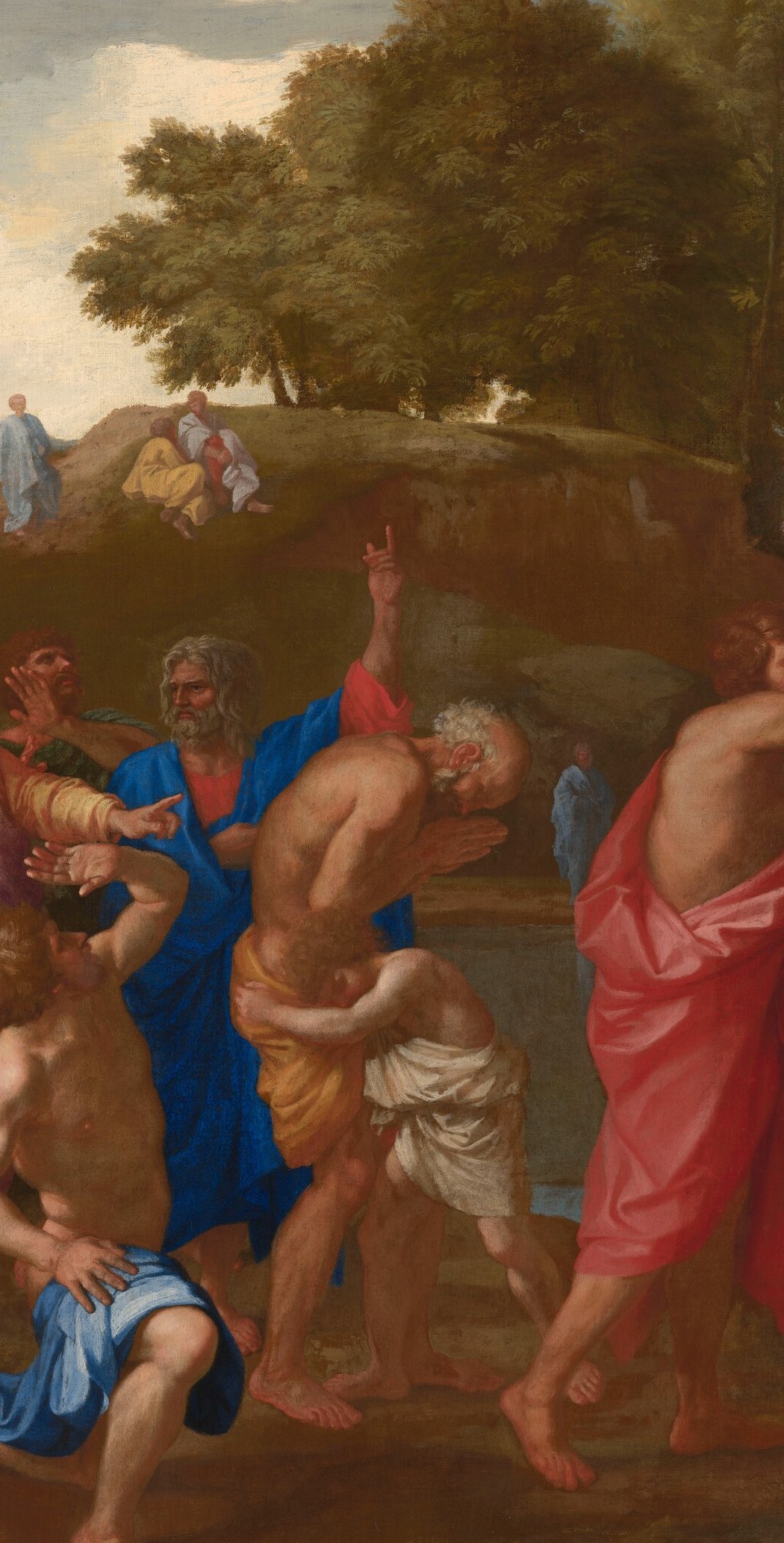
The Baptism of Christ, painted by Nicolas Poussin in 1642, is far more than a single sacred moment, it is a communal rite with a hidden waiting line.
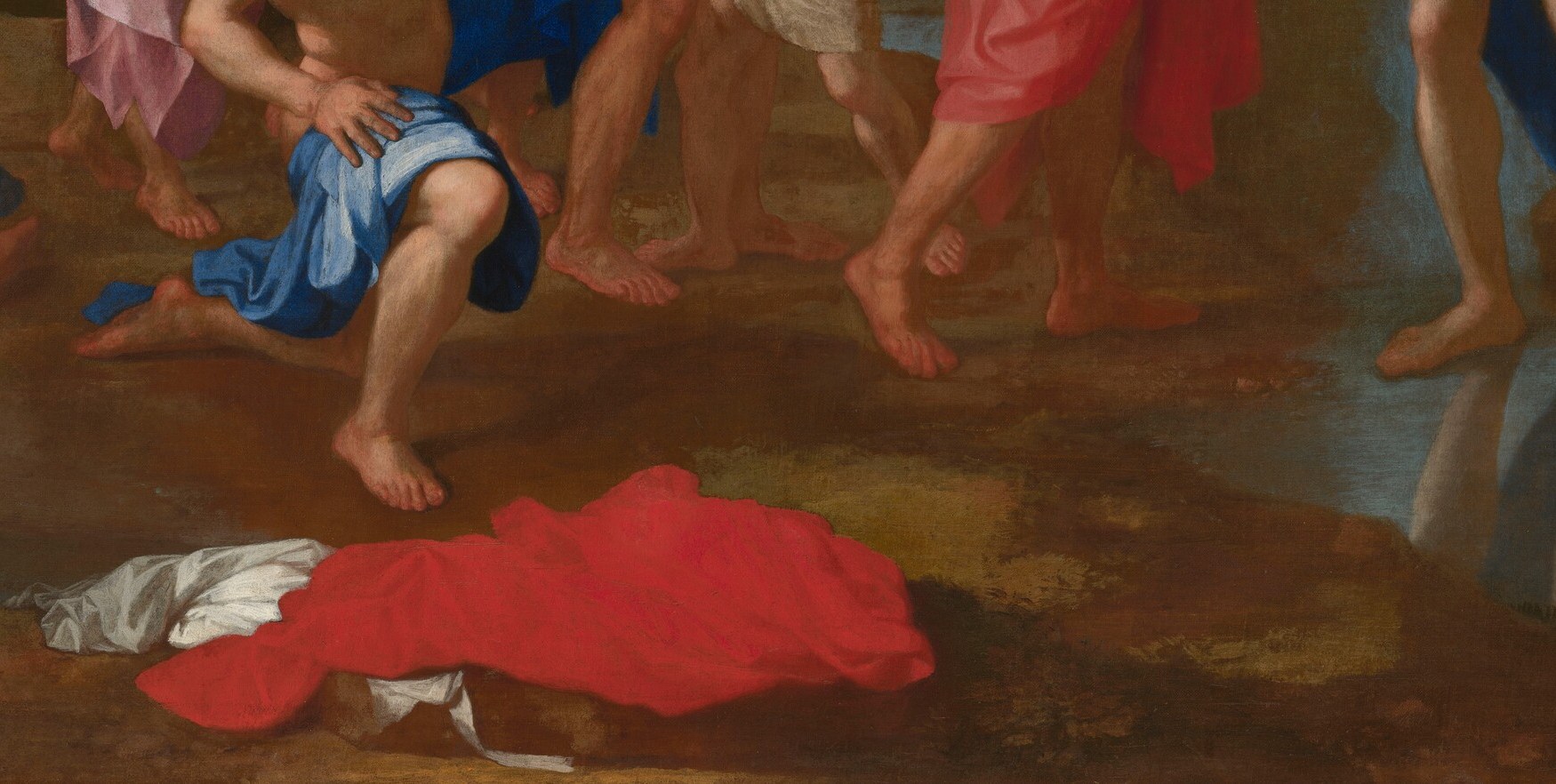
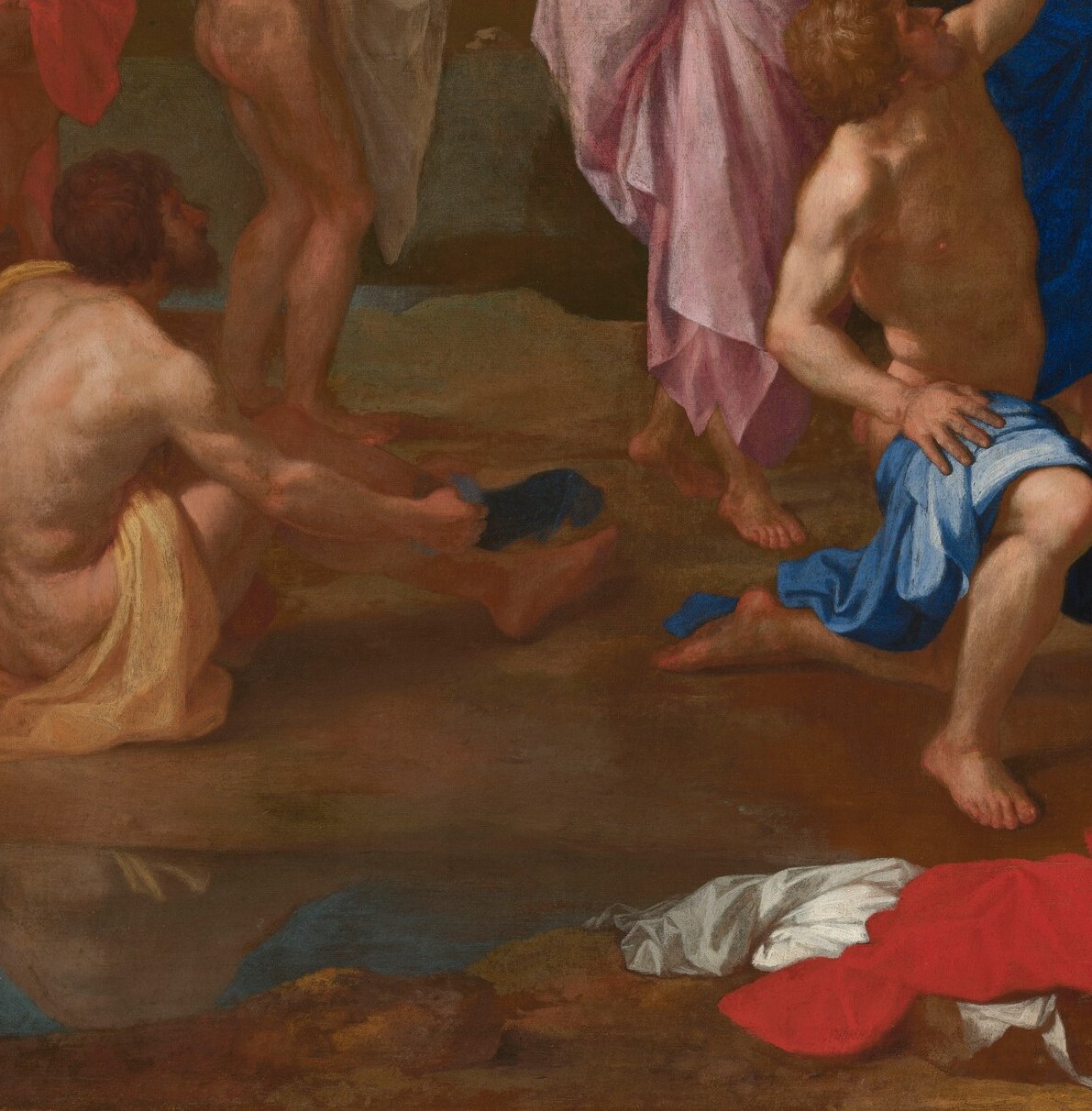
Look at the foreground. The discarded robes and colored garments scattered on the riverbank are not incidental details. They are the clothes of people who have already been baptized. A kneeling figure in the lower-left corner removes his sandal at the water’s edge, next in the queue. Poussin took a biblical account and quietly expanded it into a scene of communal ritual.
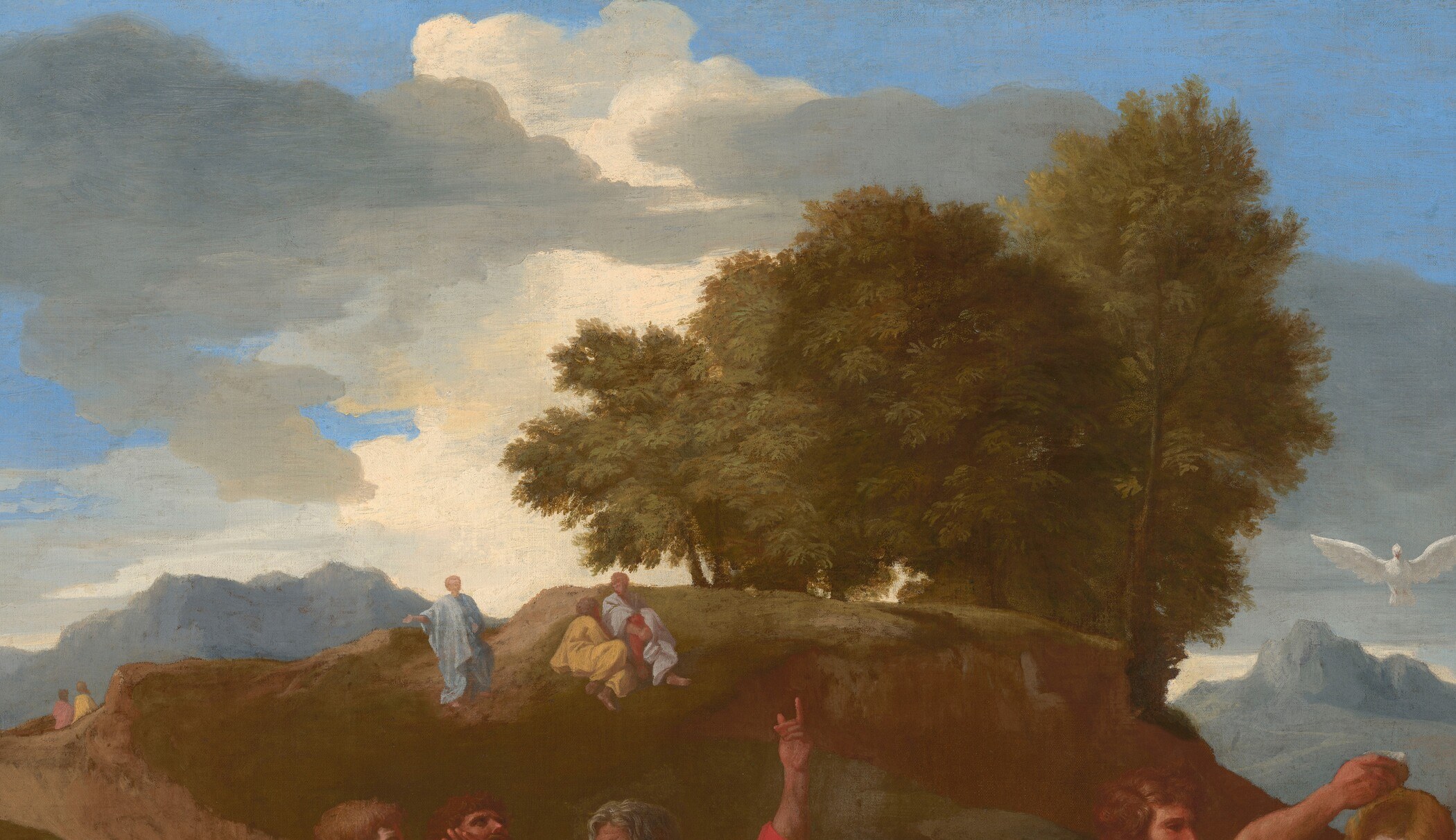
Poussin made this during his mature years in Rome, where his deep study of ancient sculpture gave the figures their statuesque, frieze-like calm. The composition is a stage: a dark canopy of trees frames the central action, the luminous sky breaks open above the dove, and Christ’s pale body anchors the entire geometry.
The painting lives at the National Gallery of Art in Washington, D.C. Next time you see it, check the ground.
Details
Transcript
Most people see only Christ and John at the center. They were painted in Rome, around 1642. But the artist left a clue on the ground. These are not random rags. They are discarded clothes. Someone has already been in this river. He removes his sandal at the water’s edge, ready to go next. This is not a singular miracle. It is a queue.