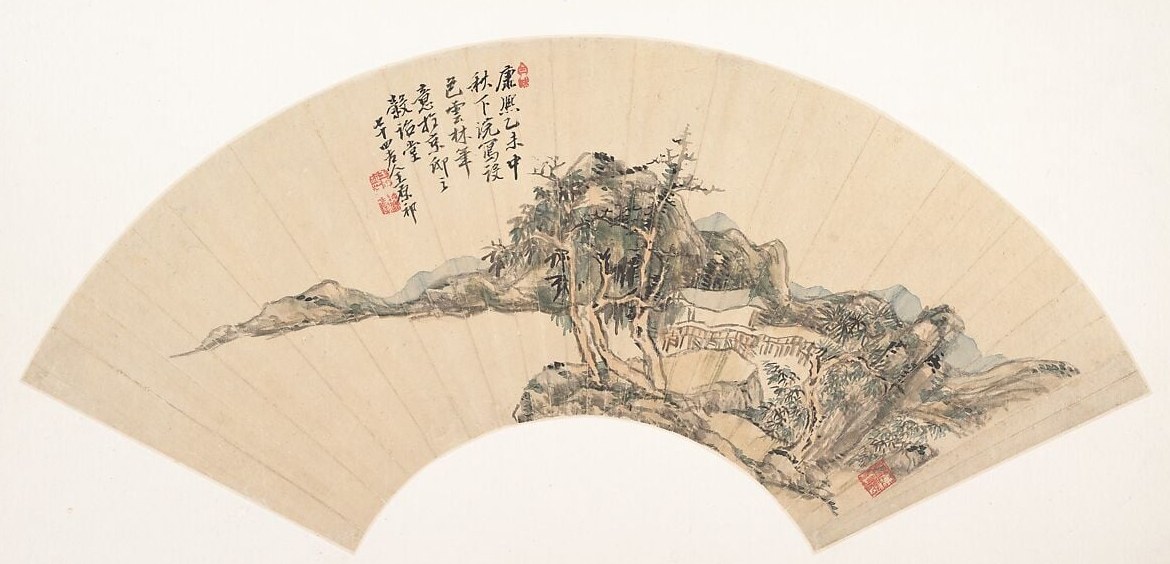
清 倣王原祁 倪雲林筆意山水 扇面|Landscape in the Style of Ni Zan by Wang Yuanqi
This serene ink painting, "Landscape in the Style of Ni Zan" by Wang Yuanqi, created around 1813, is more than just a beautiful scene. It is a contemplative artwork housed in a major collection, inviting viewers to explore its deeper meanings.
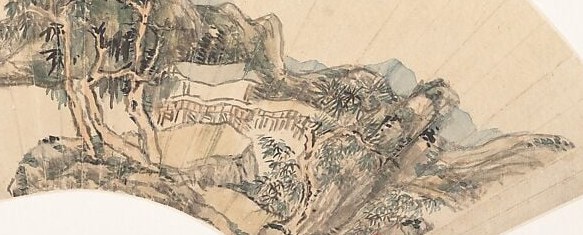
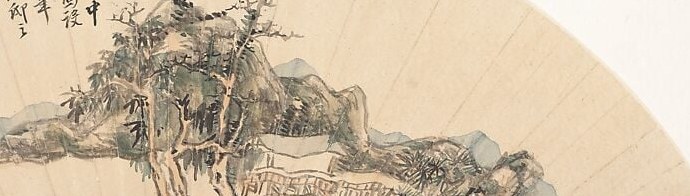
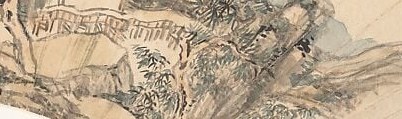
Notice the vast empty spaces, a deliberate aesthetic choice that allows the ink forms to breathe and creates a profound sense of tranquility. The sparse, gnarled trees, rendered with delicate brushwork, often symbolize resilience and the wisdom of age in Chinese art. The misty mountains evoke the ephemeral nature of the world and its immense scale. Together, these elements suggest a theme of scholarly retreat and a desire for harmony with nature.
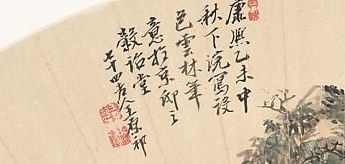
Wang Yuanqi consciously emulated the style of Ni Zan, a 14th-century master known for his minimalist landscapes. This work, originally a folding fan, exemplifies that influence through its restrained brushwork and emphasis on negative space, creating an intimate atmosphere that reflects traditional literati aesthetics.
What feelings do these quiet elements evoke in you?
Details
Transcript
This 18th-century painting invites quiet contemplation. Chinese landscape paintings often carry symbolic meanings. The vast empty spaces suggest profound tranquility. Sparse, gnarled trees often symbolize resilience and age. Misty mountains evoke a sense of the ephemeral and vastness. Together, these elements speak of scholarly retreat and harmony.