Madonna and Child and the Infant Saint John in a Landscape by Polidoro Lanzani
Polidoro Lanzani's 'Madonna and Child and the Infant Saint John in a Landscape,' painted around 1545, is a quiet Venetian Renaissance work that operates like a theological codex. Every element in the painting was chosen not for decoration, but for meaning. This isn't simply a mother with children in a park. It is a compressed sermon in oil paint.
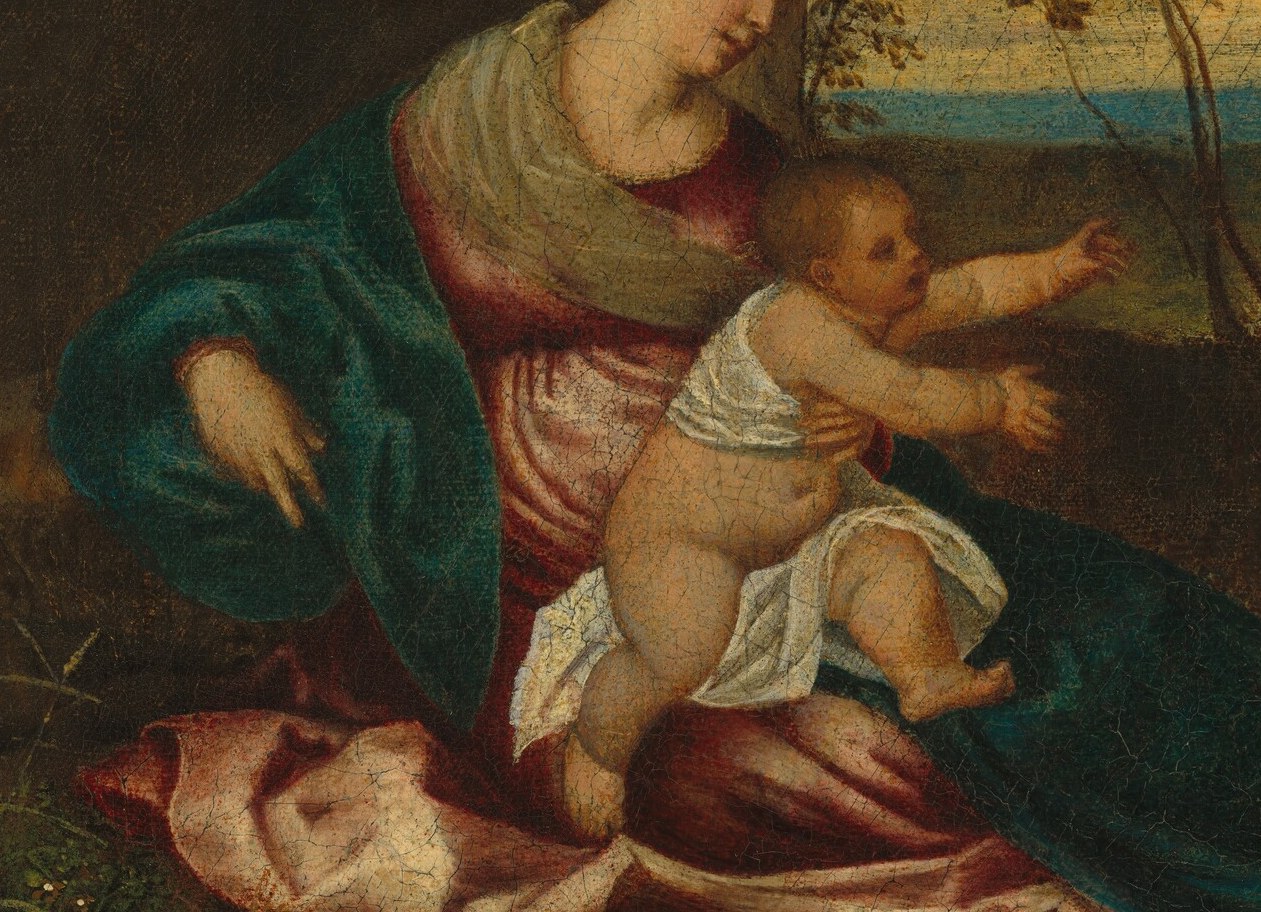
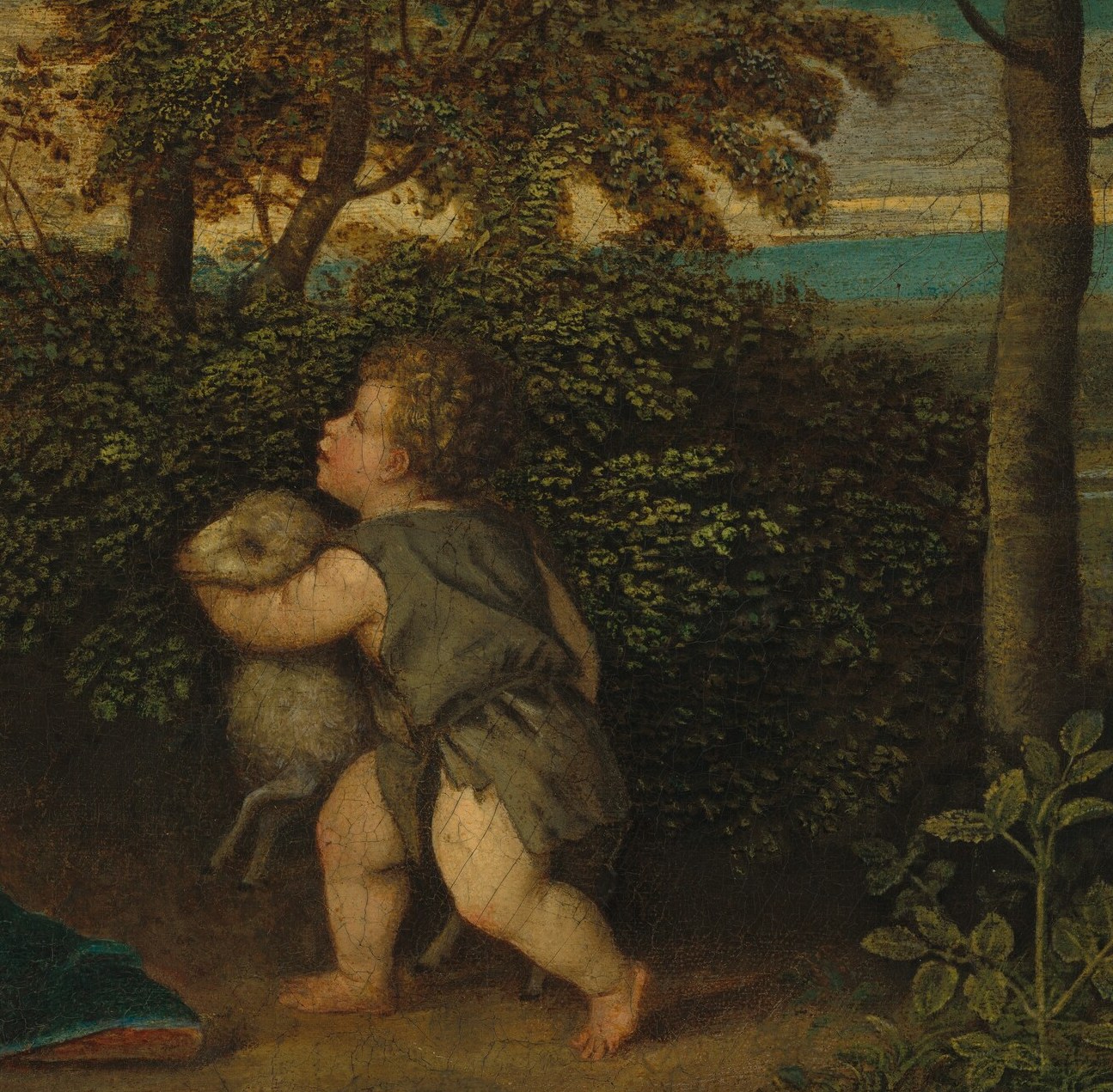
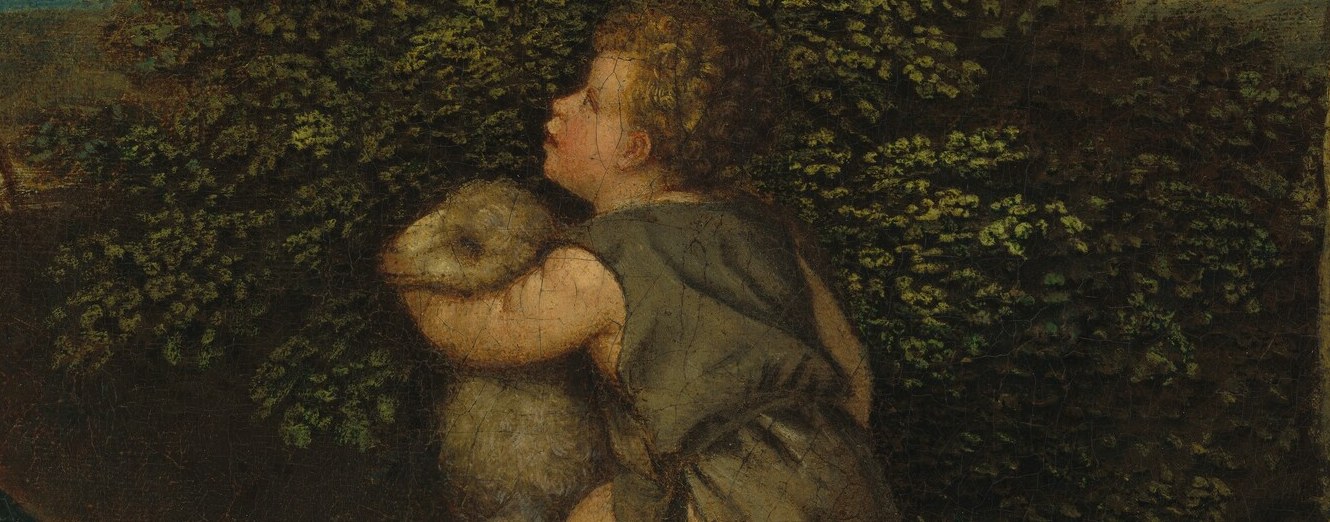
Look first at the Virgin's clothing. She wears a red dress beneath a sweeping blue mantle. This is a fixed Marian color code in Renaissance art: the red stands for the Passion of Christ, the suffering to come, while the blue signifies heavenly grace. She shelters the infants with a body already wrapped in the story's end. Next, watch the hands. The infant Saint John, standing slightly apart, reaches toward the Christ Child with an open-armed gesture. This is a miniature enactment of his gospel role as the Forerunner, the one who cries 'Behold the Lamb of God.' He is already pointing.
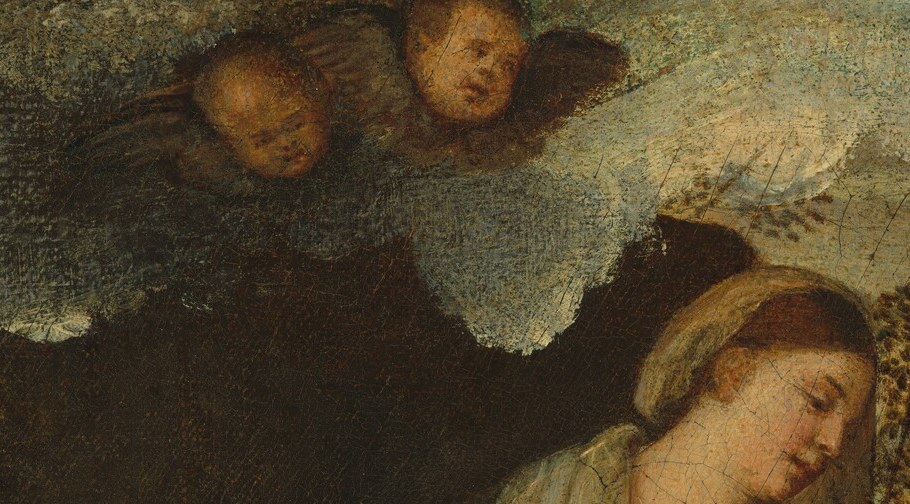
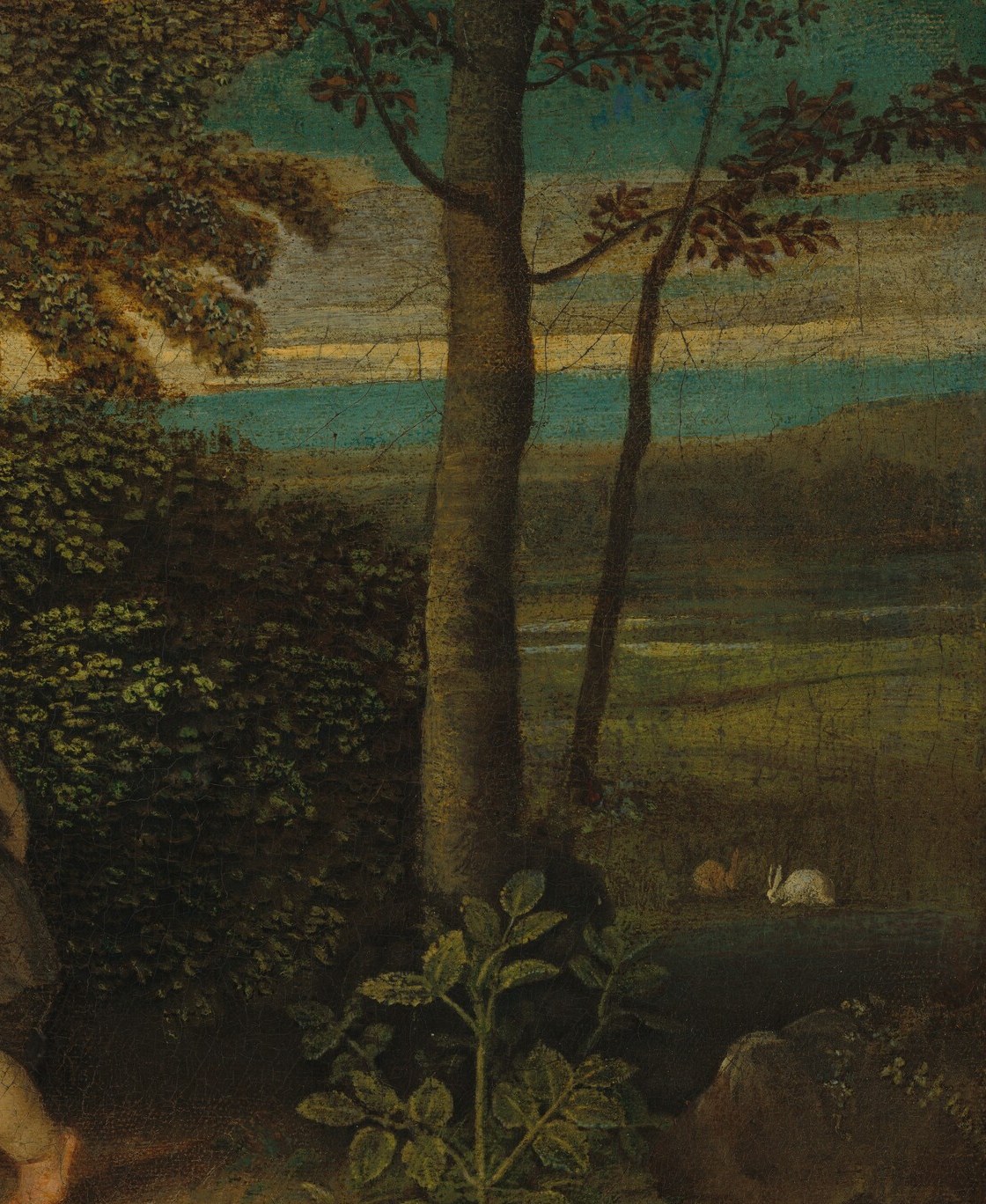
Finally, notice the setting. The holy group is not placed in a domestic interior but in a soft, Arcadian grove. A golden sky opens behind them, and a dark screen of trees pushes the pale figures forward. This is an ideal landscape, a paradise before the fall. Placing sacred figures in nature was a Venetian way of pulling the divine into a perfected version of our own world.
What fruit or animal might be hidden in the deep shadow at the lower left? Paintings like this often tucked a lamb or a book into the darkness. Look closely next time you see it in person.
Details
Transcript
She wears red beneath her blue cloak. The red encodes the coming Passion. The blue, heavenly grace. The infant at right is John the Baptist. His outstretched arms enact his entire future role: the herald pointing to Christ. They meet in a grove. Not a room, but paradise before the fall. Every color and gesture here is a declaration of what is to come.