Delaware Water Gap Village by Louis Eilshemius
Louis Eilshemius painted "Delaware Water Gap Village" in 1898, a quiet scene of a village tucked into the Pennsylvania landscape. It was his gift to The Metropolitan Museum of Art, but for decades the museum kept it in storage, and that snub became a defining chapter in one of American art's strangest careers.
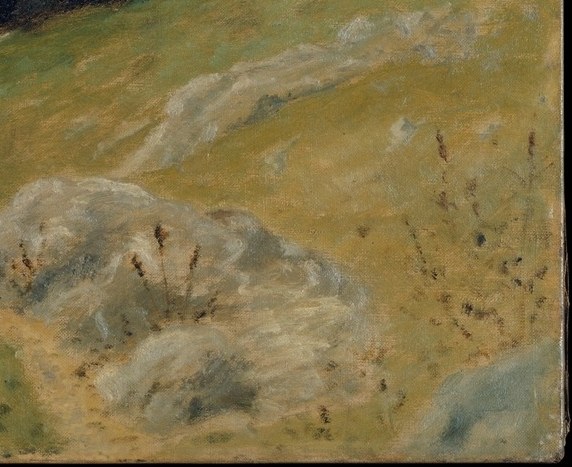
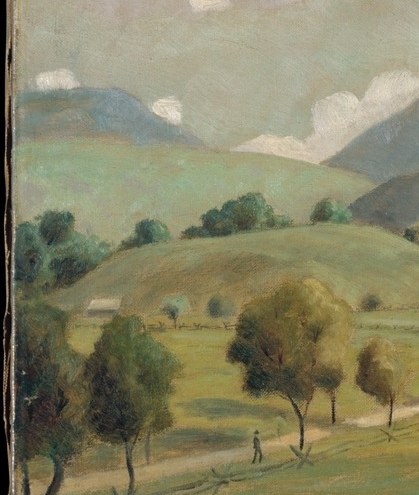
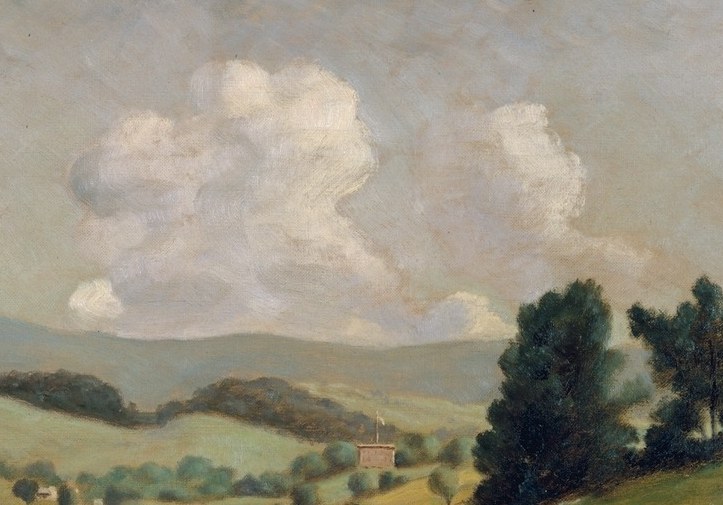
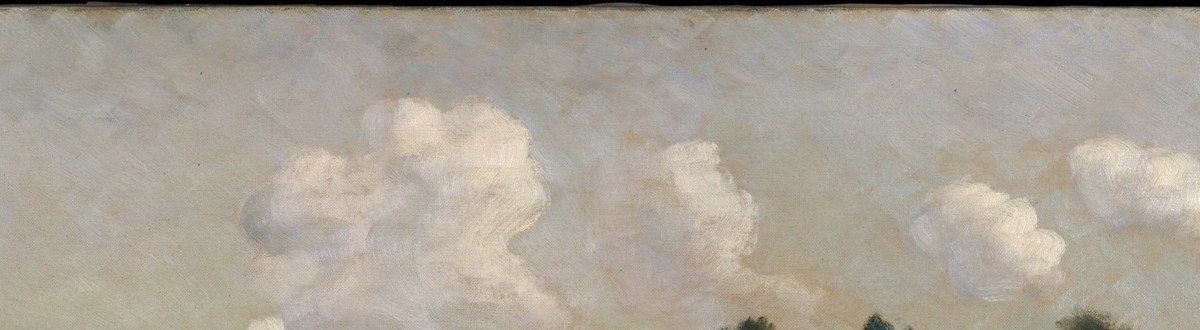
Look at the deep, almost black trees on the left that push the sunlit valley into brilliant relief. The dirt path on the right pulls your eye into the composition, toward the small white buildings and church steeple barely visible in the distance. Eilshemius handled the grass and clouds with a loose, confident brushwork that critics of his time dismissed as unfinished.
Born to a wealthy New York family, Eilshemius studied in Europe and returned to America with an idiosyncratic style that the art world ignored. After being rejected by the Society of American Artists, he gave up on galleries and took to handing out self-published pamphlets on street corners. He donated this painting to the Met in 1917, then spent years demanding $50,000 for it, once showing up at the museum to argue his case in person.
His reputation only shifted late in life, championed by Marcel Duchamp. Today the painting that spent decades in the basement hangs in the Met's American Wing, a landscape by a man who never stopped insisting on its value.
Details

Transcript
Louis Eilshemius painted this view of the Delaware Water Gap in the 1890s. A path leads the eye past dark trees, toward a village in the sun. The artist gave it to The Met in 1917. They hung it in the basement. For years, Eilshemius demanded $50,000 and stormed the museum to argue. The Met never paid. Today the painting hangs in the American Wing.