A Night at the Sea by Kaulak
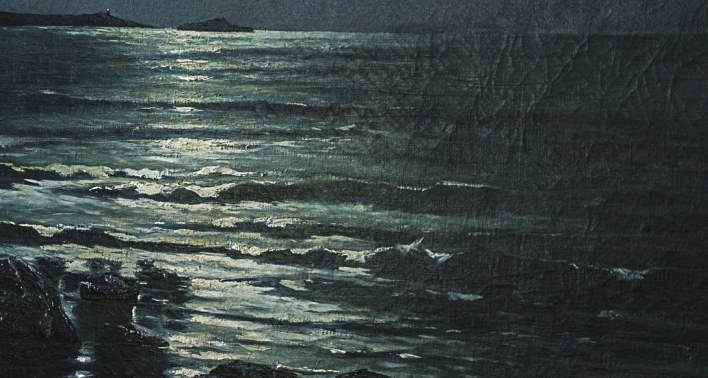
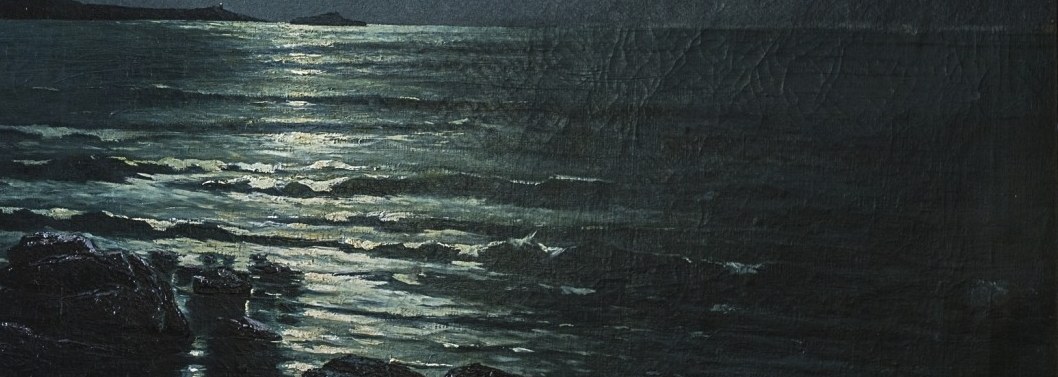
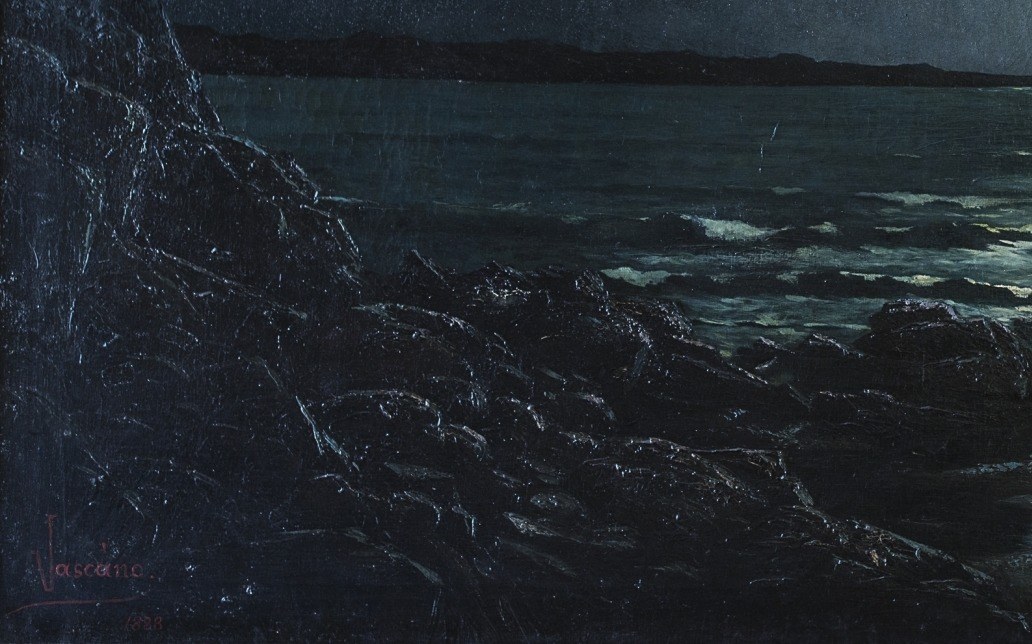
Kaulak's 'A Night at the Sea,' painted in 1894, is a captivating oil landscape held at the Museo del Prado. This painting showcases the artist's mastery of nocturnal marine subjects, where the full moon serves as the primary light source, creating a serene and ethereal atmosphere.
Observe how the luminous moon dominates the upper canvas, casting a gentle glow that illuminates the rolling waves and highlights the texture of the rocky shoreline. The moon's reflection on the water creates a shimmering path, suggesting a transient, almost meditative experience.
The Museo del Prado acquired this piece as part of its effort to represent Spanish landscape painting of the late 19th century. Kaulak employed thick, expressive strokes to convey the tactile quality of the sea and shore, emphasizing the interplay between natural light and the water's surface.
This artwork invites contemplation of nature's calm and its subtle, ever-changing rhythms. What do you find most striking about this moonlit scene?
Details
Transcript
This painting, from 1894, captures a quiet moment at sea. The luminous full moon is the only light source here. This painter, Kaulak, was known for his night seascapes. The moon's reflection creates a transient, meditative atmosphere. The museum acquired it to represent Spanish landscape painting. It invites contemplation of nature's calm and subtle rhythms.