Four Macouchi Indians by Catlin, George
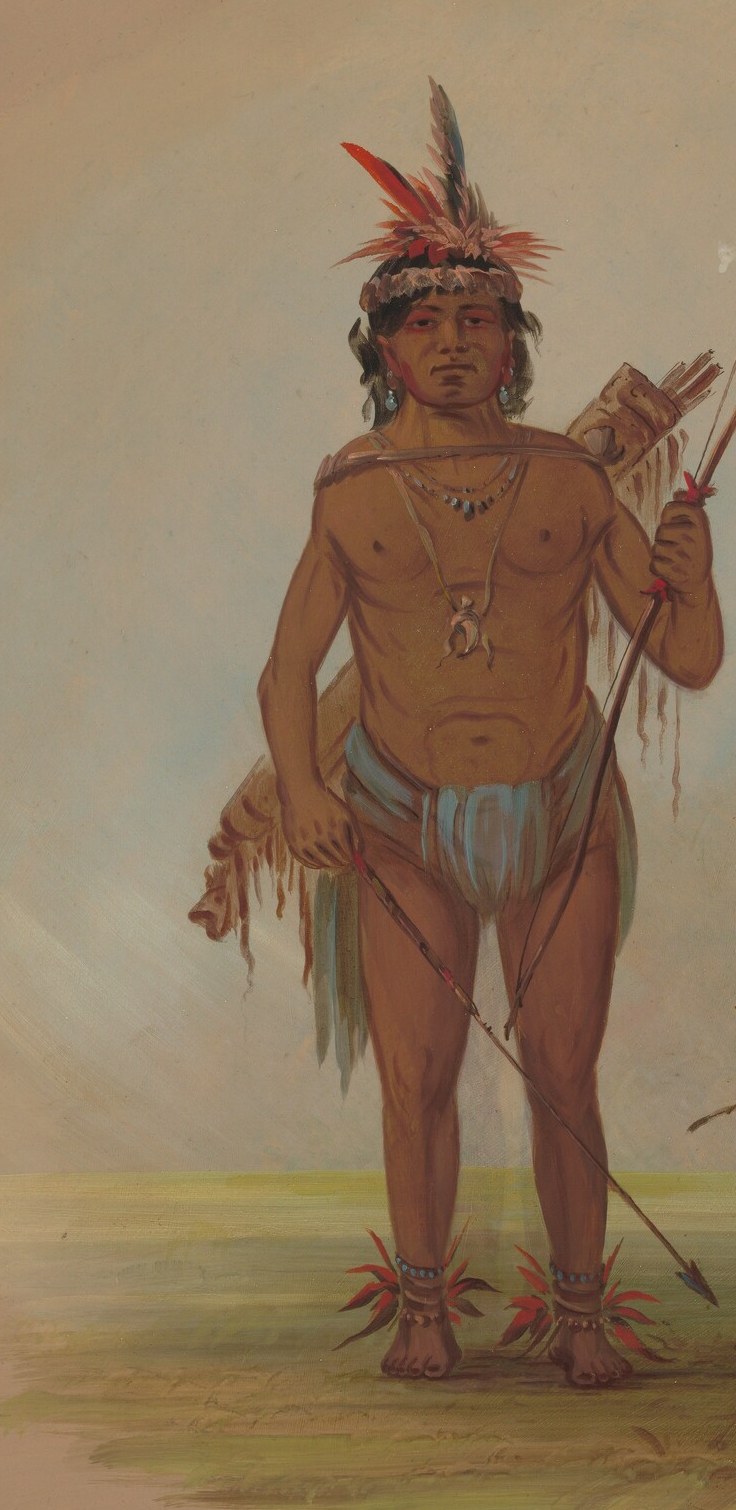
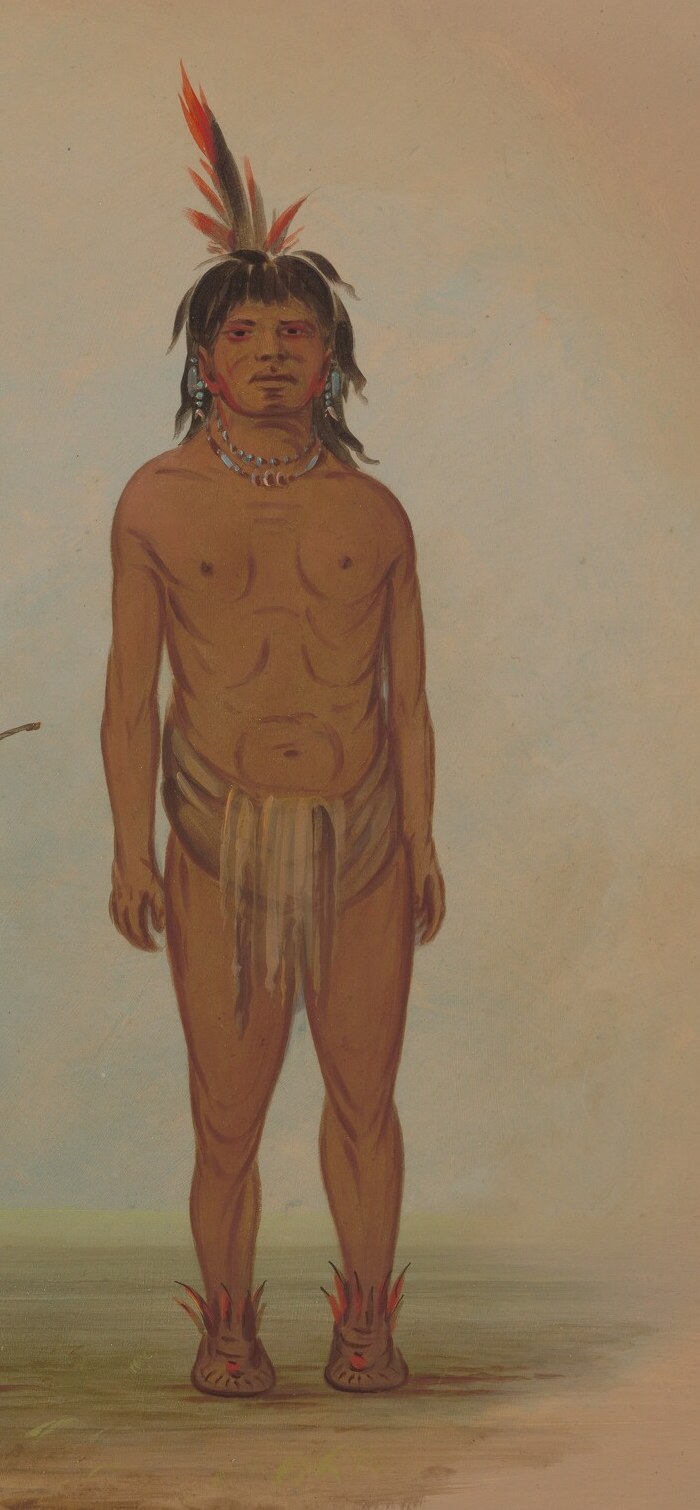
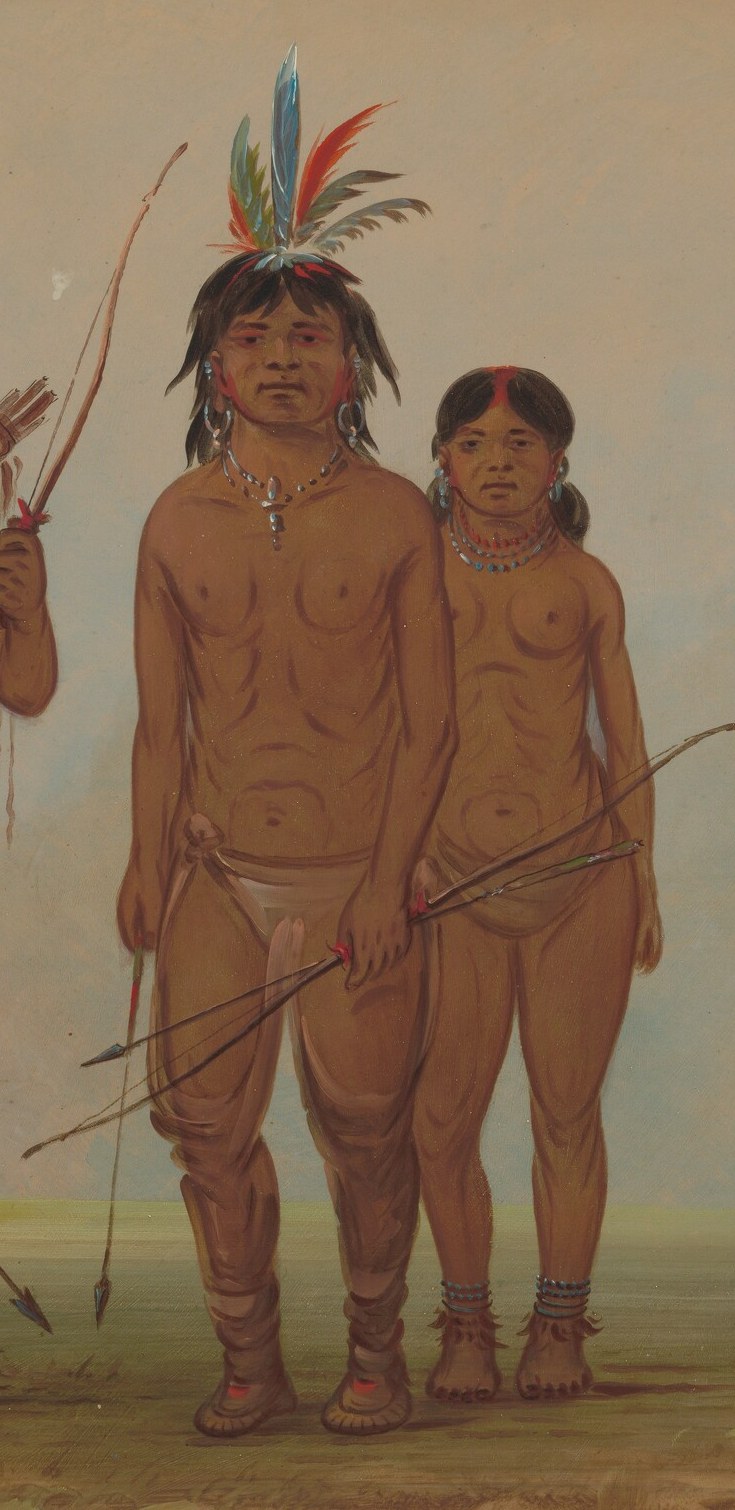
This is 'Four Macouchi Indians' by George Catlin, painted in 1862. It is oil on card mounted on paperboard, a modest and rapid medium he used while working in the field. Catlin was not trained as a painter first, he was an American lawyer who left the profession to document Native American life across the frontier, believing he was witnessing cultures on the brink of disappearance.
The painting presents four individuals standing in a stark line against a hazy background. Catlin’s style is direct and economical, every brushstroke serving documentation, not drama. Notice the specific feather arrangements, two men wear elaborate multi-colored bursts, while a third wears a single red feather. These are not generic decorations; they denote distinct status and possibly different tribal roles. The blue-and-white patterned loincloth worn by the first man is a clear cultural marker, a textile pattern Catlin wanted preserved in the visual record.
Catlin made five expeditions across the American Plains in the 1830s. He gathered sketches and observations that informed works like this one for decades afterward. His mission was ethnographic: to create a systematic visual catalog of the peoples, garments, and customs that westward expansion was actively displacing. He called this body of work his 'Indian Gallery,' and it toured to mixed receptions, part curiosity, part science, part public entertainment.
Every feather, every strand of beads, is a deliberate word in a language Catlin feared would be lost. The painting is not a casual snapshot but an argument made in pigment by a lawyer who put down his briefs and picked up a brush. What do you notice first in their faces?
Details
Transcript
George Catlin was a lawyer who left the courtroom for the frontier. He believed these cultures were being erased. So he painted a record. Look first at the feathers. Two men wear them in vivid bursts. A red and blue crown like this signals status, a man of influence. This man holds only a single red feather. Still, he is not lesser. Catlin documented specifics: a patterned loincloth marks a distinct nation. A shared beaded necklace speaks to common traditions across roles. Each detail was a word against silence. Catlin called it his 'Indian Gallery.'