The Holy Family by Giorgione
View the artwork: The Holy Family →
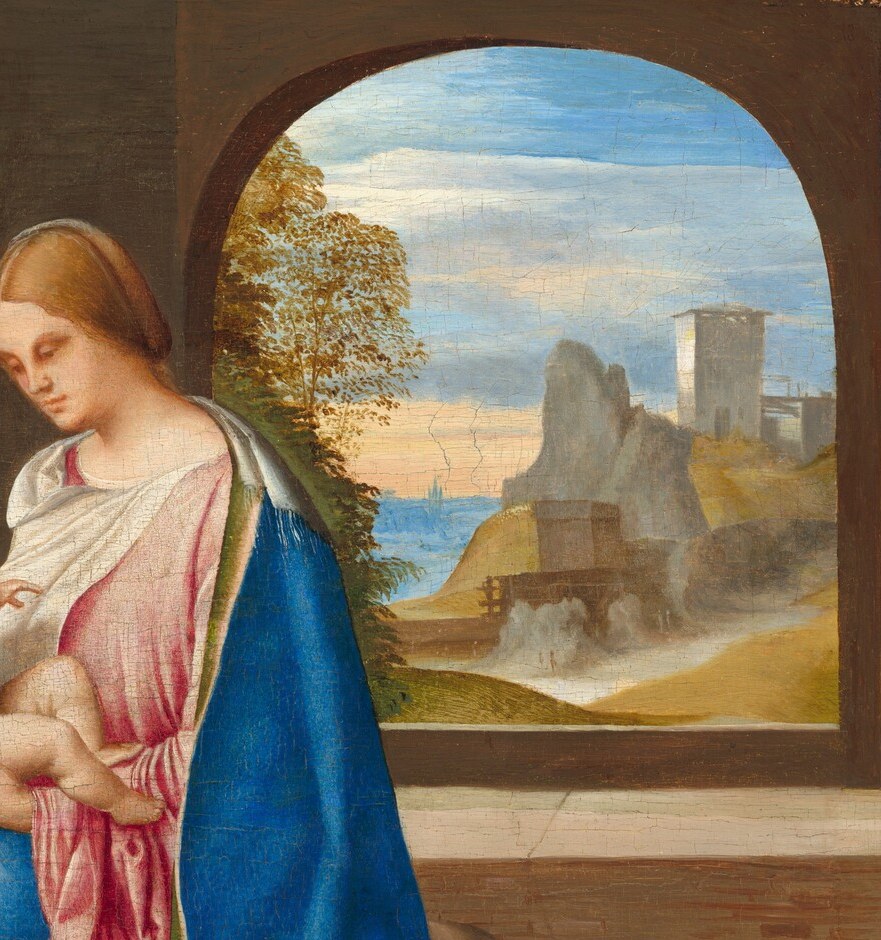
The Holy Family, painted by Giorgione around 1500, is a masterpiece that exists today because of a crime. It shows Mary, Joseph, and the infant Jesus in a private moment of domestic calm, but the physical object you see is a survivor of the black market. At some point in its history, likely to avoid export laws or to stabilize a deteriorating panel, someone sawed the original paint layer off its wooden backing and pressed it onto a modern hardboard, a radical and often illegal conservation act.
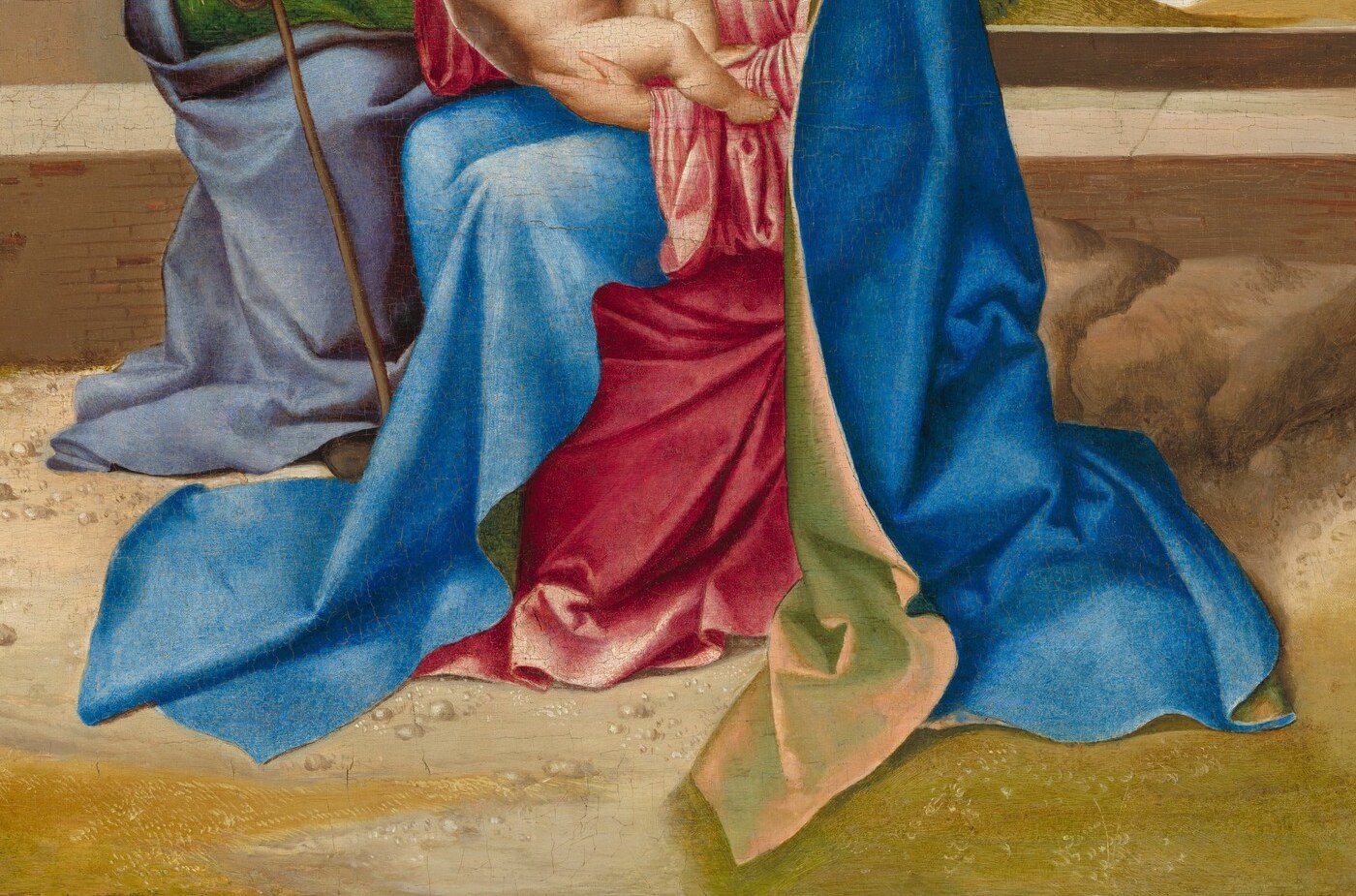
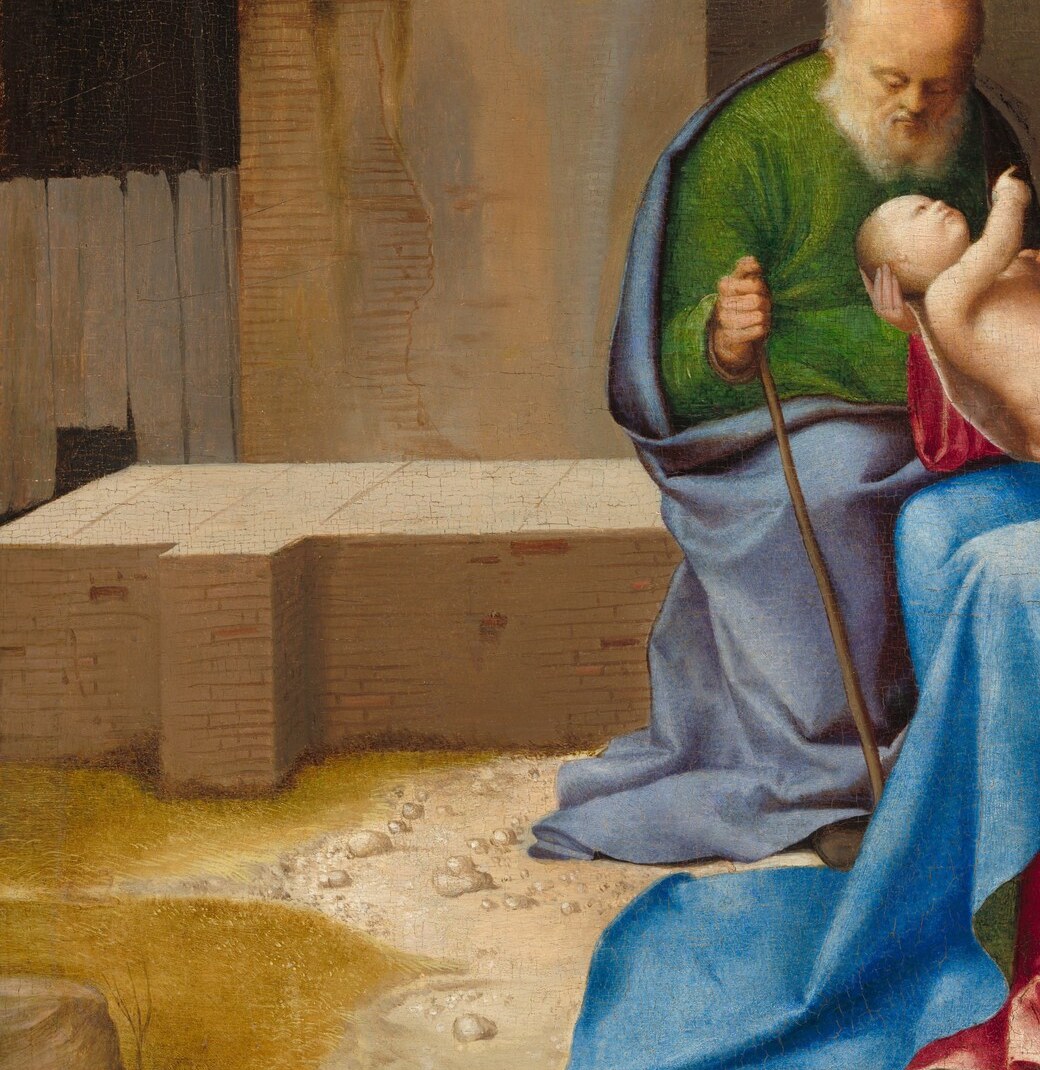
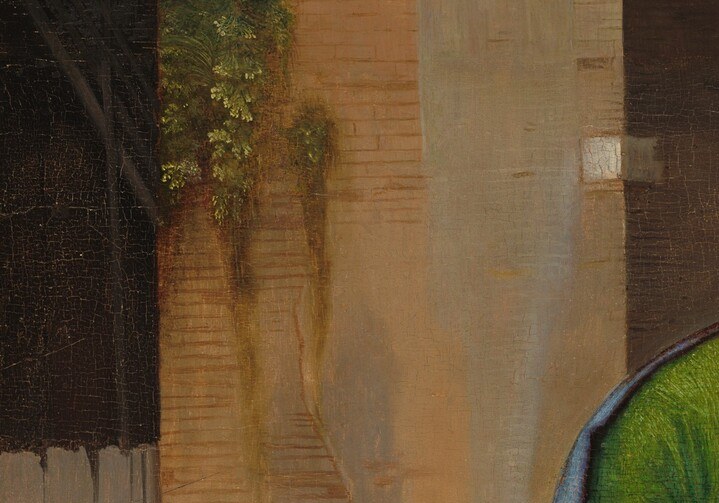
Look closely at the cobalt blue of Mary's mantle. In 1500, ultramarine was ground from rare lapis lazuli and cost more than gold. The patron who commissioned this paid for the most expensive pigment available to show devotion. Notice also Joseph's emerald-green robe, still shockingly saturated, which suggests the panel has lost very little of its original tonal range despite the trauma of its transfer.
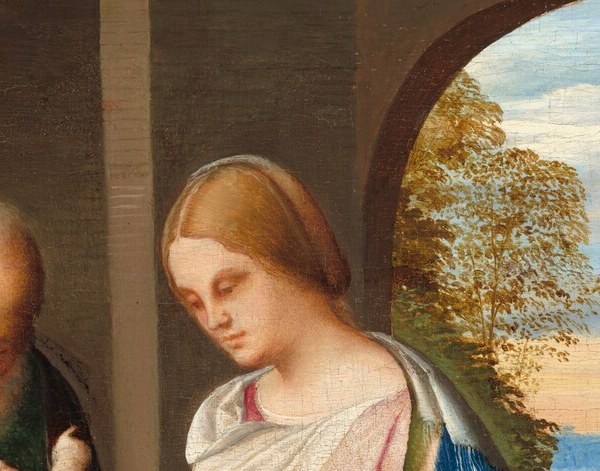
Giorgione was a quiet genius in Venice, painting small, intimate works for private collectors rather than the Church. He died young, perhaps in his early thirties, leaving only a handful of canvases that scholars still debate. The soft shadows and glowing faces here are his signature sfumato, a technique of layering translucent oil paint over days to let the figure emerge from darkness.
This is not just a painting of a family. It is an object that crossed borders under unsanctioned hands, a secret kept safe through an act of surgical violence done to its own back.
#arthistory #giorgione #renaissance
Details
Transcript
It looks like a quiet holy scene, painted around 1500. Cobalt blue so vivid, it cost more than gold. The artist died young, leaving no signed works. A private patron kept this behind closed doors for centuries. But the real scandal is the back of this panel. The wood was secretly planed off and fused to a board. An illegal transfer, likely to smuggle it across a border.