Artwork
The Holy Family
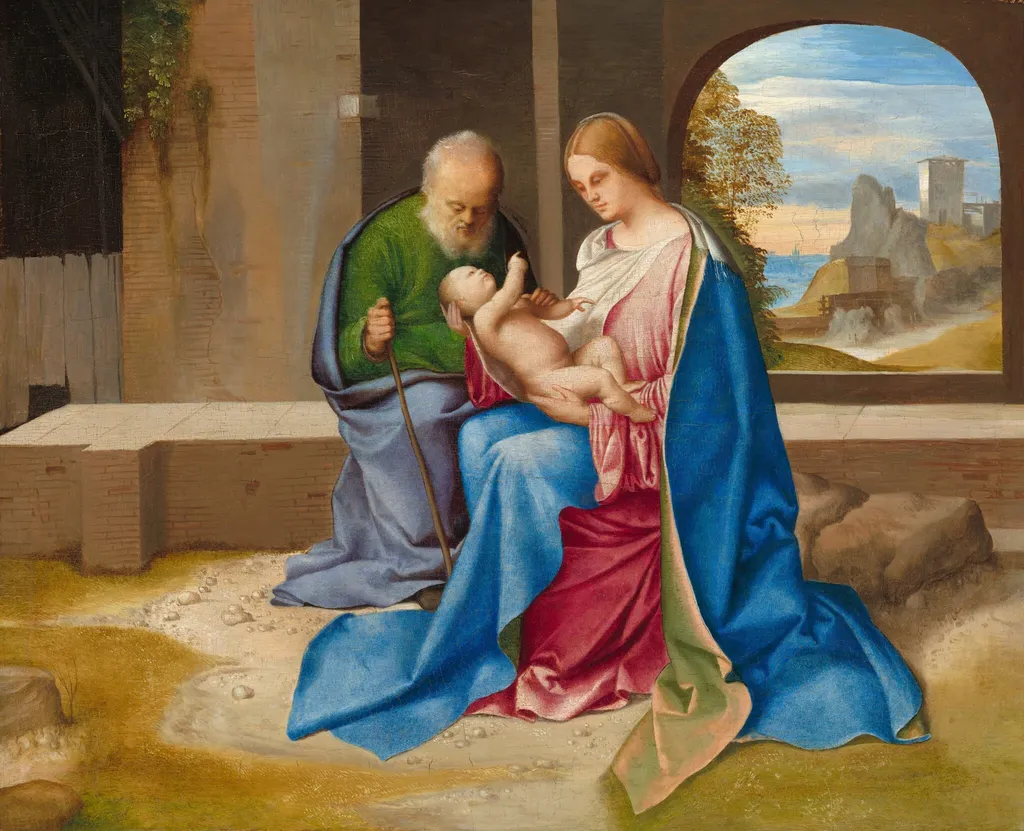
The Holy Family is an oil painting by the High Renaissance artist Giorgione. It dates from 1500 and is held in the collection of the National Gallery of Art.
About this work
Mary, Joseph, and the infant Jesus gather in a plain room, their robes both soft and weighty. The bare walls let the warm light settle on their faces. Giorgione painted it around 1500; why he chose so quiet a family moment we cannot say, but the colors stay calm throughout.
Subject & Meaning
Scattered stones and small plants in the foreground reveal Nordic influence, and the abundant, dry folds of the drapery echo Flemish examples.
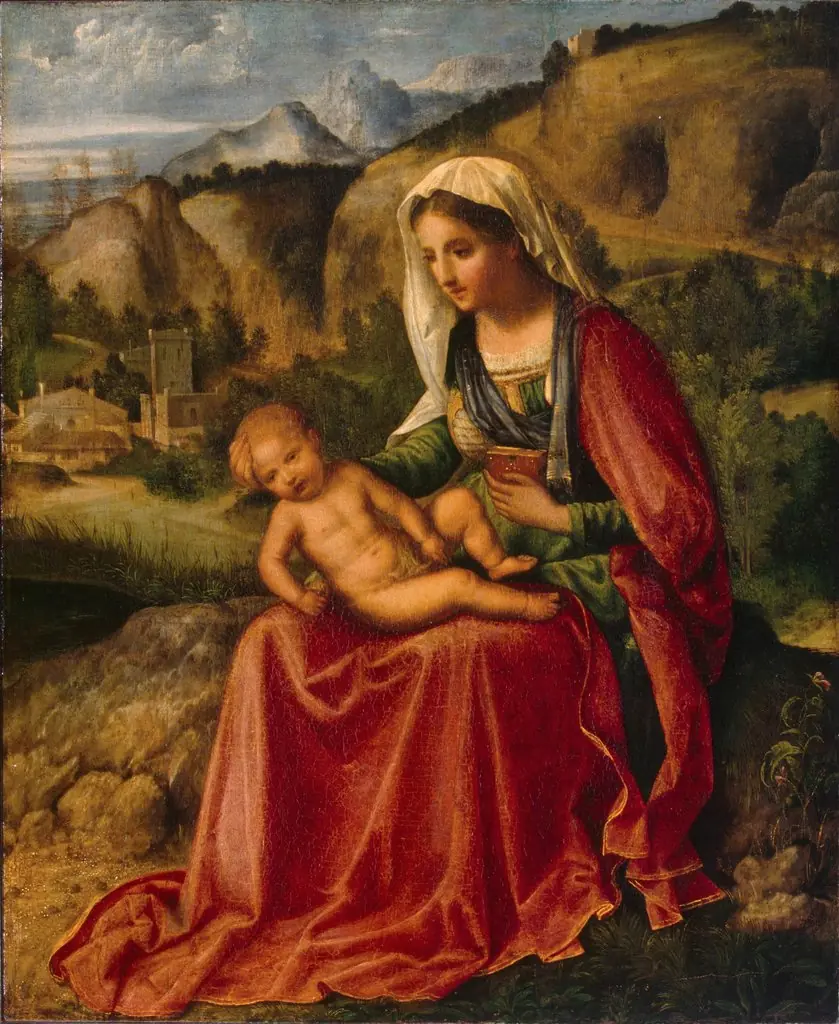
The painting shows the Holy Family, Mary, Joseph and the Infant Jesus, gathered in a modest hut opened by an arch onto a distant landscape. The Christ Child wriggles in Mary's arms like a newborn, while Joseph sits on a rough wall and the Madonna is seated on a bare rock that may symbolize the world's incompleteness before Christ's coming. Scattered stones and small plants in the foreground reveal Nordic influence, and the abundant, dry folds of the drapery echo Flemish examples.
The figures' poses recall the protoclassicism of Lorenzo Costa and Joseph's physiognomy recalls Giovanni Bellini, while Giorgione's tonal use of colour blends figures and landscape into an atmospheric whole.
Technique & Style
Executed circa 1500, this work is an oil painting originally created on a wooden panel that was subsequently transferred to a hardboard support. Measuring 37.3 by 45.6 centimetres, the composition exemplifies the Venetian tonalist style, where color rather than linear contour defines volumetric form. Giorgione applied paint in overlapping layers to achieve atmospheric effects that seamlessly fuse the figures with the background landscape.
The handling of drapery features abundant folds with dry, paper-like creases reminiscent of Flemish art, while minute foreground details, such as scattered pebbles and small plants, reflect an assimilation of Northern European precision. Despite these external influences, the figures possess a soft, protoclassical posture, and the absence of sharp outlines allows subjects and setting to merge within a unified luminous atmosphere.
History & Provenance
Attributed to Giorgione and dated to approximately 1500, the painting was executed in oil on a panel later transferred to hardboard. Its early provenance is uncertain but may include ownership by Charles I and James II of England before passing to the Dutch dealer Allart van Everdingen, who sold it at an Amsterdam auction in 1709. The work subsequently appeared in French collections before resurfacing in Brighton, England, where it was acquired by Henry Willett in 1887.
In 1894, it entered the London collection of Robert Henry and Evelyn Holford Benson, after whom the work is named. The entire Benson collection was sold in 1927 to Duveen Brothers, Inc., and the painting was purchased by the Samuel H. Kress Foundation in 1949. It was finally gifted to the National Gallery of Art in Washington, D.C., in 1952.
The Holy Family is currently held by the National Gallery of Art in Washington, D.C., as part of the Samuel H. Kress Collection. The painting entered the museum's collection in 1952 as a gift from the Samuel H. Kress Foundation, which had acquired the work in 1949 from Duveen Brothers, Inc. Prior to its acquisition by the Kress Foundation, the artwork was sold in 1927 alongside the broader Benson collection to Duveen Brothers.
Overview
This painting, titled The Holy Family, was created by Giorgione around 1500. It portrays Mary, Joseph, and the infant Jesus within a serene, enclosed space. The composition emphasizes a quiet domesticity, rendered with a palette that evokes warmth while maintaining a sense of tranquility. The artist's approach to this sacred subject highlights an intimate moment rather than a grand narrative.
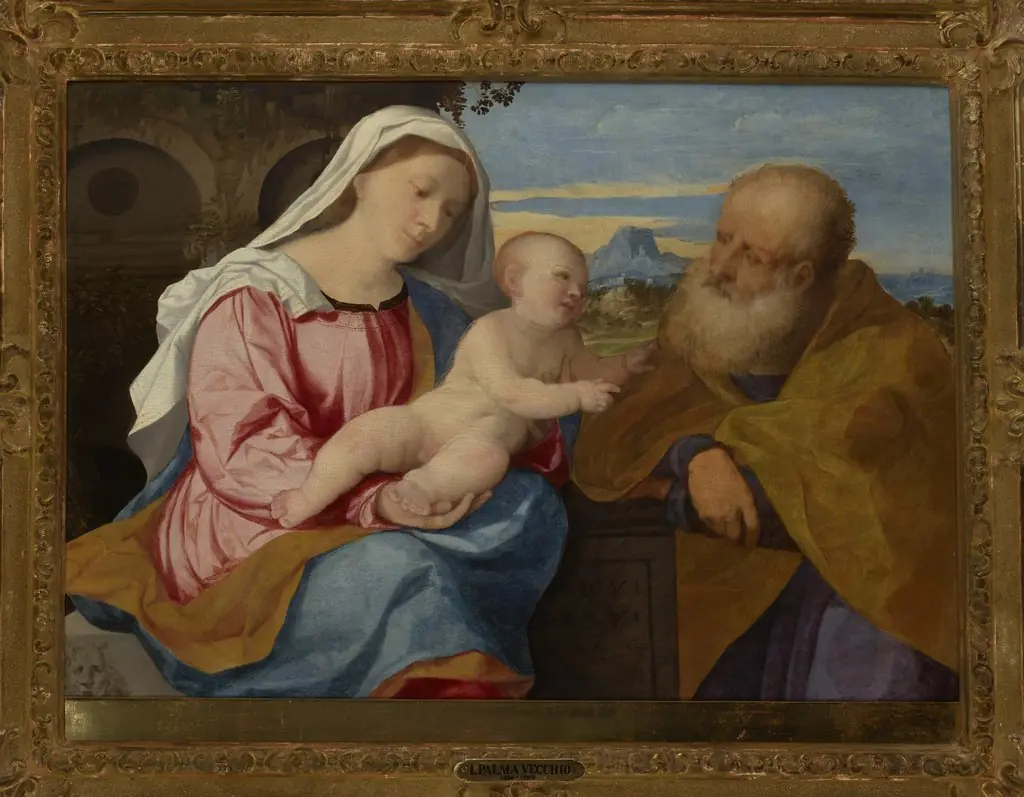
Own this work as a print
Artist & collection


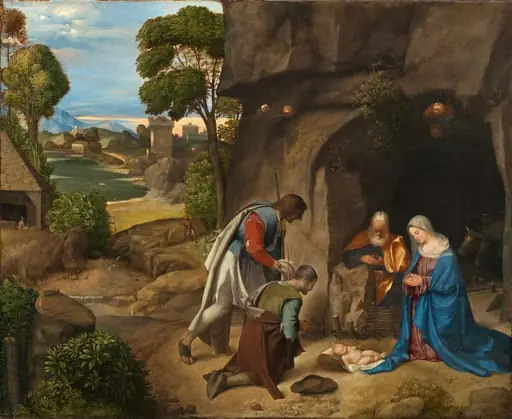
- The Holy Family
 The Holy Family
 The Holy Family
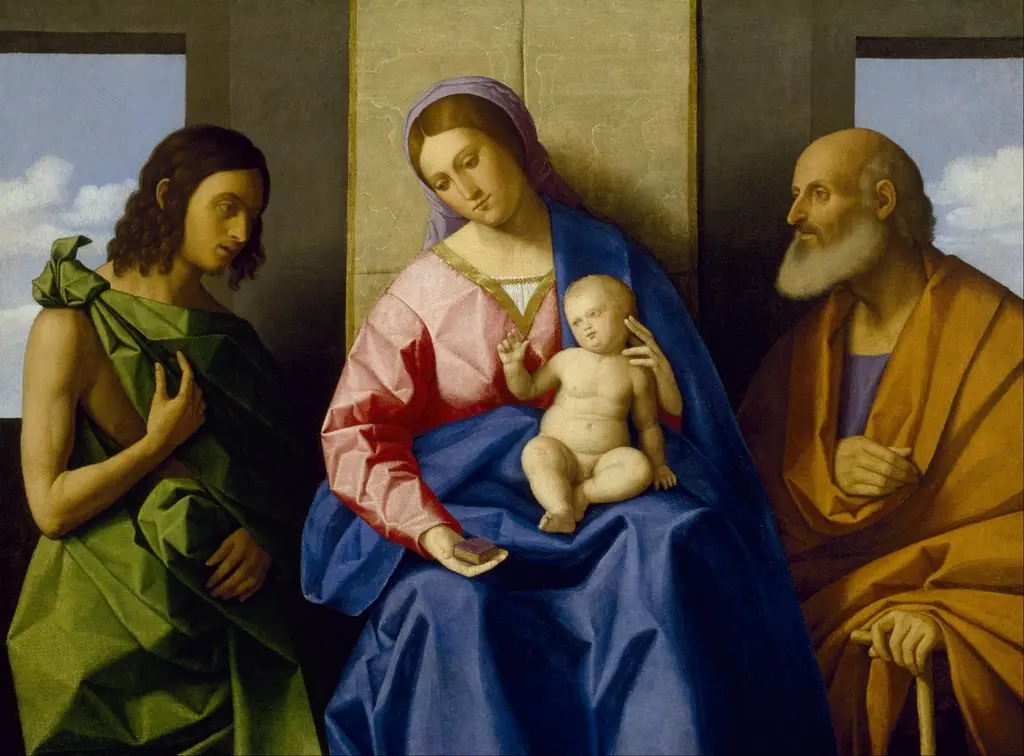 Virgin and Child with Saints John the Baptist and Joseph
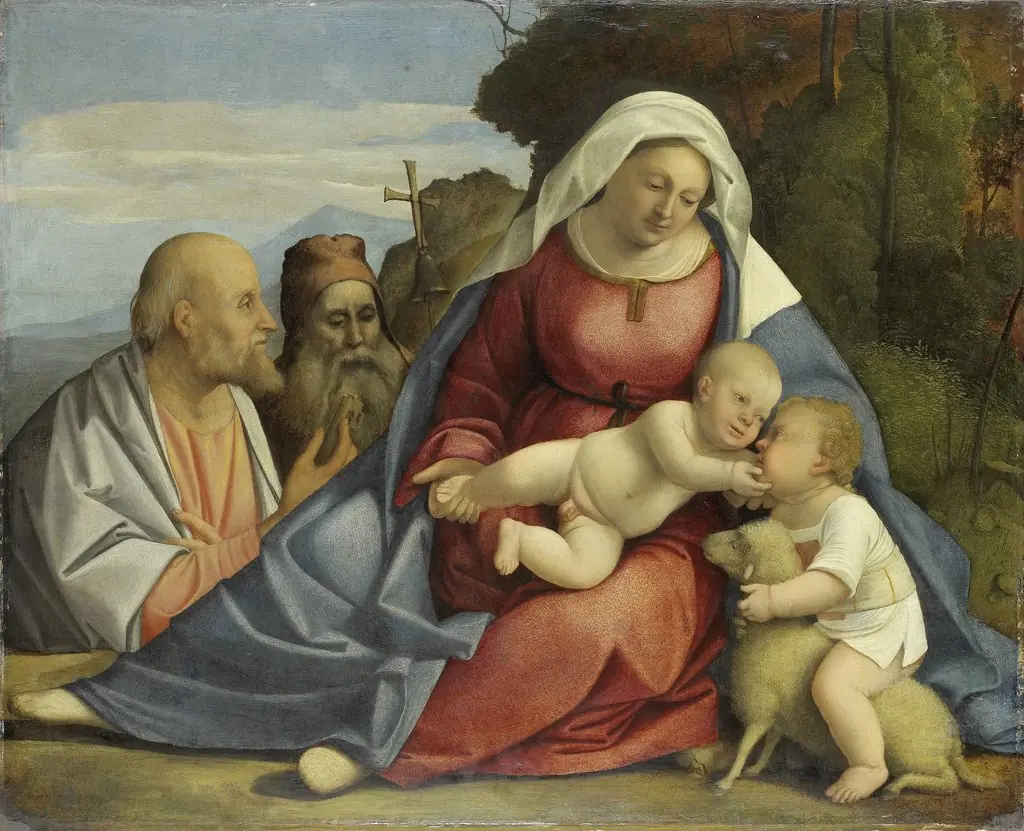 Virgin and Child with young John the Baptist, Saints Peter and Antony Abbot
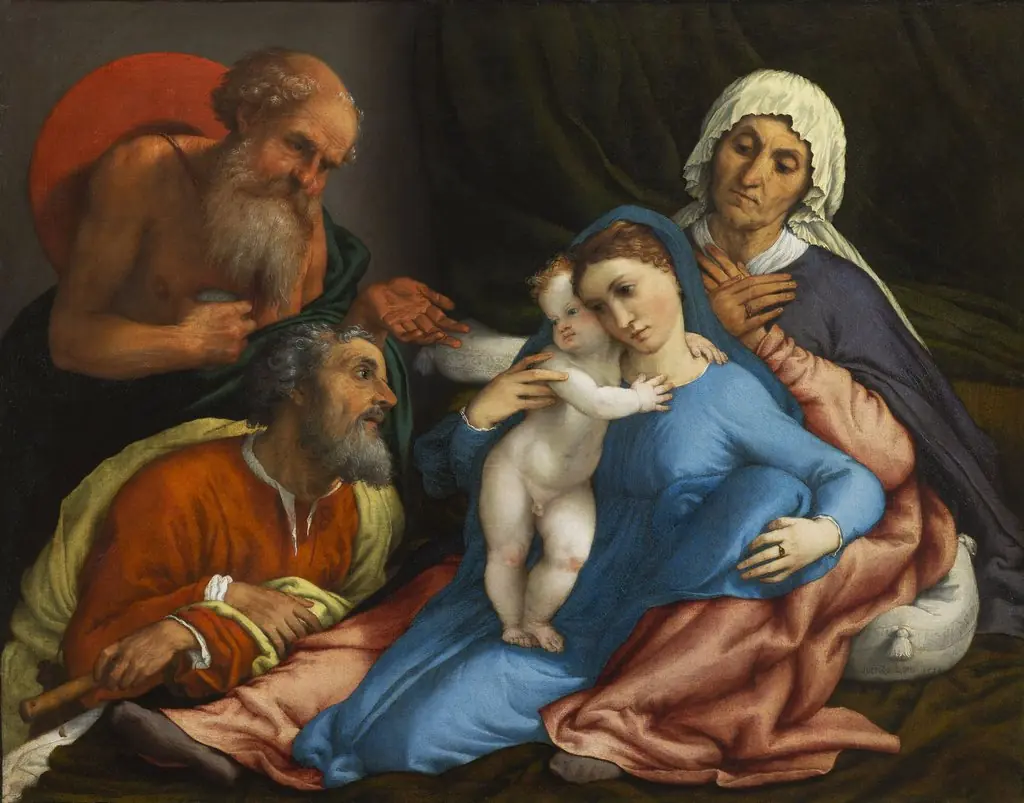 Madonna and Child with Saints
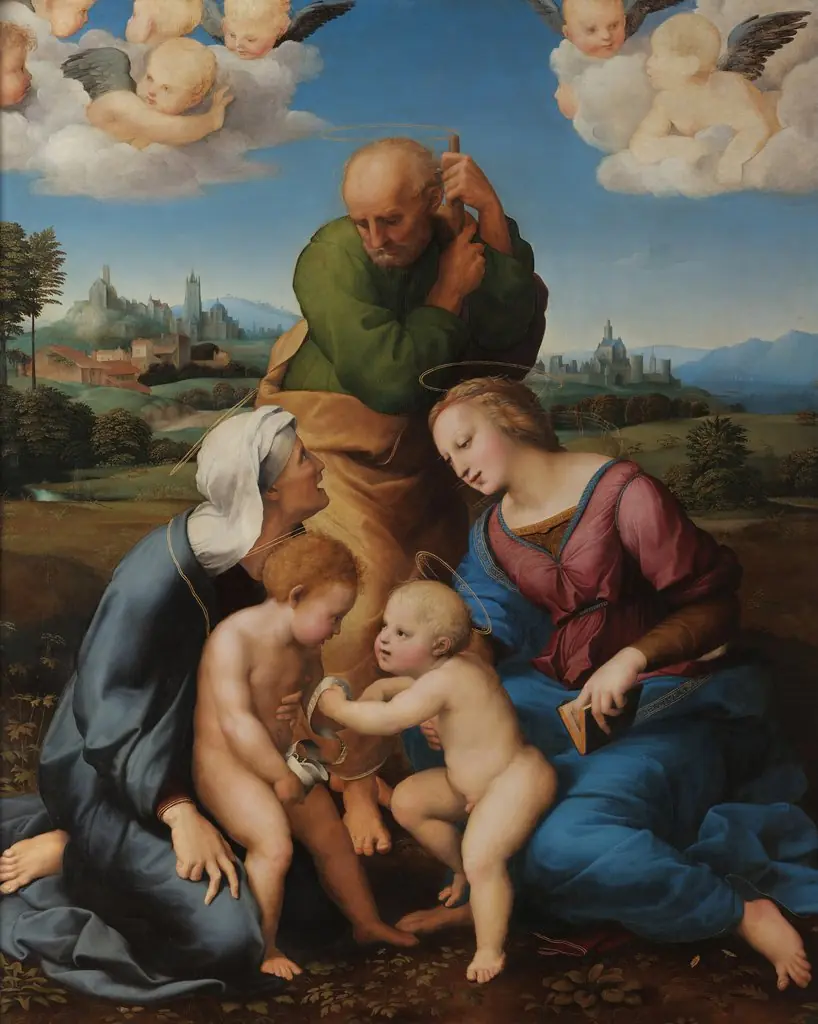 Canigiani Holy Family
 Virgin and Child with an Angel
 Madonna of the Roses
 The Adoration of the Shepherds
 The Nativity
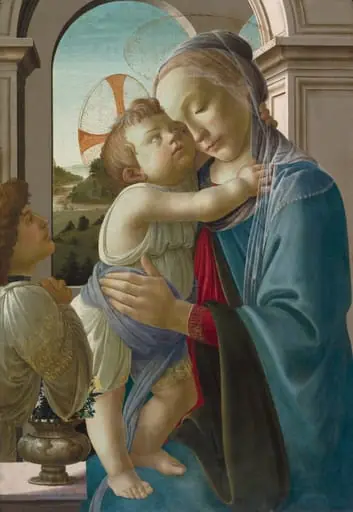 Virgin and Child with an Angel