Rowing Scene: Crowds Watching from the River Banks by Lévy, Émile
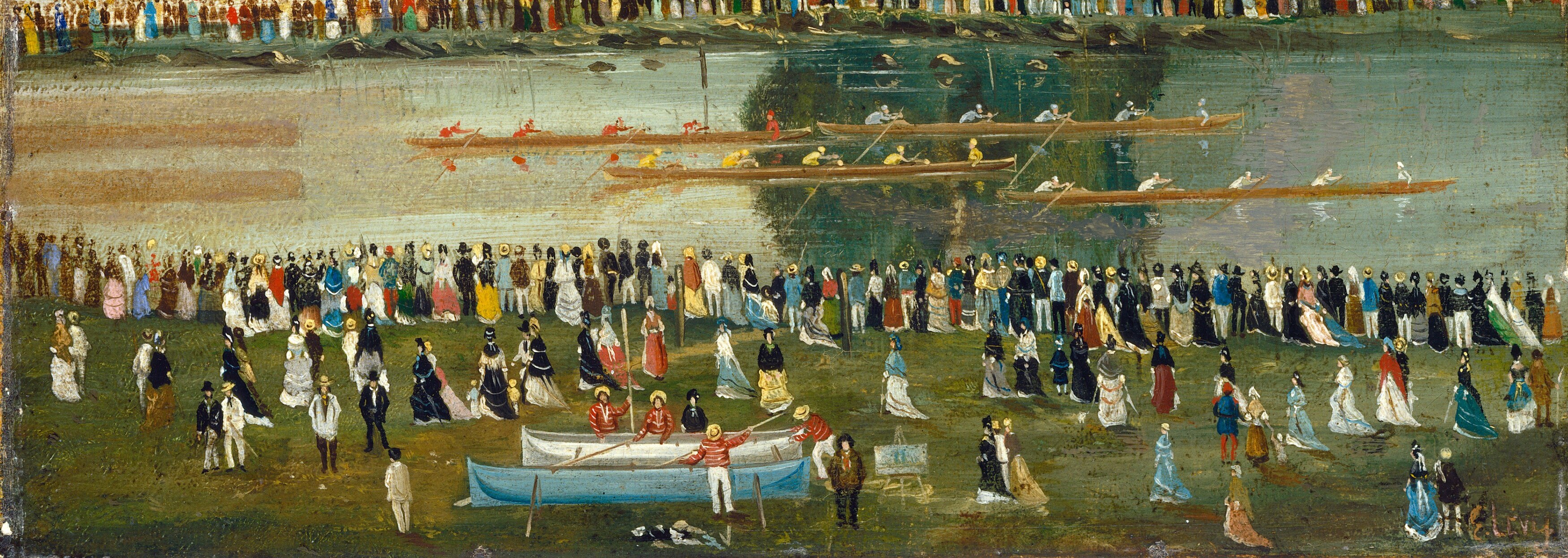
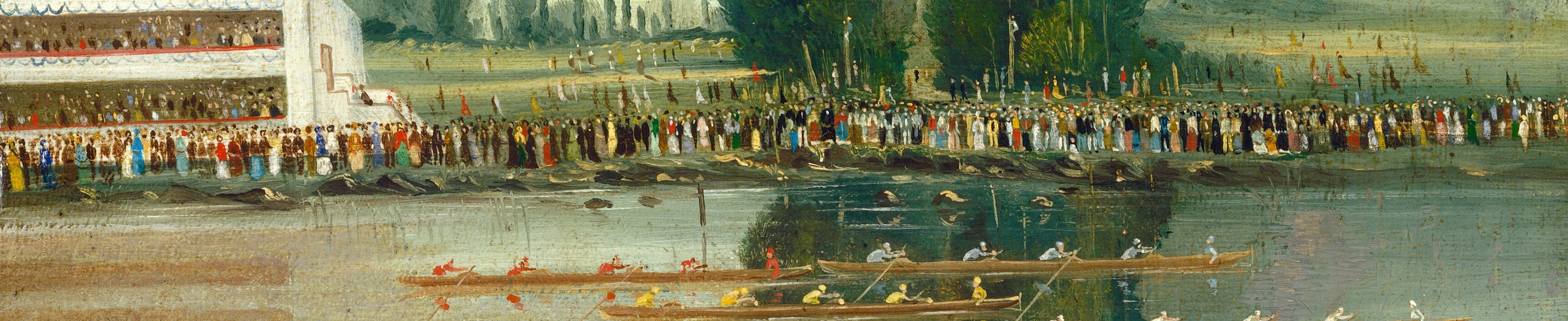
Émile Lévy's *Rowing Scene: Crowds Watching from the River Banks*, painted around 1850, caused a quiet stir for its depiction of the public. This oil on wood painting, housed in an unknown collection, captures a lively river event, likely a regatta.
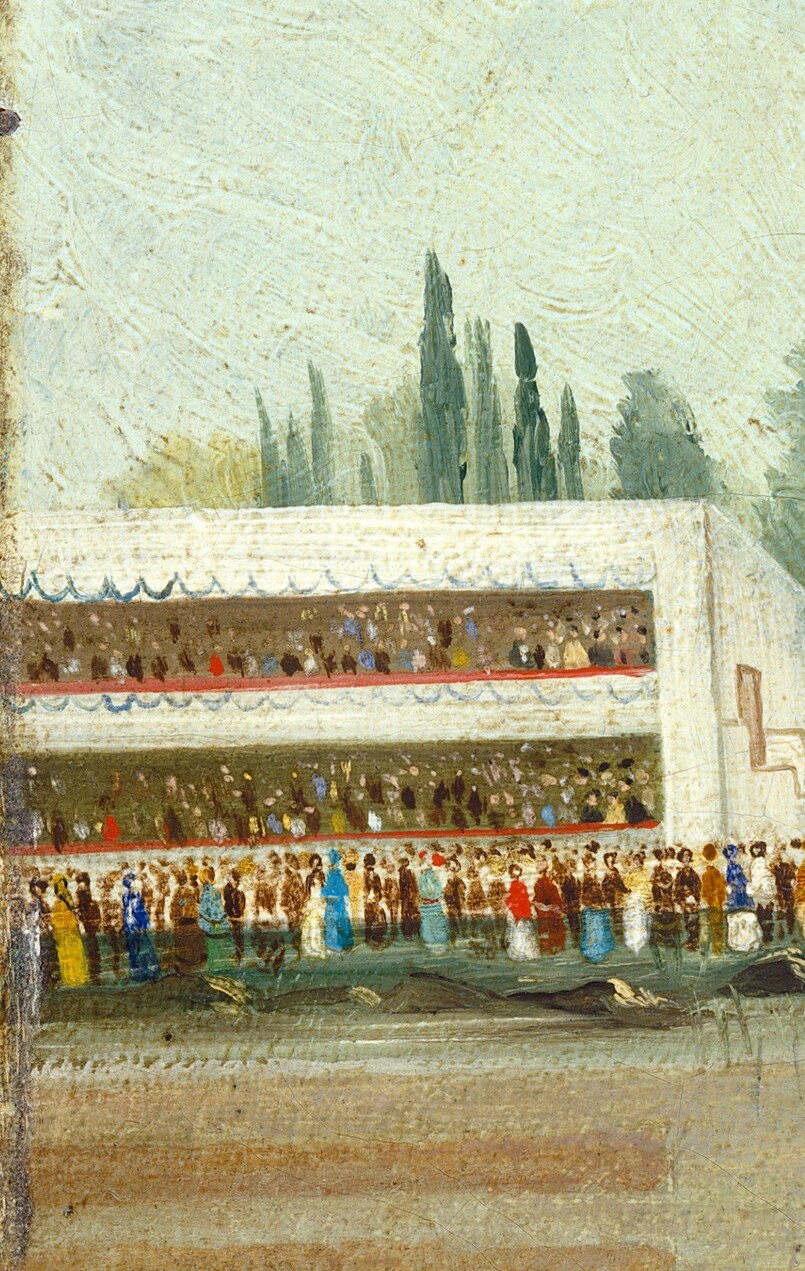
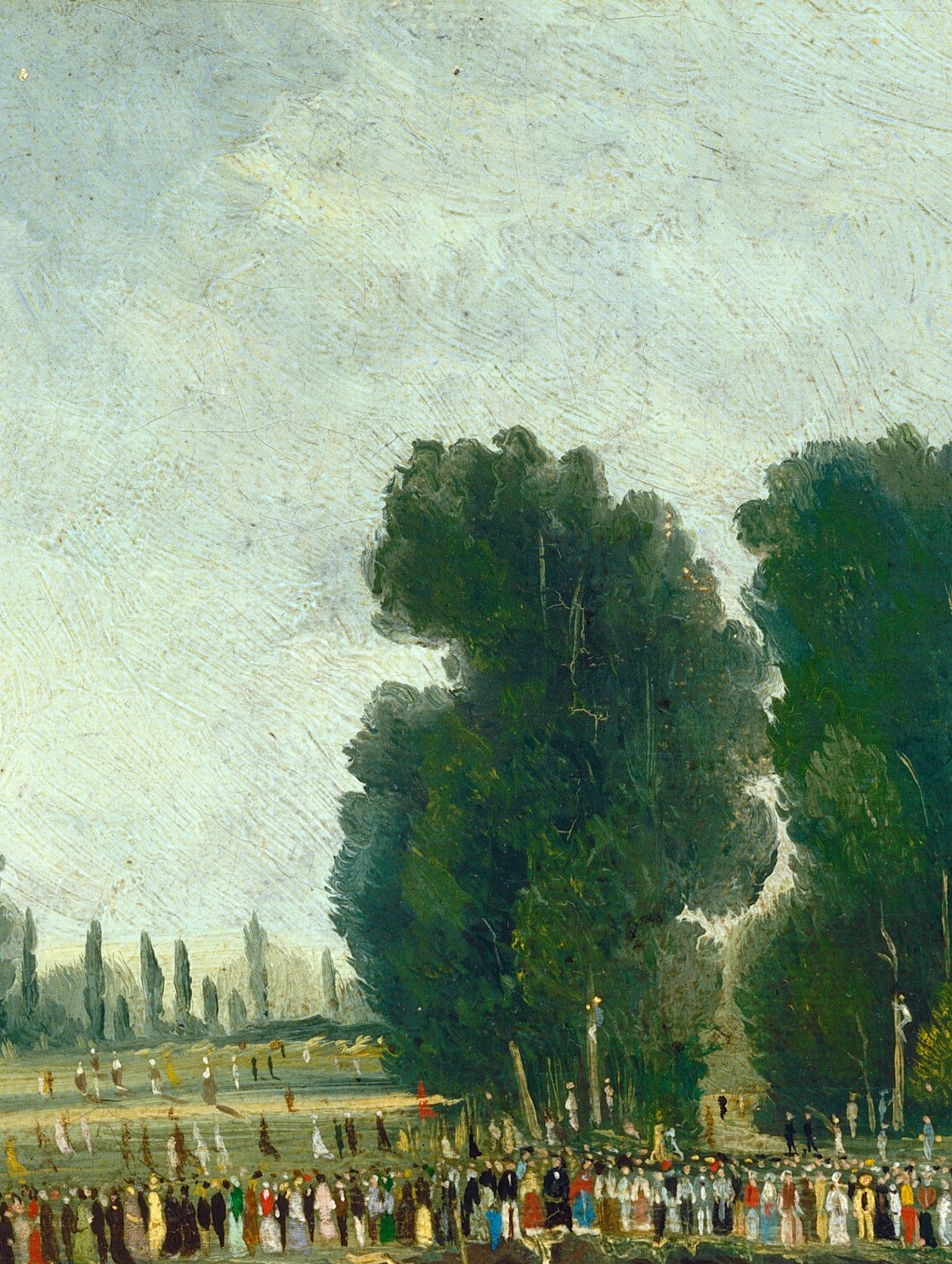
While the wealthy spectators are given a distinct, elevated view from a grandstand, the artist renders the rest of the crowd as an almost faceless, generalized mass. Look closely at the densely packed figures on the riverbank, their features blurred by loose brushstrokes. This artistic choice, rather than singling out individuals, was seen as a subtle yet deliberate disregard for social distinctions.
In the mid-19th century, such an approach was considered provocative. It challenged traditional notions of social hierarchy within art, where individual representation often signified importance. Lévy's technique here focuses on the collective energy of the event rather than individual narratives.
It’s a fascinating insight into how artistic choices could reflect, or subtly challenge, the societal norms of the time. What do you notice about the crowd?
Details
Transcript
This painting shows a rowing race on a public holiday. Notice the detailed, elevated grandstand on the left. This was for the wealthy who paid to watch the spectacle. But the crowd on the riverbank is a blur of faces. The painter rendered them as a faceless, undifferentiated mass. This refusal to distinguish the lower classes was scandalous. It was considered a shocking affront to social order.