Figures on the Beach by Pierre-Auguste Renoir
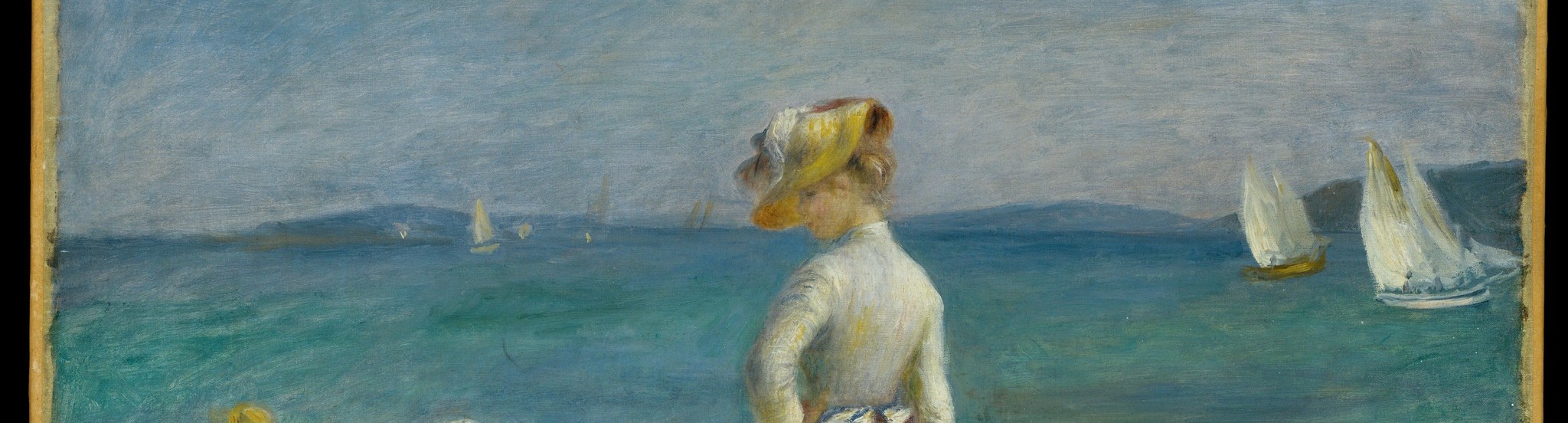
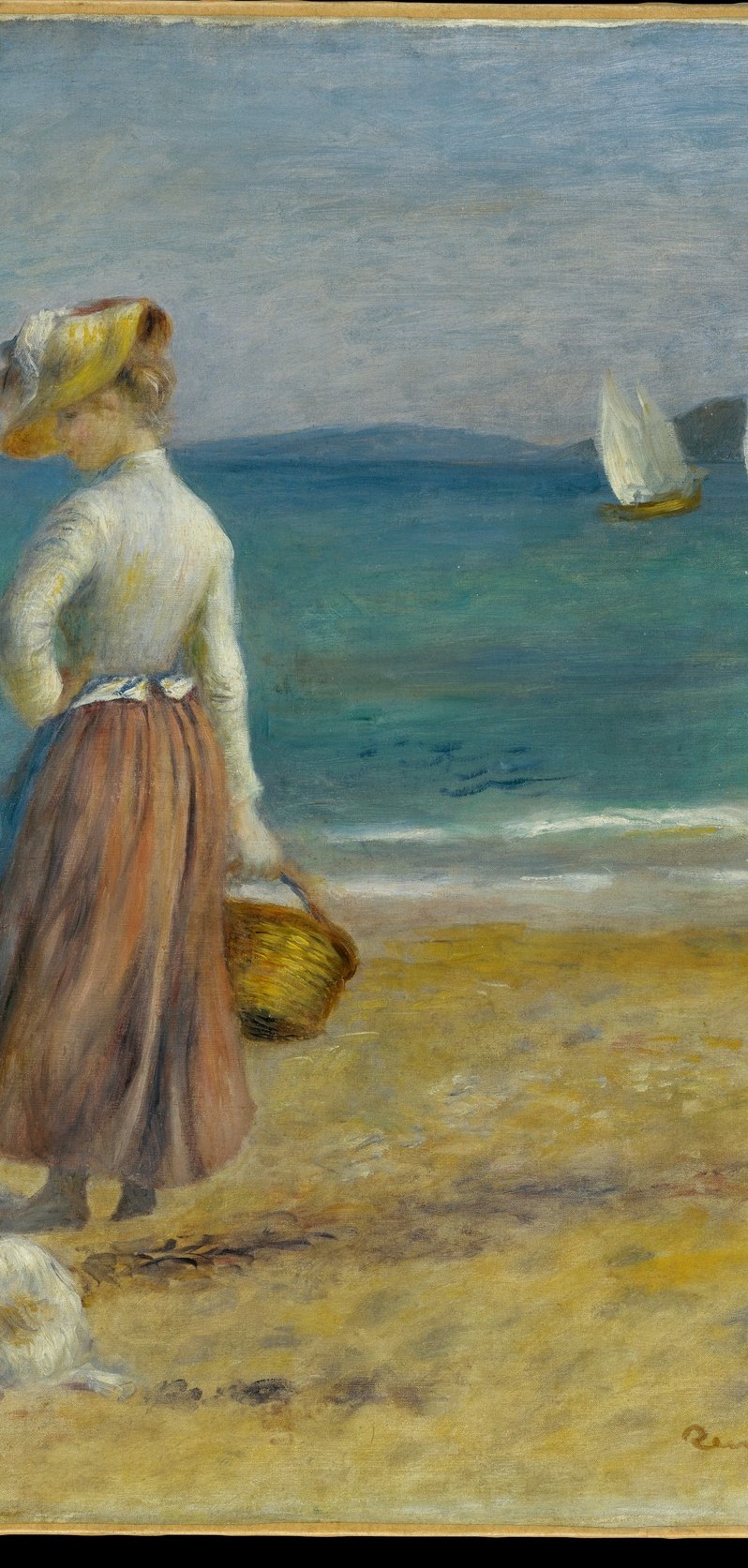
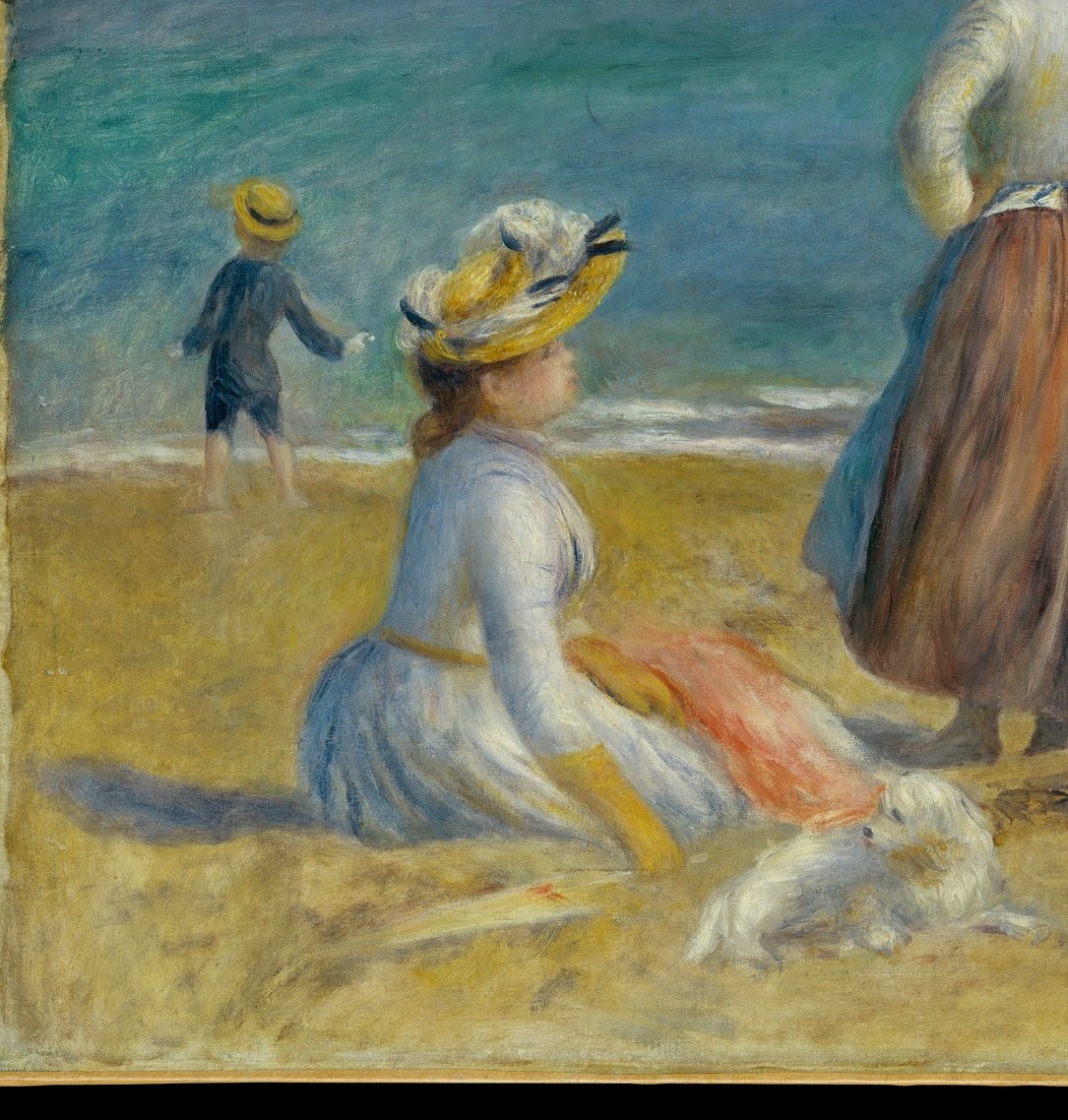
Pierre-Auguste Renoir’s “Figures on the Beach” (1896) begins as a postcard of bourgeois leisure, two women, a dog, sailboats, but hides a compositional secret in plain sight. The painting lives at The Metropolitan Museum of Art and marks a period when the artist’s body was turning against him.
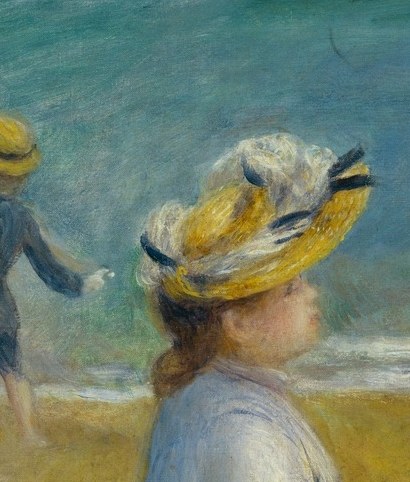
Scan the shoreline just left of center. A third figure, a boy in a yellow hat, walks near the water. His hat is barely a dot of paint, his body a loose sketch. Renoir gives him just enough form to pull the eye deep into the scene, then lets him dissolve. Most viewers scroll right past him.
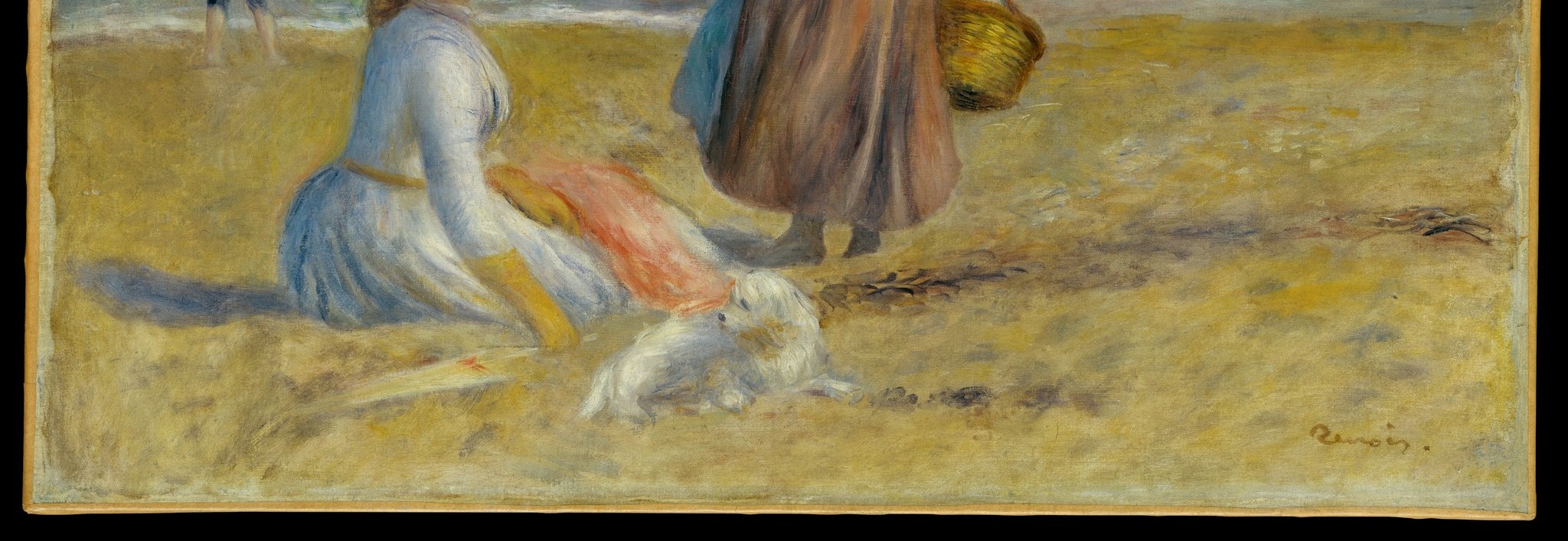
By the mid-1890s Renoir’s hands were becoming deformed by rheumatoid arthritis. He began adapting his brushwork, building surfaces from separate, broken strokes of pink, ochre, and gold rather than blended passages. The sand foreground is the clearest record: get close and it fragments into individual hatch marks that somehow read as warm light.
A painting that looks effortless was actually a hard-won late solution. What do you notice first: the figures or the light?
Details
Transcript
They look like an ordinary party on the sand. But look into the distance, near the water. There is a third person: a boy in a yellow hat. His tiny yellow hat is barely a dot of paint. Renoir was 55 and his hands were failing. Look at the sand itself: built from separate pink and gold strokes. He found a way to make crumbling pigment feel like warm light.