The Virgin of Guadalupe with the Four Apparitions by Nicolás Enríquez
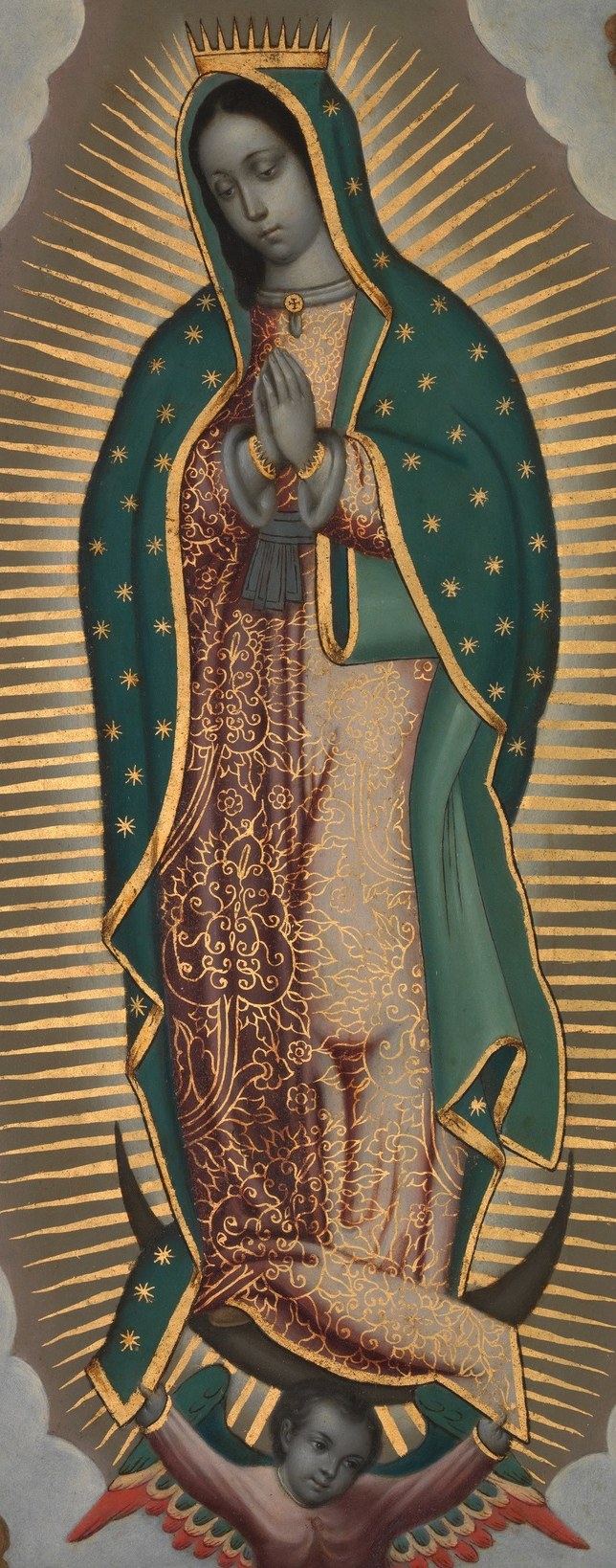
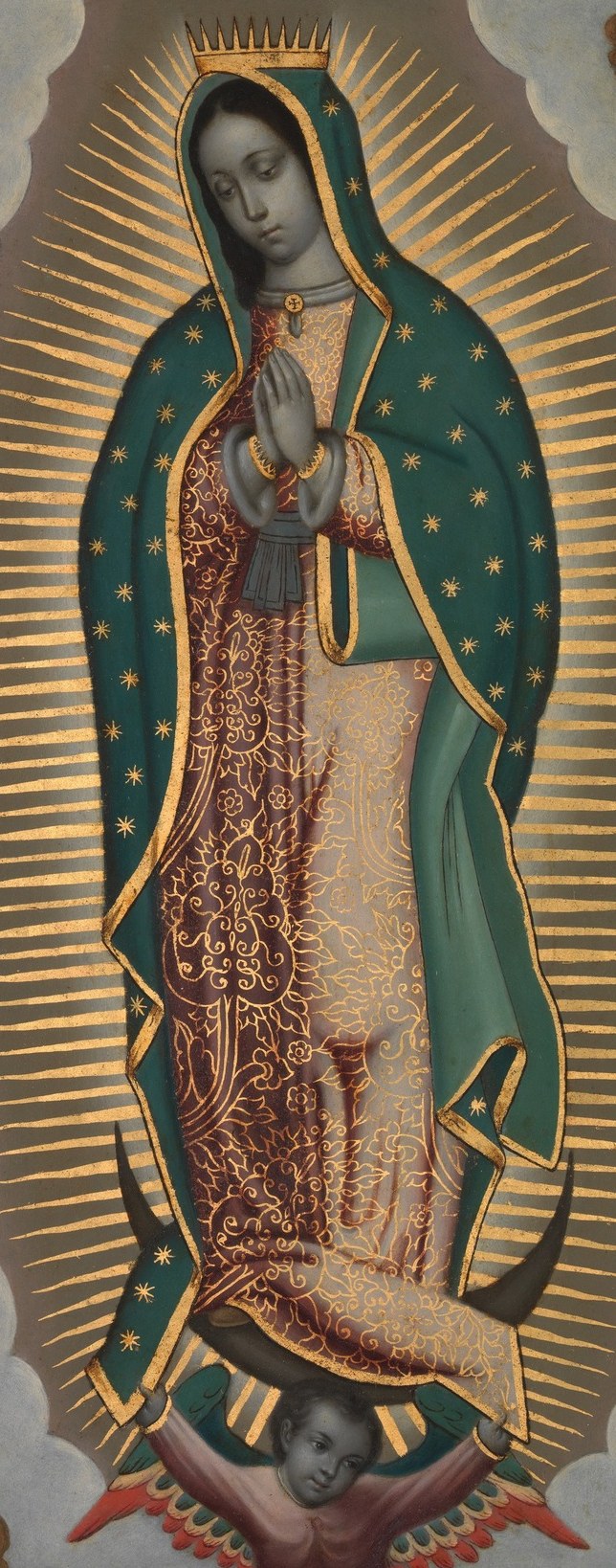
Nicolás Enríquez’s The Virgin of Guadalupe with the Four Apparitions, painted in 1773, is a powerful devotional image held at The Metropolitan Museum of Art. The central figure of the Virgin of Guadalupe is depicted with serene grace, surrounded by golden light and cherubic angels, emphasizing her divine presence.
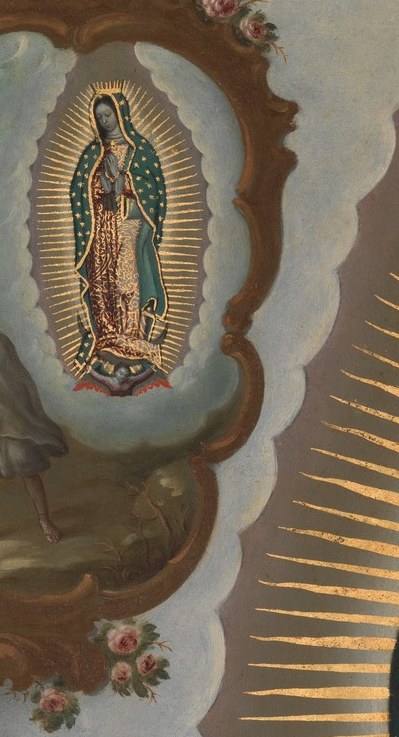
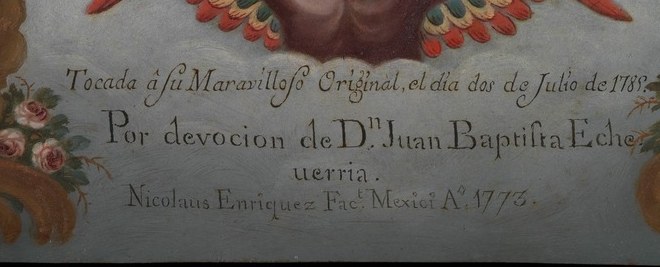
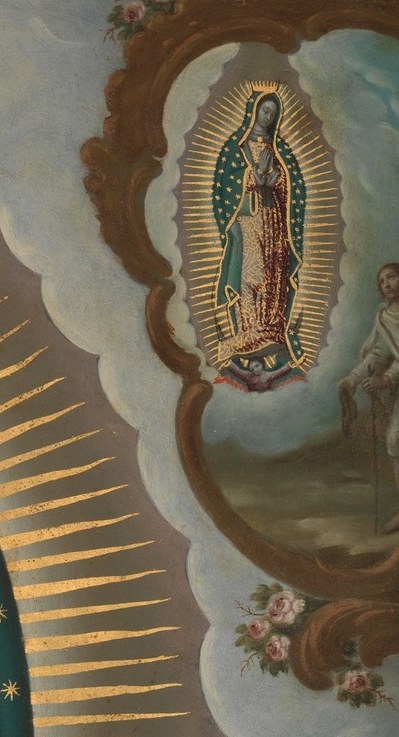
Look closely at the four smaller scenes that frame the main figure. Each one illustrates a different apparition of the Virgin, narrating key moments of her story. Below, the inscription reveals not only the artist's signature but also its original purpose as an object for devotion.
Enríquez crafted this piece on copper, a choice that contributes to its luminous quality and preservation over centuries. It stands as a significant example of 18th-century religious painting from the Americas.
What details do you find most striking in this portrayal of divine revelation?
Details
Transcript
This painting centers on the Virgin of Guadalupe. She stands on clouds, surrounded by golden rays. Four smaller scenes show her apparitions. The artist, Nicolás Enríquez, signed it in 1773. His signature also states its devotional purpose. It was painted on copper, a less common material.