The Yellow Curtain by Vuillard, Edouard
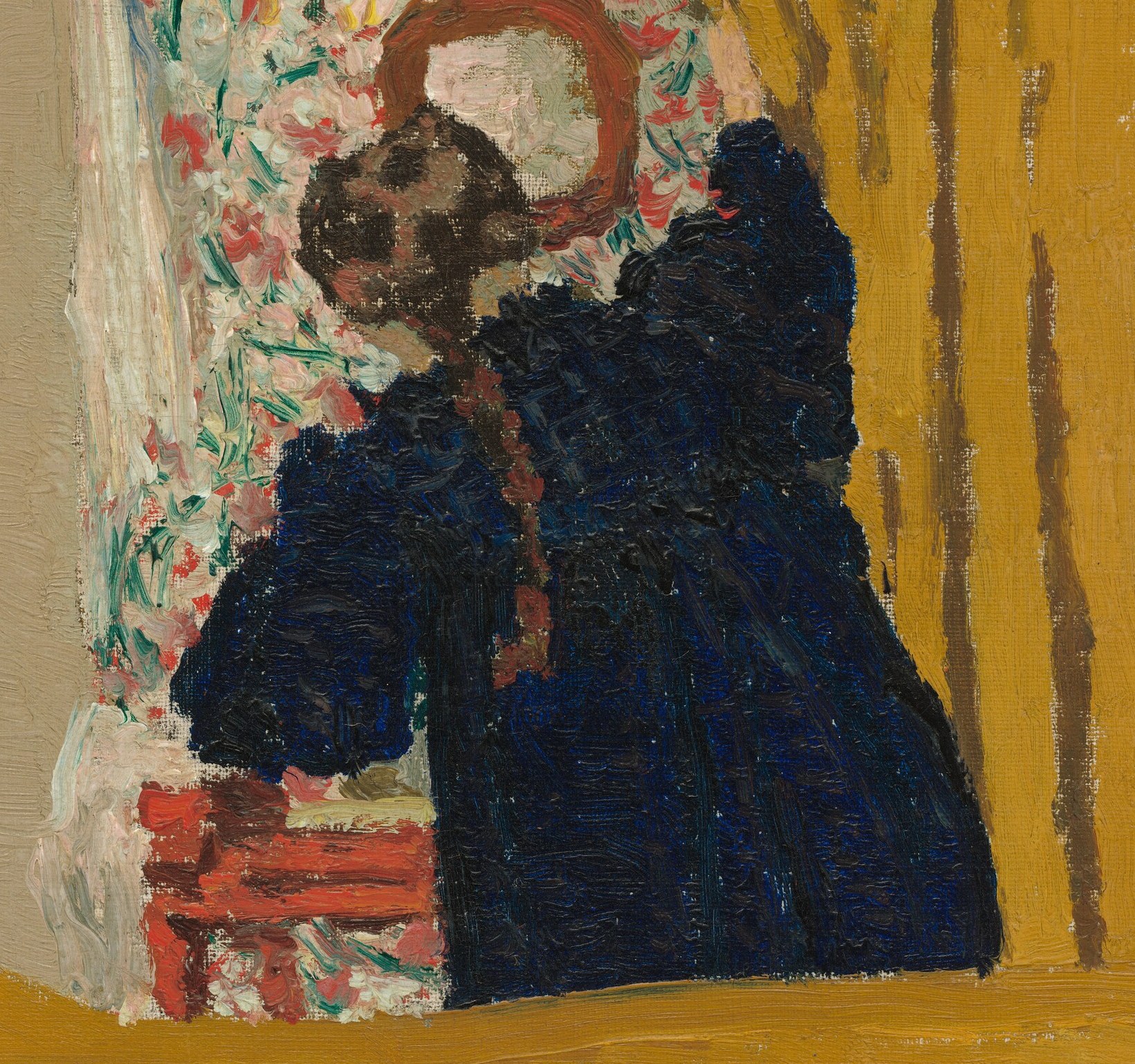
The Yellow Curtain, painted by Édouard Vuillard around 1893, looks at first like a quiet domestic interior. But the story behind it is a hidden affair. The woman in the blue coat is Misia Natanson, the artist's patron and the wife of his close friend Thadée Natanson, who commissioned the work.
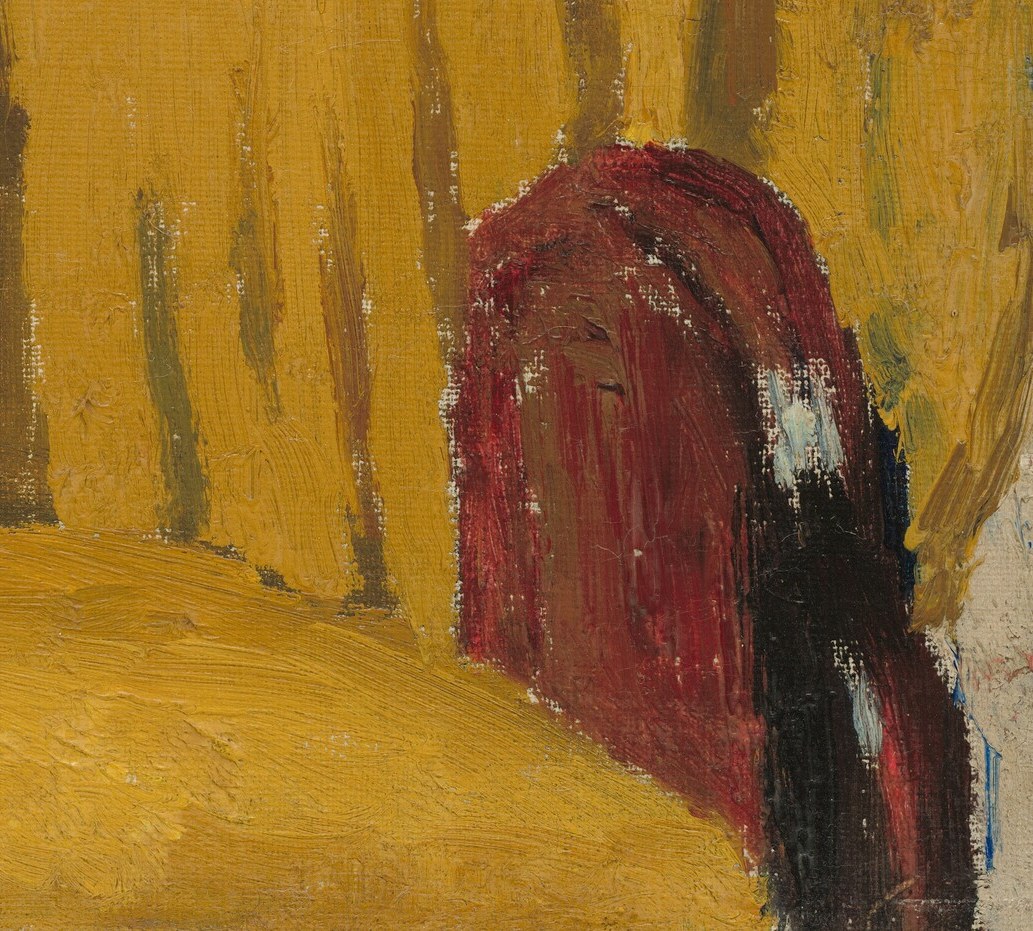
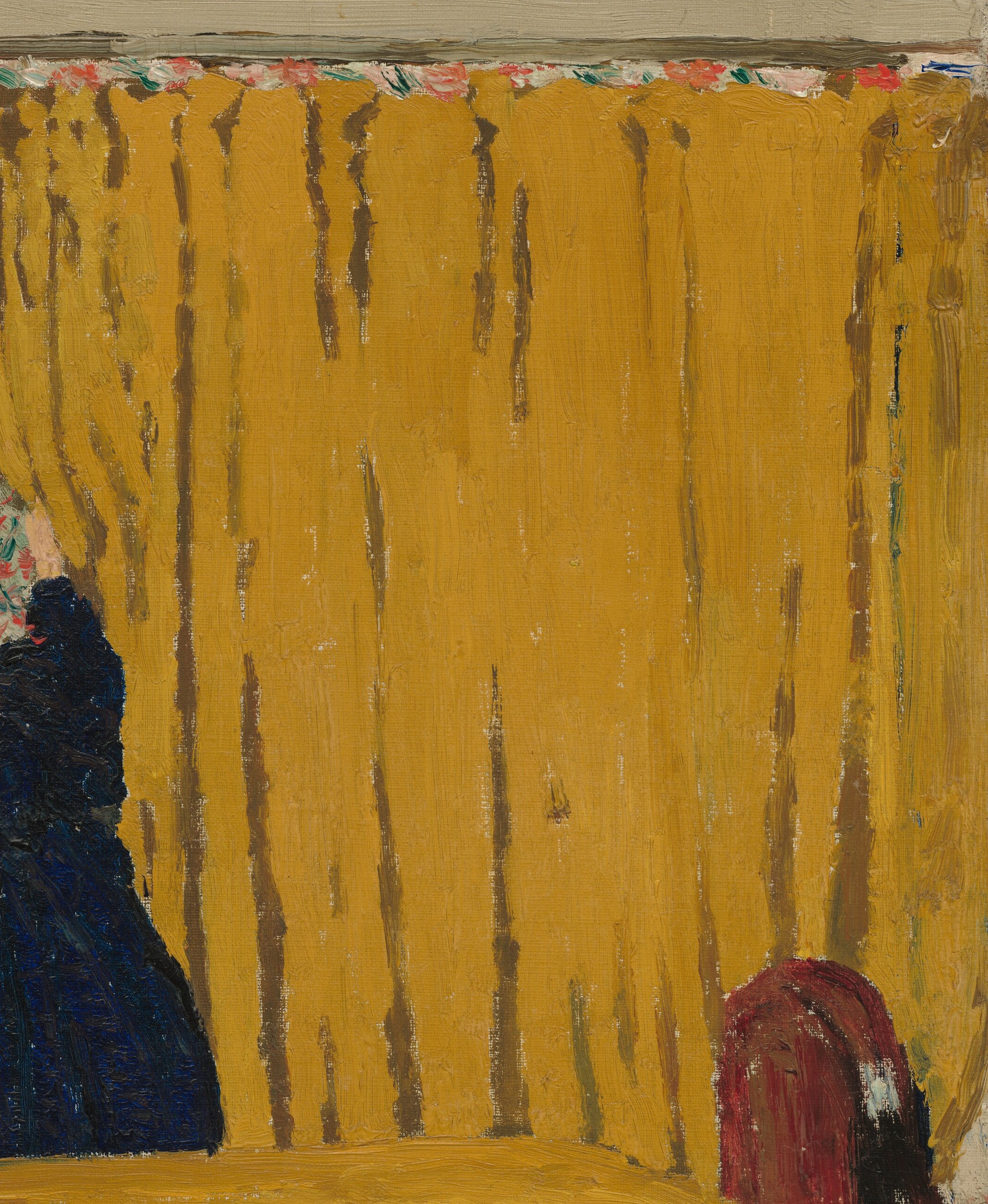
Look closely at the composition. Vuillard never shows her face. She’s turned away, obscured, a private figure in a room built for her. The red chair in the corner is a deliberate clue, Misia owned one just like it, and Vuillard placed it here as a personal signature of her presence. The overwhelming yellow curtain nearly swallows the space, turning a bourgeois apartment into a private world of color and concealment.
Vuillard was a member of Les Nabis, a group of young French avant-garde artists who believed a painting was not a window onto the world but a flat surface arranged with color and pattern. Here, he uses those principles to encode something deeply personal. The relationship with Misia lasted for years, hidden in plain sight, woven into the decorative fabric of her own home.
This is not just a study of light and fabric. It’s a secret, painted onto canvas and hung on the wall of the man who was paying for it.
Details
Transcript
She was his patron. And she was married. Her husband commissioned Vuillard to paint this room. But the woman in the blue coat is her. Vuillard fell in love with her. This is their secret. Look at the red chair in the corner. He included it. Hers was identical. A coded portrait, hidden in her own house.