The Studio of the Haarlem Painter Pieter Frederik van Os by Anton Mauve
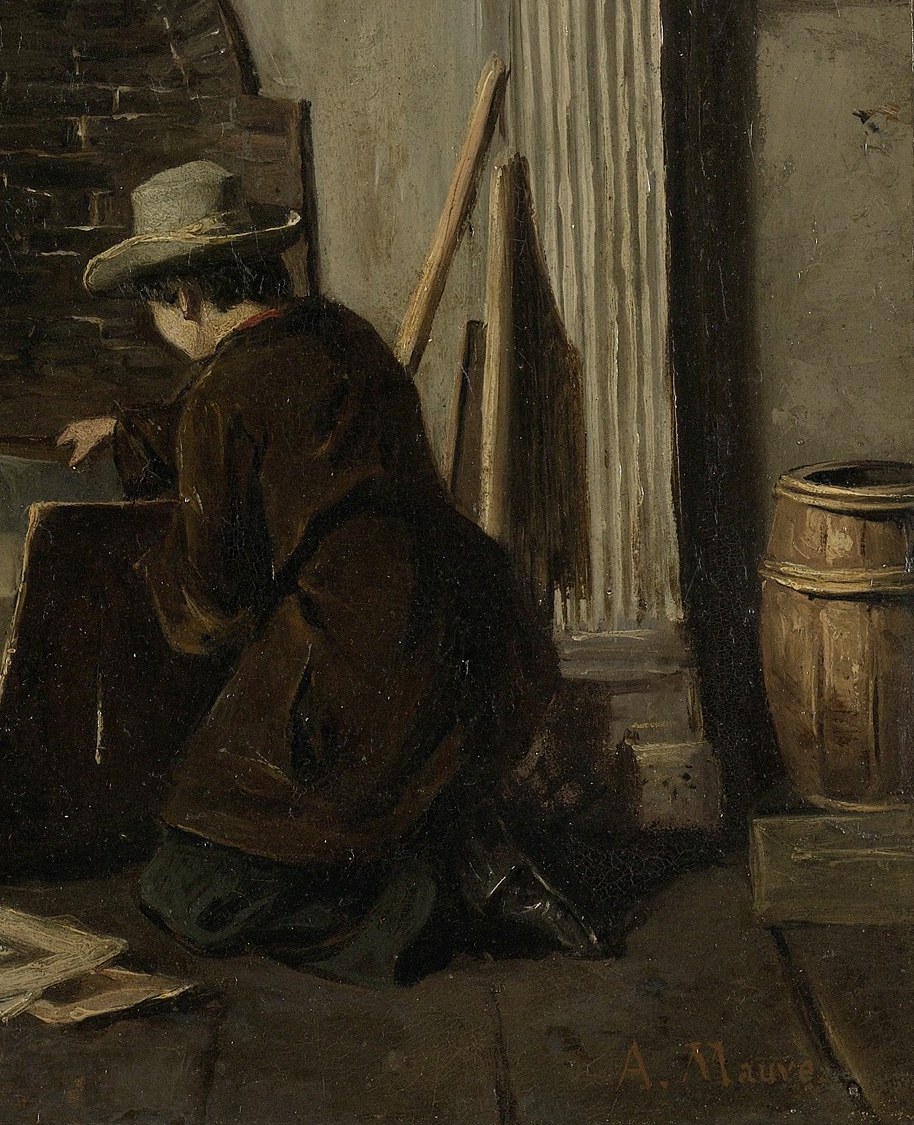
This is Anton Mauve’s “The Studio of the Haarlem Painter Pieter Frederik van Os” from 1856, now in the Rijksmuseum. It is a rare interior scene from an artist better known for his landscapes and sheep, and it shows his fellow painter sitting quietly with his easel. The calm domestic scene hides an extraordinary history.
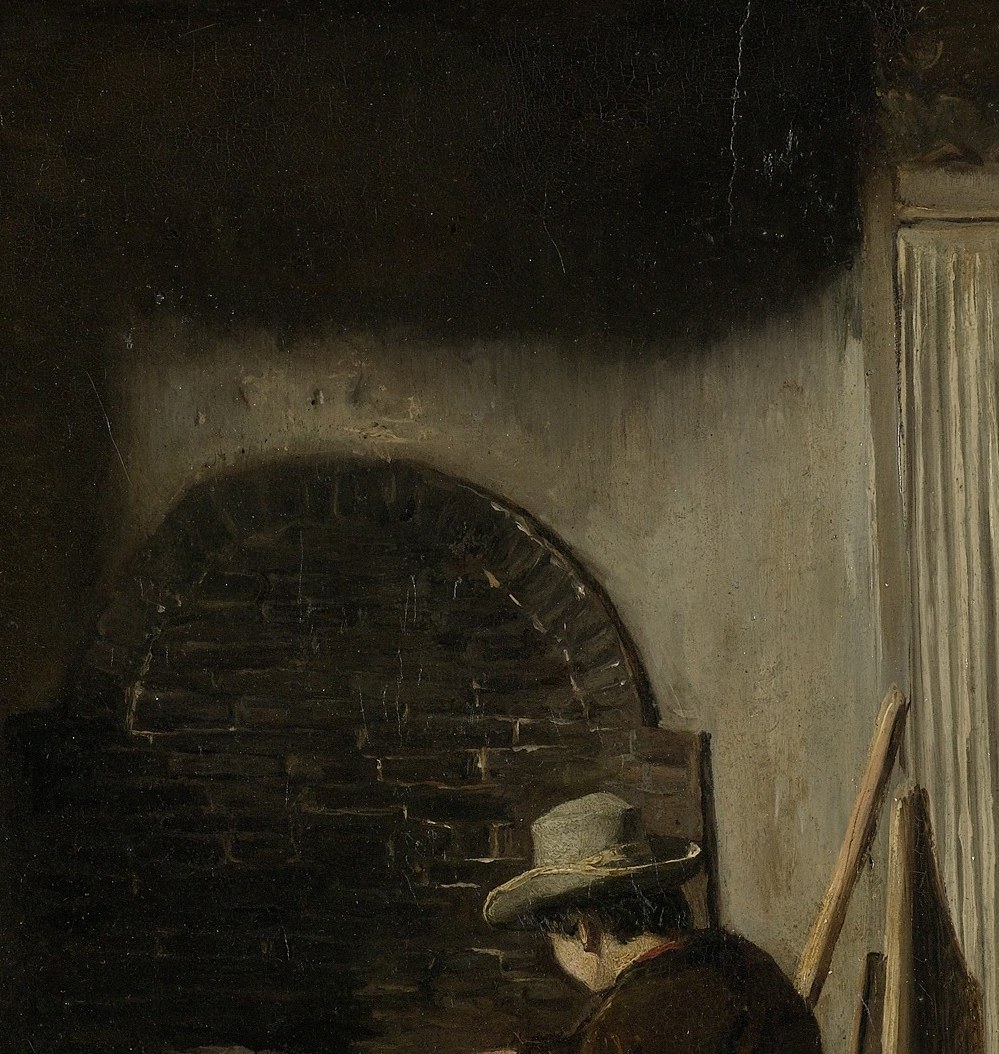
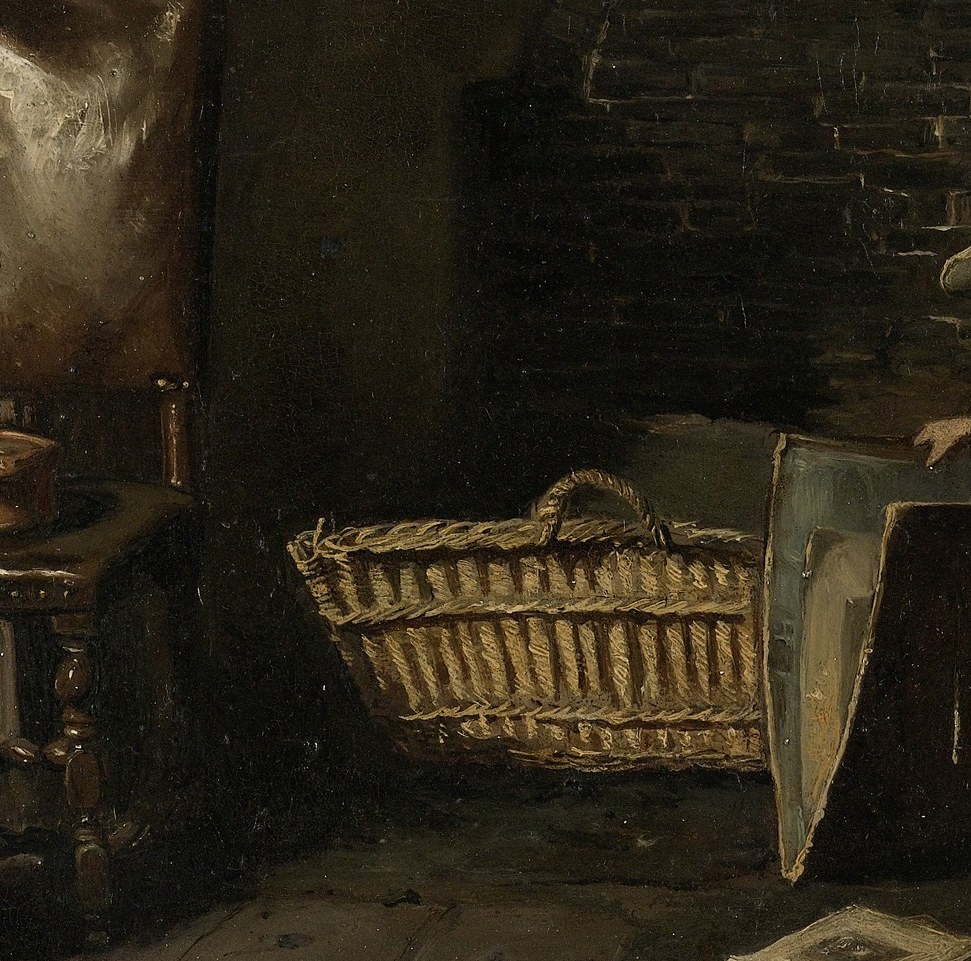
Look at the dark, unlit fireplace behind van Os. That shadowed void became the symbolic backdrop for a very real crime. The entire painting, quiet as it appears, was torn from history by the Nazi looting apparatus in 1942. It was taken from the collection of a Dutch Jewish owner and disappeared into the chaos of the war.
The work was eventually recovered by the Allied Monuments Men from a salt mine in Altaussee, Austria, where it had been stored among thousands of other stolen masterpieces in a vast underground bunker. After the war, it was repatriated to the Netherlands and entrusted to the Rijksmuseum. The peace inside this studio is hard-won.
Mauve, who was Vincent van Gogh’s cousin-in-law and an important early influence on him, painted this scene long before the wars that would send it into a mineshaft. He was a master of quiet tone, capturing the soft light from an unseen window. The stillness he painted returned, decades later, to a museum wall.
Details
Transcript
It looks like a quiet afternoon in a Haarlem studio. The painter in the wide hat is Pieter Frederik van Os. Anton Mauve painted this early in his career, in 1856. Now look at the dark fireplace behind him. In 1942, Germans looted this painting from a Jewish collector. It was found in a salt mine bunker, deep underground. The man at the easel returned to the Rijksmuseum.