Blacksmith shoeing a horse by Philips Wouwerman
This painting, "Blacksmith shoeing a horse" by Philips Wouwerman, around 1650, offers a detailed look into 17th-century rural life in the Netherlands. It's held in the collection of the Rijksmuseum.
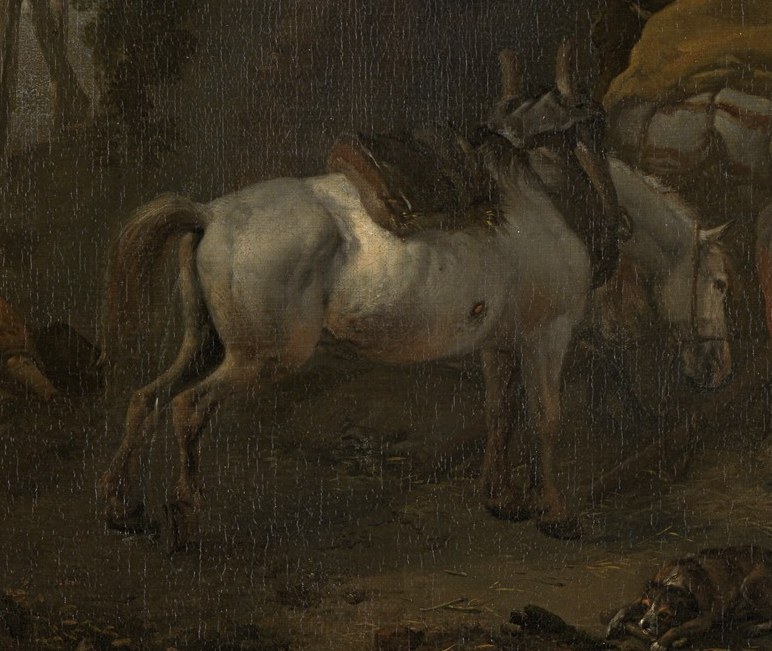
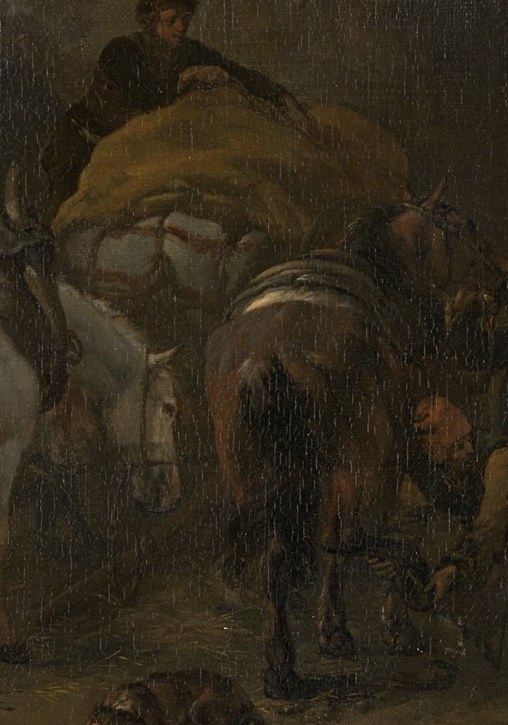
Wouwerman, known for his landscapes and genre scenes, often featured horses in his work. Here, he captures the meticulous skill of the blacksmith at work, from the hammer poised to strike to the fine detail of the horse's hoof.
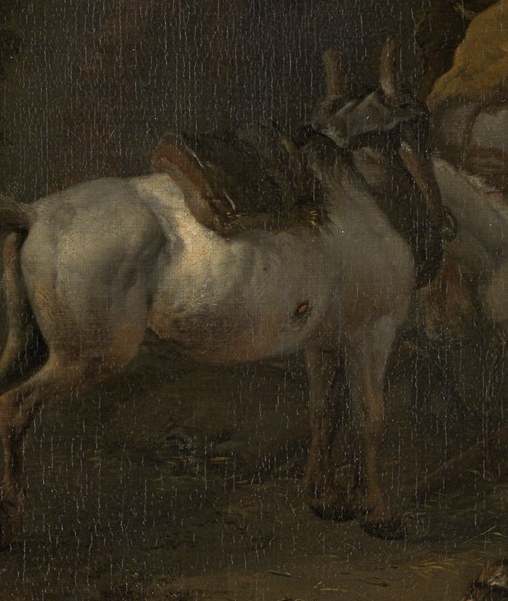
Scenes of daily labor were popular during the Dutch Golden Age, reflecting the vitality of the countryside. This work exemplifies Wouwerman's realistic approach, rendering textures of leather, metal, and fur with great precision.
The painting shows the quiet interdependence of humans and animals in agricultural life. What other details do you notice?
Details
Transcript
Rural life, 1650. A blacksmith at work. This painter was famous for his horses. He renders every detail of the task. See the worn leather of his apron. Even the horse seems to watch closely. A quiet moment of skilled labor.