Madonna and Child by http://www.wikidata.org/.well-known/genid/91803a106cce8020ec46af995c903553
This is a tempera painting on wood, titled Madonna and Child, by an unknown artist around 1500. The museum acquired it not because of the painter's fame, but because it holds itself together as a living record of survival.
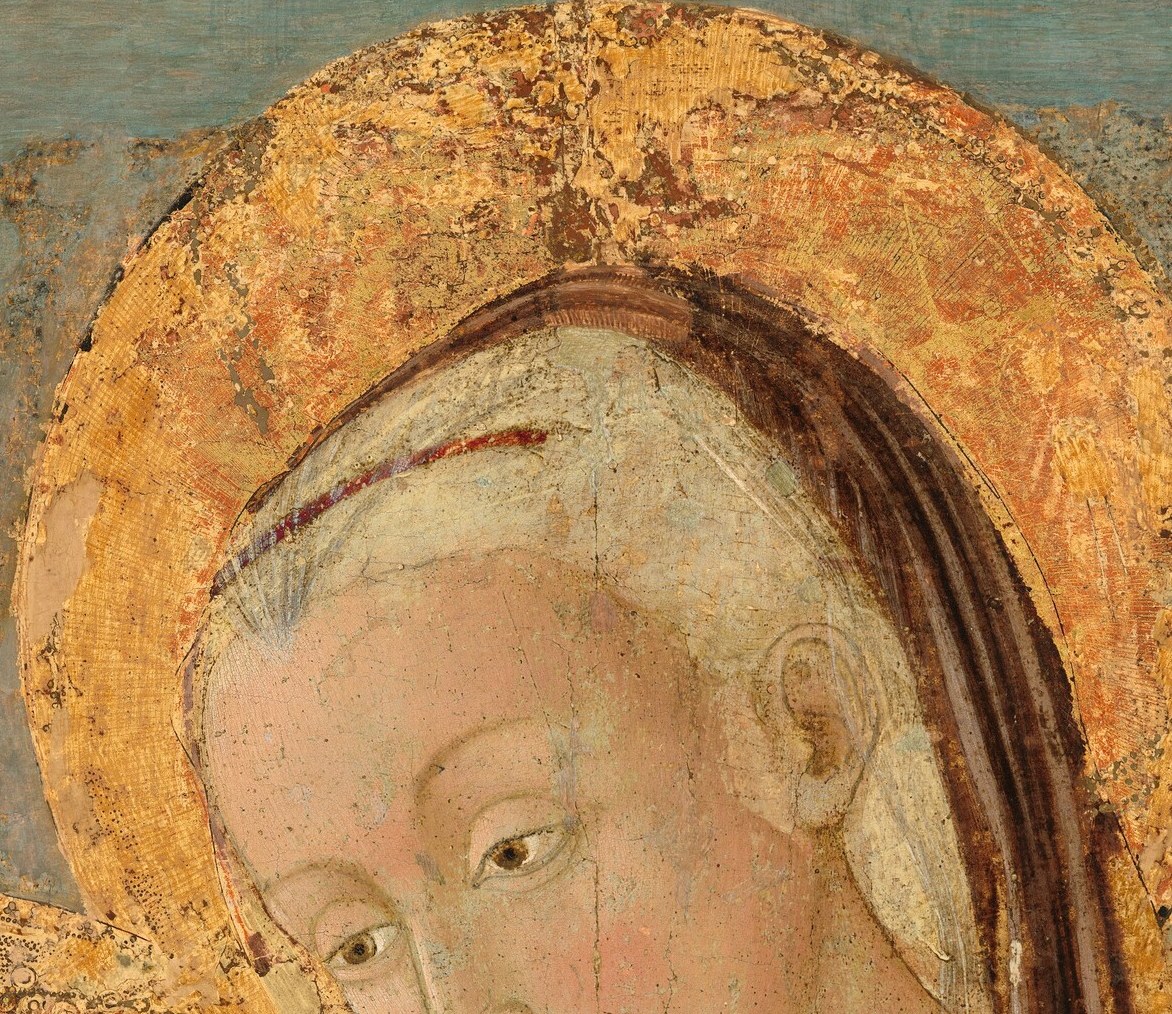
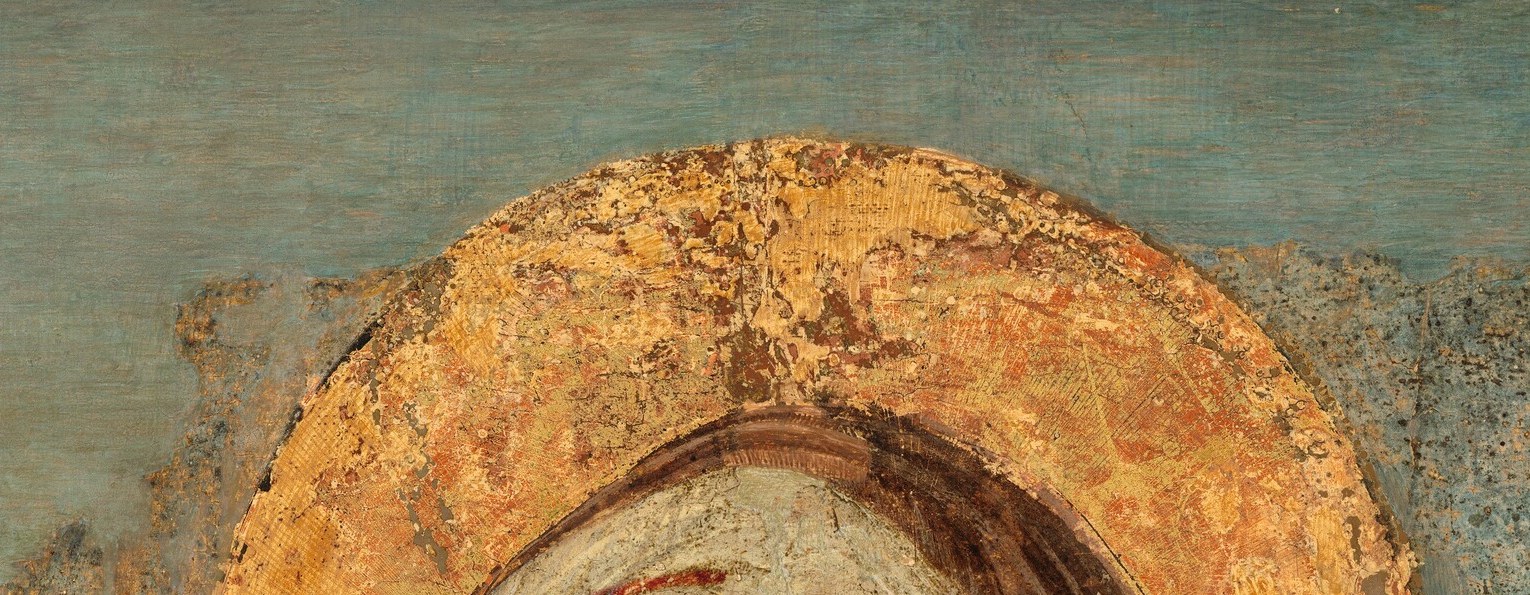
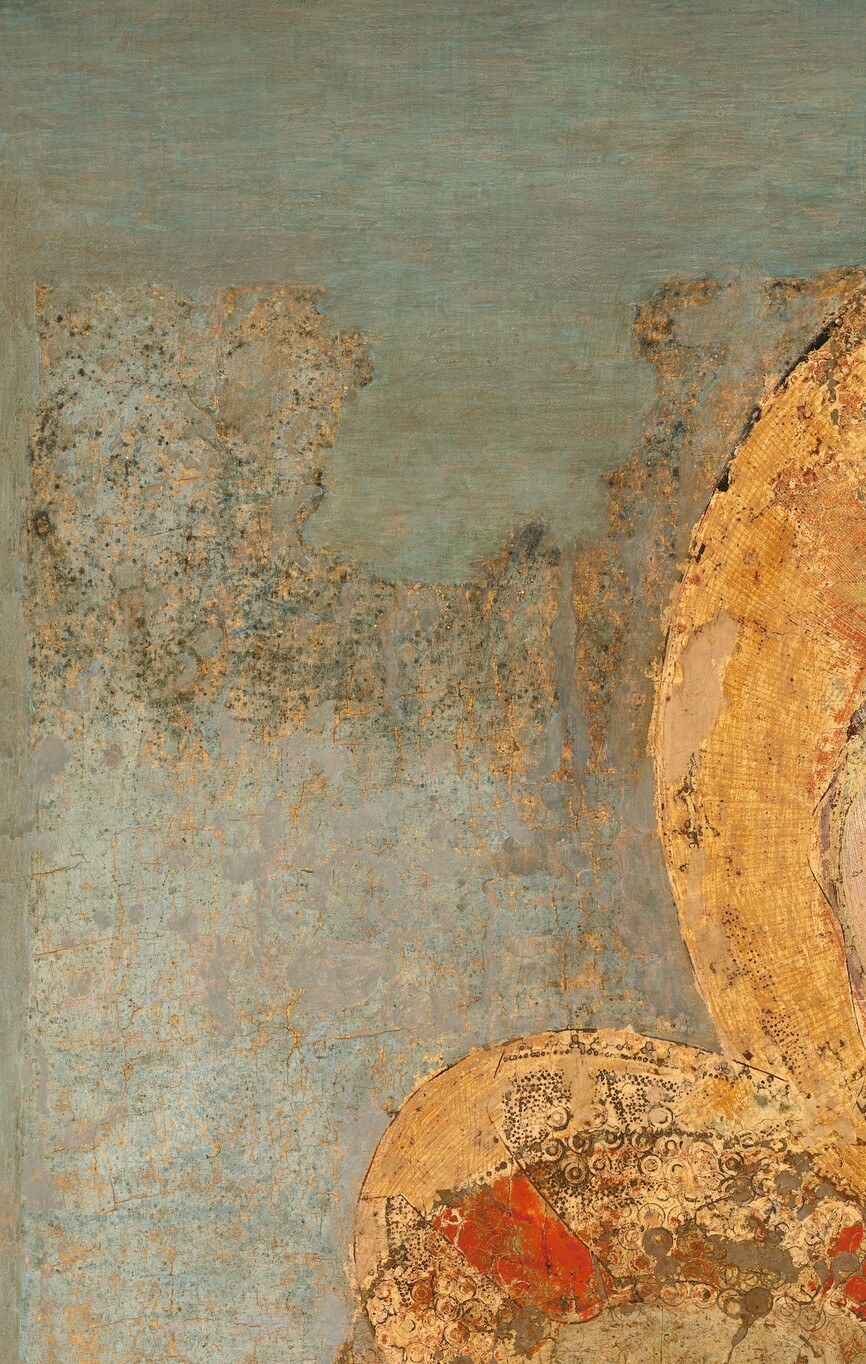
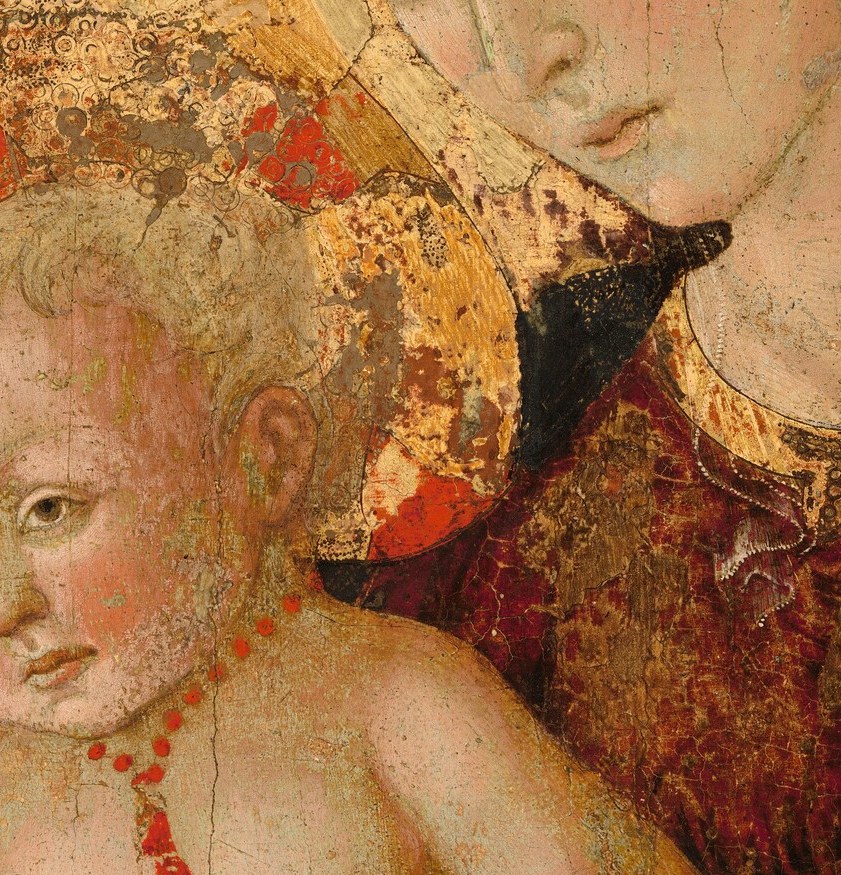
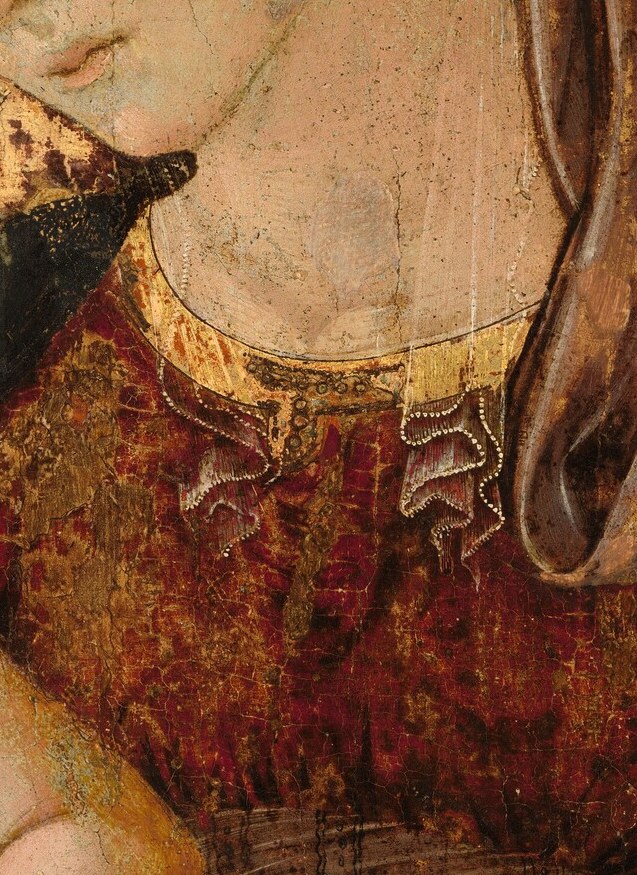
Look at the deep cracks in the black background and the flaking pigment of the Virgin's radiant crown. The blue mantle, once a fortune in ground lapis lazuli, has dulled with age. Notice the exposed torso of the infant Christ, a deliberate theological choice meant to emphasize his human incarnation. His right hand is raised in a blessing gesture and his face is turned outward, directly engaging the viewer.
This painting was created on the eve of the Protestant Reformation's most violent waves of iconoclasm. In the decades that followed, mobs across Northern Europe stripped churches and smashed devotional objects, targeting the faces and hands of holy figures. That this tempera panel survives with its delicate details intact, including the Christ Child's blessing hand and the serene expression on the Madonna's face, suggests it was hidden away in a private home or a concealed church space until the fury passed.
It is a quiet object, but its very existence is a kind of testimony. The next time you see an old devotional painting, look past the religious subject to the physical surface: the cracks, the scrapes, and the worn gold. Those are not just the marks of time. They are often the marks of history itself.
Details
Transcript
She looks like a survivor of a different age. Her crown is chipped. Her robe is cracked. The tempera is flaking off the wood beneath. During the 16th-century iconoclasms, such images were smashed. Rioters targeted the eyes and the tender hands. But this Child's blessing hand remains intact. Someone hid this painting. We don't know who.